
8th Week of the Summer CSA Season: Week of July 14th
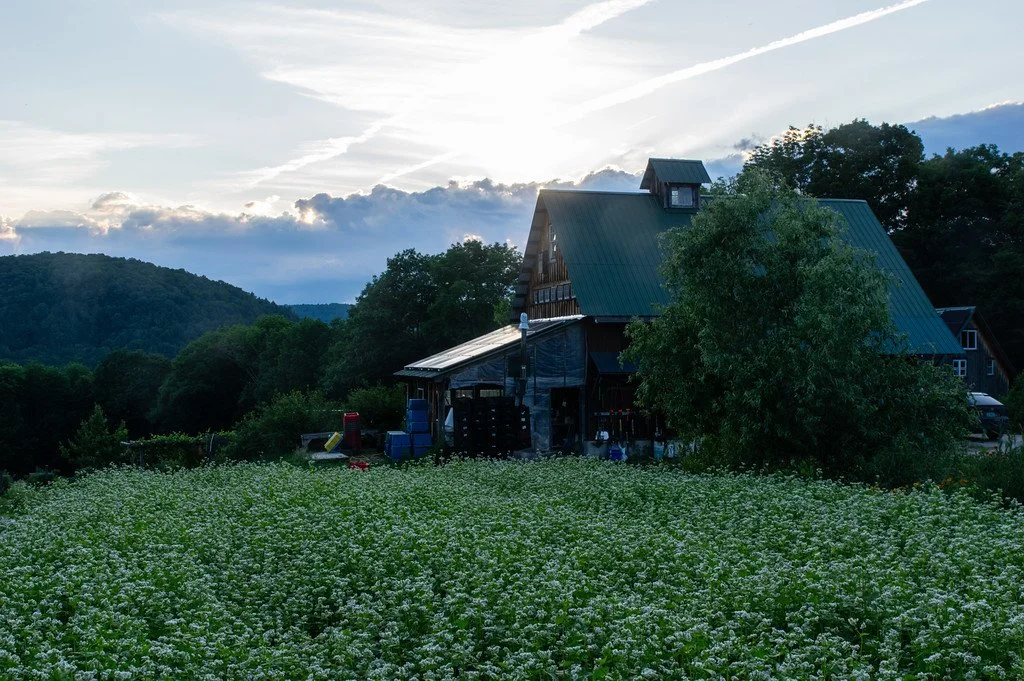
Pollinator paradise, photo by Adam Ford
This Week’s Availability
This week we will have:
Greens: baby lettuce, bok choi, pea shoots, green curly kale bunches, lacinato, rainbow chard, napa cabbage, green cabbage, caraflex cabbage
Roots: new red potatoes, salad turnips, red beet bunches, yellow beet bunches, red radish
Alliums: scallions, chives, fresh onions, garlic scapes, fresh garlic bulbs
Herbs: sage, parsley, basil tops
Fruiting crops: zucchini, summer squash, slicing cucumbers, Japanese slicing cucumbers, sugar snap peas,
Miscellaneous: rhubarb, broccolini, fennel
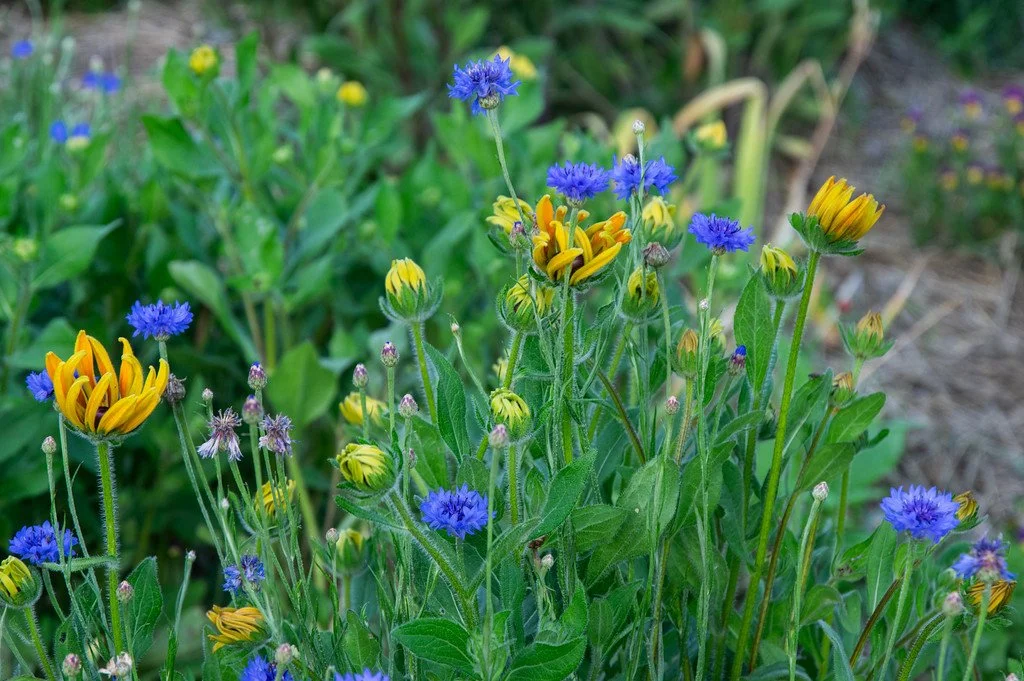
Flower garden ready to harvest, photo by Adam Ford
Farm News
This week the flower garden has exploded with blooms! The star of the show this week is Rudbeckia Hirta, which we planted several years ago. When we planted the seedlings in the spring, they flower in fall, and we expected the plants to winterkill, as they are considered a tender perennial hardy only to zone 8, which you would find in the southern mid-atlantic states. No chance of making it through our zone 4 winters! But somehow over the past few years these awesome flowers have not only reseeded themselves, but also consistently emerge in the spring from the overwintered root system, flowering in early-mid July. For folks who pick up at the barn, we hope you enjoy them and all the other flowers that come into bloom over the next few weeks. For anyone who may be new to our CSA, we have scissors and rubber bands available to harvest this complimentary thank-you for our CSA members. You may wish to bring your own jar of water to keep your bouquet fresh for the ride home. If not, just trim off a tiny bit of the stems when you get home and they should freshen right up in water. We love seeing how much joy this flower garden brings.
In addition to CSA, our farm provides vegetables for some really awesome community organizations. This summer we are able to send a truly impressive amount of vegetable each week to BROC Community Action in Rutland, whose mission is to “provide hope, opportunity, and a path forward out of crisis or poverty, so our neighbors and communities thrive”. We are also beginning to send a lot of vegetables to the Farmacy Project, managed by the Vermont Farmer’s Food Center, which makes CSA shares available to families of limited means whose doctors prescribe a CSA share to support their health. This week we will be bagging up over 60 pounds of pea shoots to send to the Farmacy project’s 250 CSA families. And those are just a couple of the amazing projects that we get to support by providing healthy food. We feel so lucky to have access to fresh and healthy vegetables for our family, and in our world of incredible complexity and inequality, it feels like a solid aspiration for all people to have access to good quality food that supports our health. It is through the efforts of many that it is possible for us to be a part of this web of community supporting itself.
Crop Report
Basil tops are especially beautiful and tender this week. For all of us who love sugar snap peas, they continue to be excellent. This may likely be the last week of peas, but the good news is that as they wrap up for the season we will likely be ready to begin harvesting tomatoes for next week. (Fingers crossed!) Our family has really been loving the beautiful early onions, especially sauteed along with fennel. Bok choi is looking amazing this week.
Sadly we will have a lull in carrots periodically for the next few weeks. We plant several seedings of carrots, beginning in February in our high tunnels and all the way through early July for the late fall harvested carrots. This spring, several of those plantings were completely gobbled by slugs as their first leaves emerged…what a bummer for this crop which is usually such a staple for us, and such a crowd pleaser with you all! Our later plantings have great germination and we are going to keep an especially close eye on them, and start harvesting them as soon as they are large enough.
Have a great week,
-ESF Team: Kara, Ryan, K2, Vanessa, Taylor, Katie, Galen, Leah, Natalie, Cindy, Georgia, Amelia, and Hannah (and S.ky and Soraya)
It’s cucumber season! So we put tzatziki on most meals, yum…
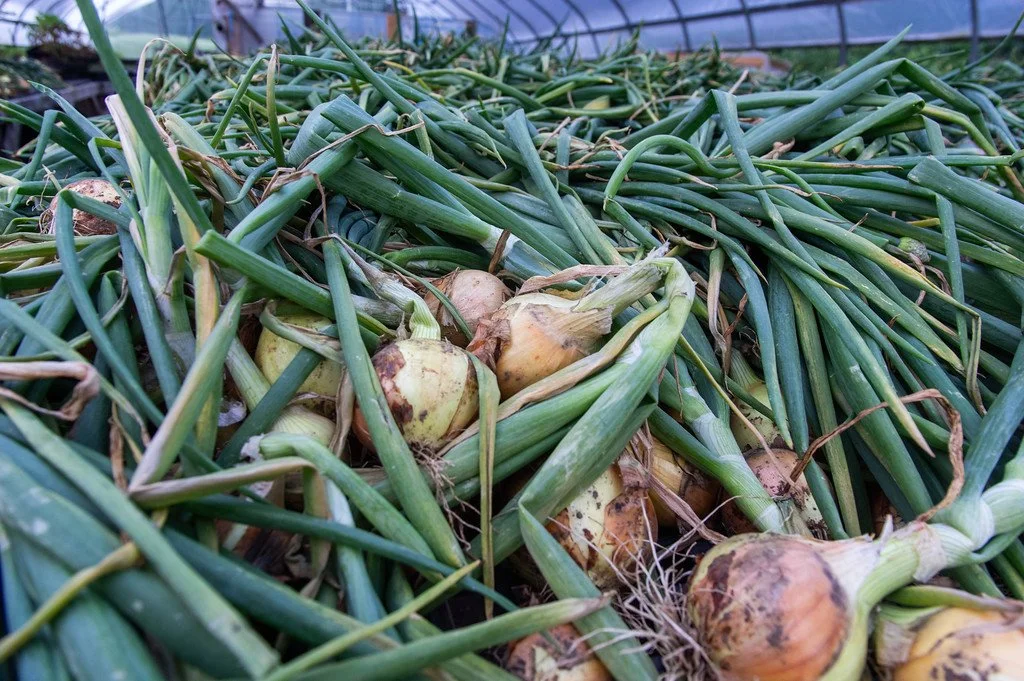
onions drying in the prop house, photo by Adam Ford (Onion tip: we will be curing these for a few weeks, so for now, if you get onions, keep them in your fridge if you aren’t going to us them within a week. After several weeks of curing in our prop house, then they will be ready to sit out on your counter, and you will be able tell the difference with their dried out skins that will develop during curing.
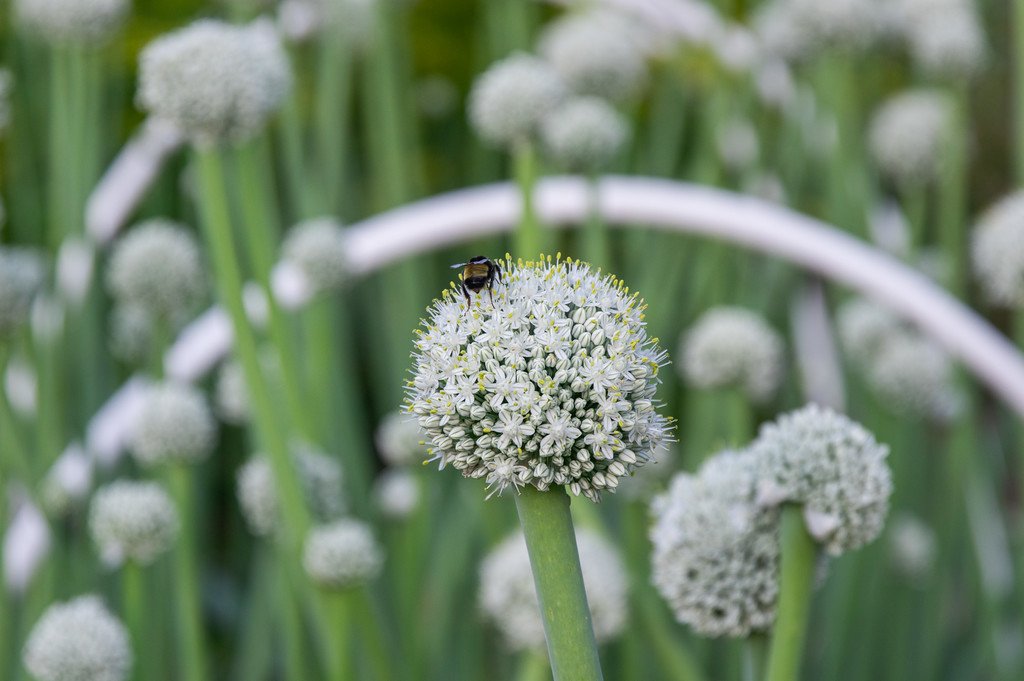
Onion flowers to grow seed for next year, photo by Adam Ford
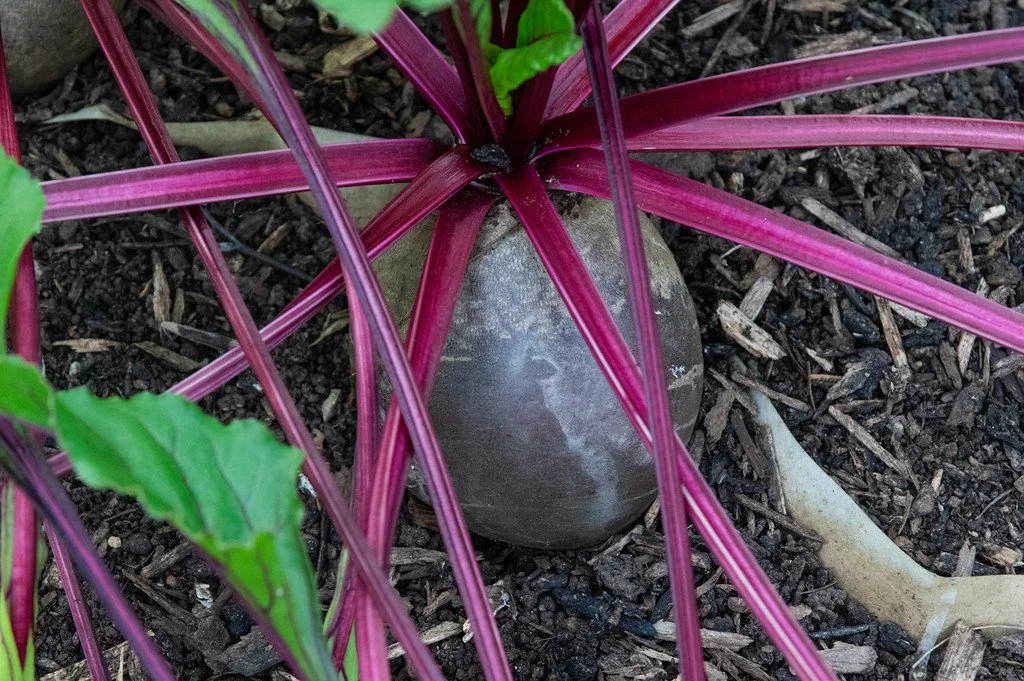
The beets are awesome, photo by Adam Ford (Beet tip: Use the greens and the roots. The greens are like chard. A favorite side dish these days is to chop the root up into very small chunks, roast those with salt and olive oil. Separately sauté the greens with garlic, salt and oil oil, and then mix the roasted roots together wit he sauteed greens… They’re delicious on their own, or in pasta, on pizza, grilled cheeses, etc.)
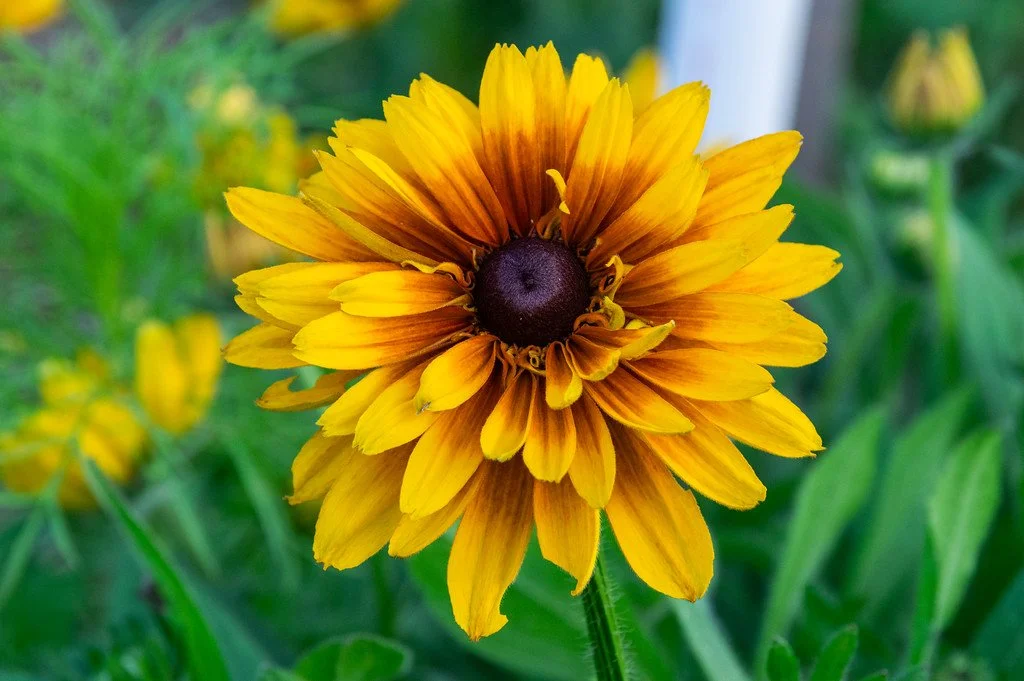
Beautiful rudbeckia in the flower garden, photo by Adam Ford
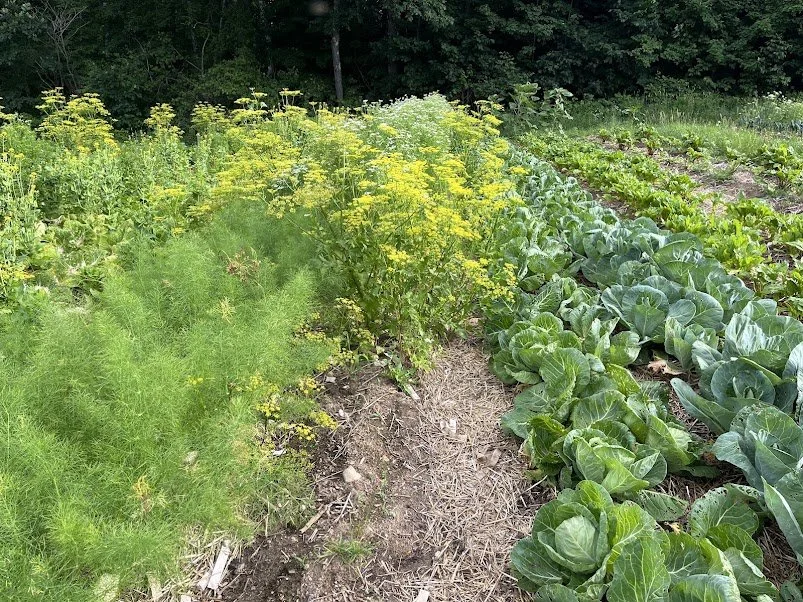
Fennel, flowering parsnip and cilantro, and cabbage. All these flowering plants bring a diversity of beneficial insects right into our crop fields, photo by Ryan
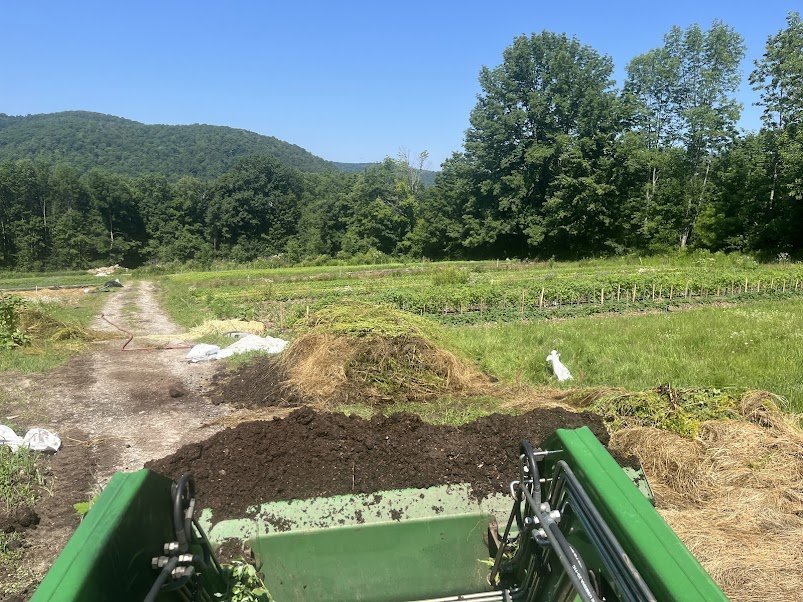
When I’m able, I use the tractor to mix horse manure, farm residues, and spoiled hay to make compost for our soil, photo by Ryan
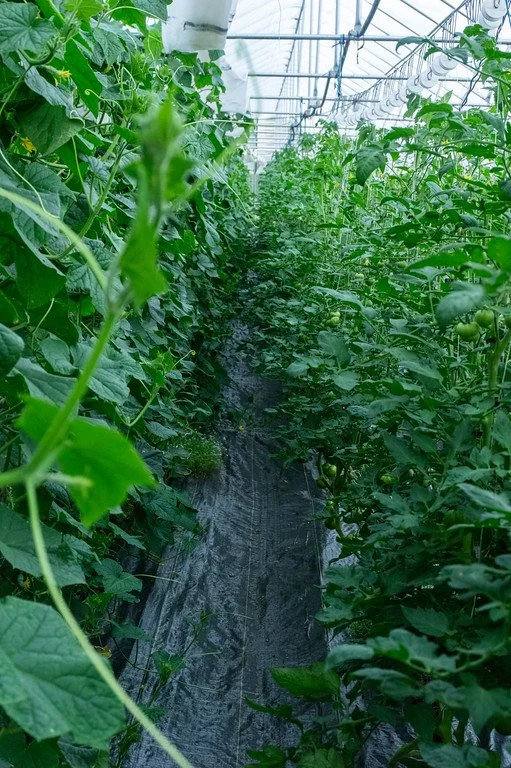
The cucumber and tomato plants are taller than we are, photo by Adam
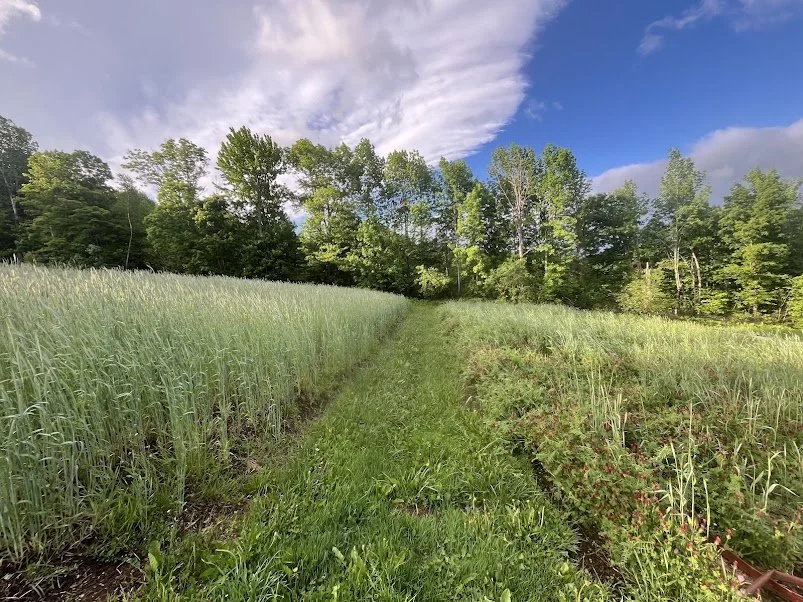
Earlier this month, this photo shows a rye cover crop on the left, and rye/vetch/crimson clover on the right, photo by Ryan
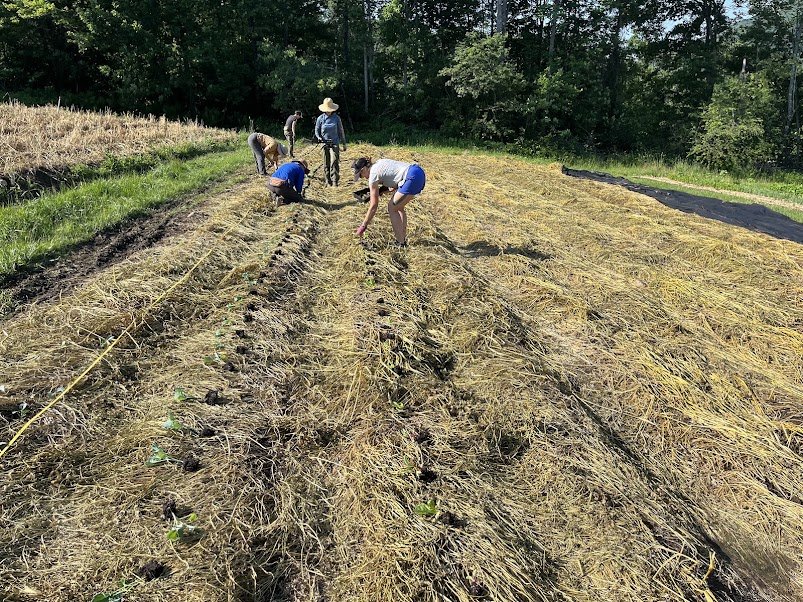
Our team plants fall kale, chard, scallions, fennel, and lettuce through the cover crop residue. UVM extension is helping us take soil samples of these fields through the growing season to learn how much we can reduce the organic fertilizer inputs as a result of the legume cover crops, phot by Ryan
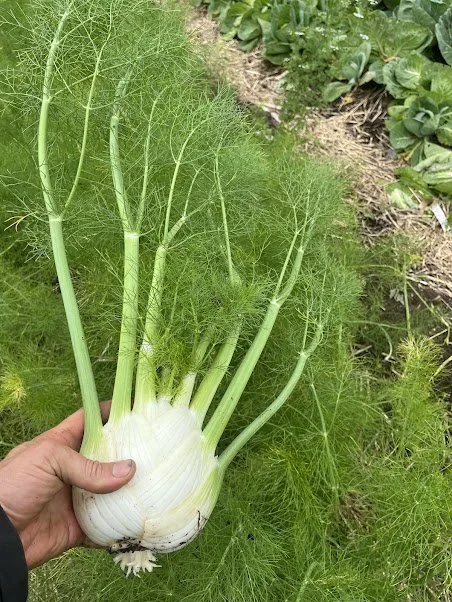
I love the fennel, especially munching on the raw stems. Photo by Ryan
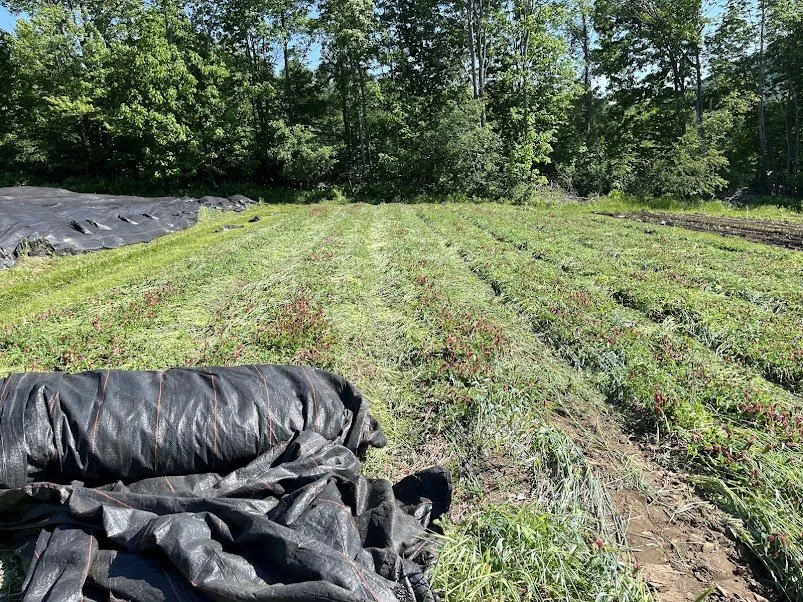
Rye/vetch/crimson clover is flattened, ready to tarp to create a mulch for the subsequent crops. Photo by Ryan
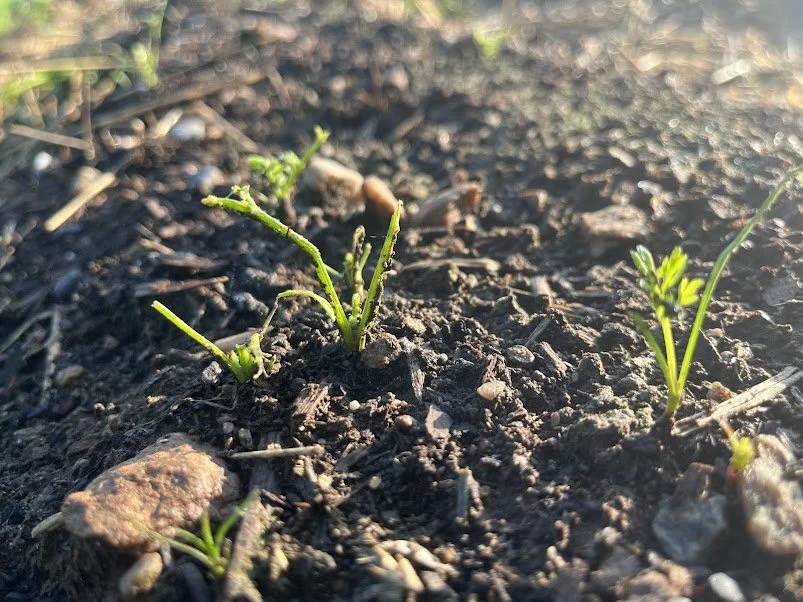
We love our heavily mulched, reduced-tillage growing systems for so many reasons, but slugs eating carrot seedlings is a major problem to solve. Photo by Ryan

After hours, photo by Adam Ford