
11th Week of the Spring CSA Season: Week of May 13th
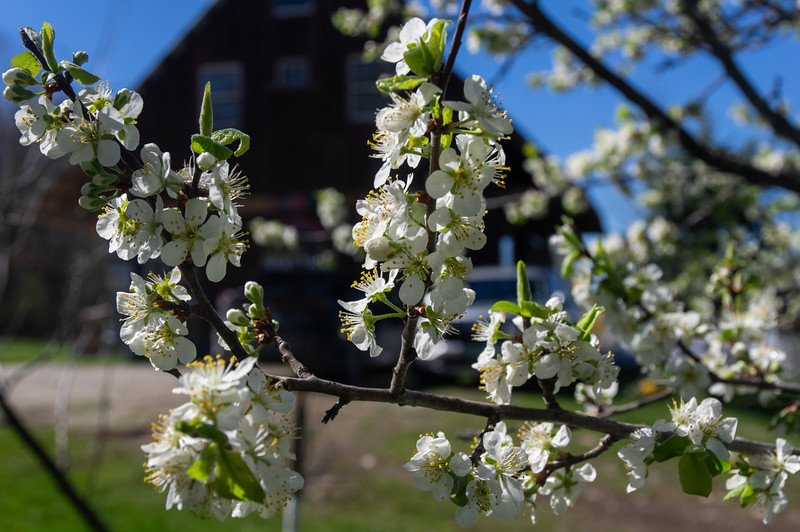
I really love all the fruit tree flowers this time of year, photo by Adam Ford
This Week’s Availability
This week we will have:
Greens: spinach, baby lettuce, rainbow chard, pea shoots, mesclun mix, bok choi, baby kale
Roots: fresh red radishes, red beets, yellow beets, watermelon radish, yellow potatoes*, daikon radish, parsnips
Alliums: scallions, green garlic
Herbs: parsley
Fruiting crops: frozen heirloom and beefsteak tomatoes, Painted Mountain grain corn
Miscellaneous: rhubarb
some plants: We will start having some plants for your garden available as CSA items. We don’t usually make them available this early, but we have a few cold-tolerant varieties that are ready if you are eager to get a few things in the garden. A much wider variety will become available in 2 more weeks.
*Potato Note: The rest of the storage potatoes are getting hard to sort through for zero blemishes on them. We will start to pack a larger amount of potatoes in the packed bags, and we invite you to take 2 pounds of potatoes at the barn if you pick up here, in hopes that this extra amount will account for any parts you have to cut off. While we prefer to be able to send out impeccable quality vegetables year-round, we also experience making the most of storage vegetables as part of our efforts to address the different ways we can address our climate impact. Most estimates have food waste as contributing 5%-10% towards global greenhouse gas emissions, so in our home, we scrounge every little bit of edible food by cutting off bad spots.
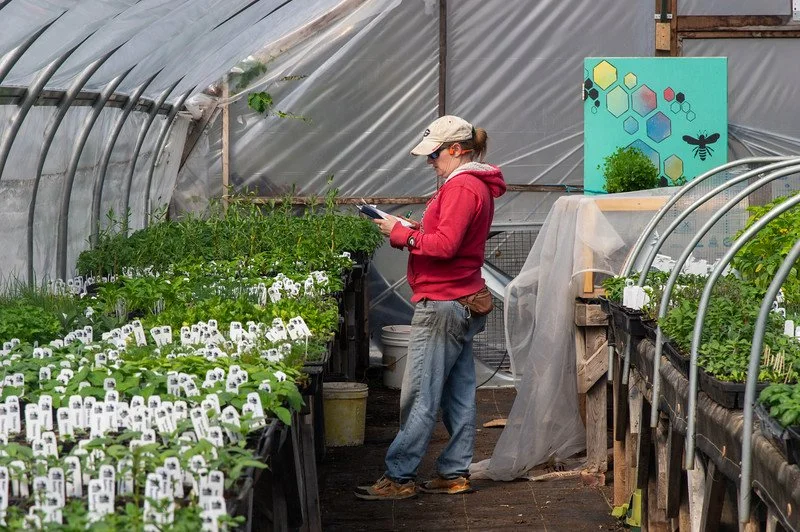
K2 double, triple, quadruple checking the inventory on the pre-ordered plants… It’s quite a process to set up our plant pre-order system and nail it each year, but with lots of spreadsheets, diligence, and attention to detail, it seems to work year after year. Ryan often questions why I continue this project because it takes so much oversight, but I LOVE IT. I love everything about it… The baby plants, trying new plants, dialing in the timing, and most of all, imaging all of your gorgeous home gardens that bring so much joy and nourishment to so many home, photo by Adam Ford
Farm News
The propagation house is finally beginning to see more plants leave. This week we seeded the last of the trays that will head out into gardens as starts, along with brussels sprouts for the farm fields and another round of flowers for the pick-your-own garden. This week marks a subtle shift that happens every year in the spring, where the pace of transplanting gradually overcomes the pace of seeding and our propagation house begins to empty out.
We also spent time this week working through the flower garden, pulling dandelions just as they were beginning to bloom. Unlike many of our vegetable beds, that space is a long-term planting of annuals, bulbs, and perennials all woven together, so we cannot simply “reset” the soil with cultivation once weeds become established. A dandelion allowed to settle in there can become a years-long companion.
Over time, as we have shifted more of our vegetable production toward mulch-based systems, we have dramatically reduced the amount of tillage on the farm. The change has improved soil health and reduced many of the fast-growing annual weeds that thrive in freshly disturbed ground. But every farming practice creates its own ecology, and with less tillage have come different plants asking for our attention.
Years ago, when beds were rototilled multiple times each season, dandelions hardly registered as weeds to us. A seed drifting into a field would rarely have enough time to mature before the next cultivation pass buried it back into the soil. Now, with fields tilled only once or twice a decade, a dandelion seed landing beside an onion seedling in May has a real chance of becoming a deeply rooted plant by the following spring. Left alone, it will scatter thousands more seeds into the field the year after that.
So May has become dandelion season here on the farm. For a brief window each spring, we walk the fields looking for flashes of yellow among the crops, pulling plants before they go to seed. It is also the one time of year when we become especially attentive about mowing the grassy swales around the fields, trying to reduce the number of seeds drifting inward on the wind.
In this week’s share, rhubarb returns for another stretch of spring baking, alongside beautiful bok choi harvested from the outer rows of our cucumber beds in the high tunnel. The coming week should bring a satisfying stretch of transplanting: peppers and tomatoes into the high tunnels, early zucchini tucked beneath row cover outside, celery, and the last of the onions.
Have a wonderful week,
-ESF Team: Ryan, Kara, K2, Vanessa, Taylor, Katie, Galen, Leah, Natalie, Cindy, Georgia, Amelia, and Hannah (and Sky and Soraya)
Last week a friend asked me how I like to eat daikon. My preferred way to eat daikon is fermented: grated with fresh ginger and salt to create a fun addition to salads and wraps, or in a batch of kimchi. But then I remembered this recipe above, given to us by a CSA member a couple years ago. If you check out the recipe, you will see I improvised with additional cilantro, but I imagine you can do the same improvisation with parsley.
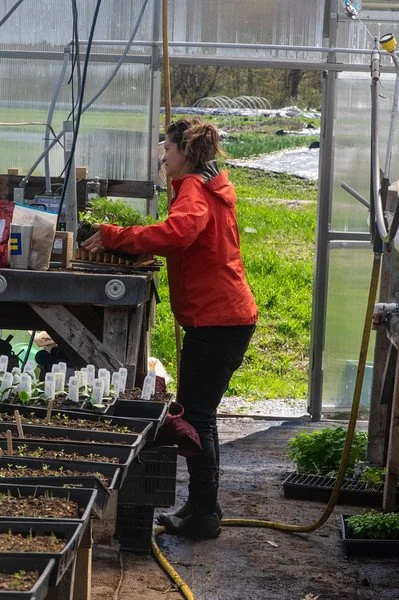
Kara struggling with the plug popper to pot up some plants, photo by Adam Ford
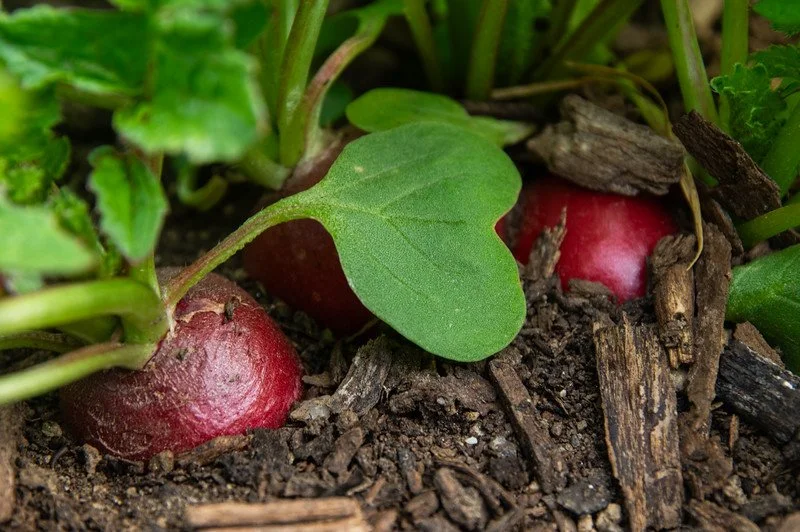
radishes in the tunnel… a long-awaited spring garden treat for some (but not for me! my favorite joke when people ask me what I do with radishes is “remove the rubber band and toss them gingerly in the compost!” ha, just kidding… I do find a fresh red radish to taste like a crisp and juicy burnt rubber band, but if you use the greens in a schzug, and roast the radishes whole with olive oil and salt, they become these delightfully textured, sweet flavor bombs, photo by Adam Ford
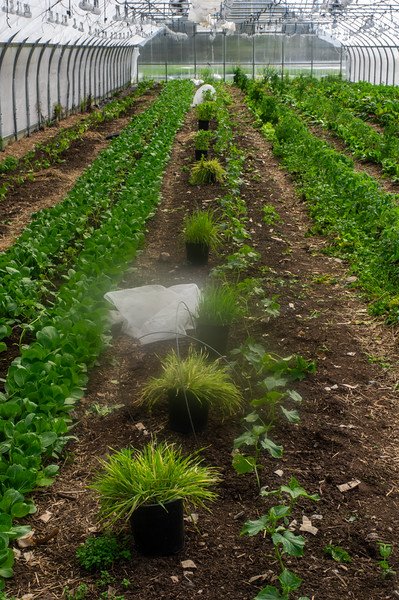
setting out our aphid plant nursery to provide a food source for the wasps, photo by Adam Ford
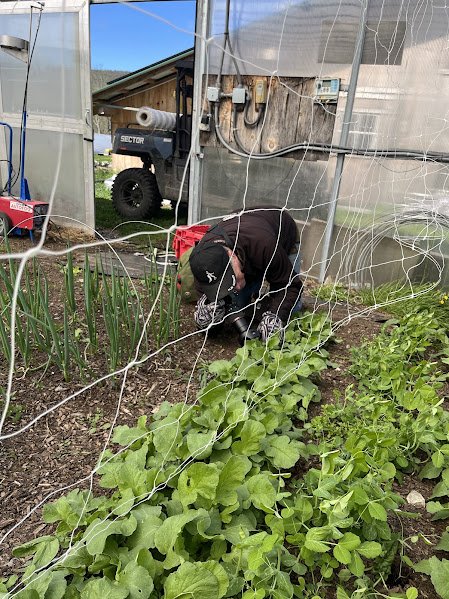
Here is Adam Ford taking the previous radish picture, photo by Ryan Fitzbeauchamp
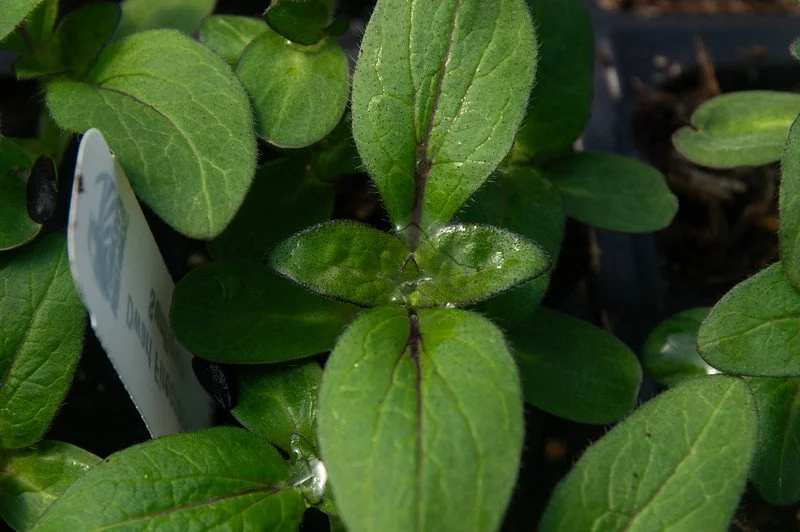
sunflower starts, photo by Adam Ford
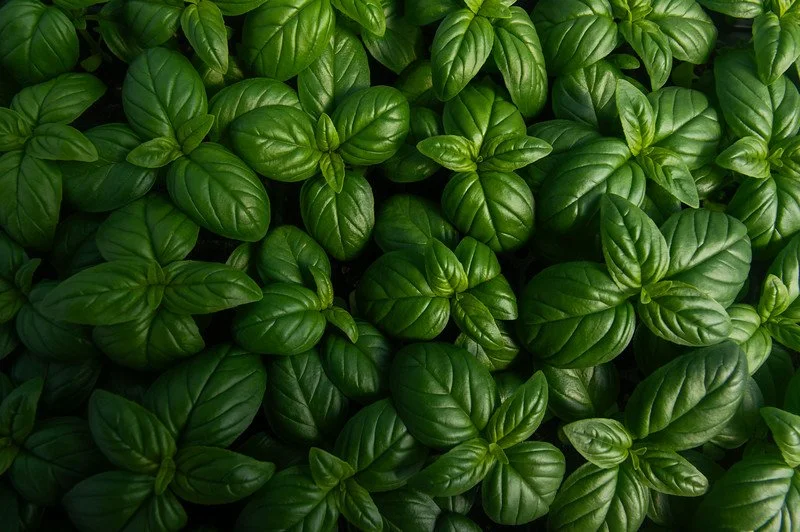
basil starts, photo by Adam Ford
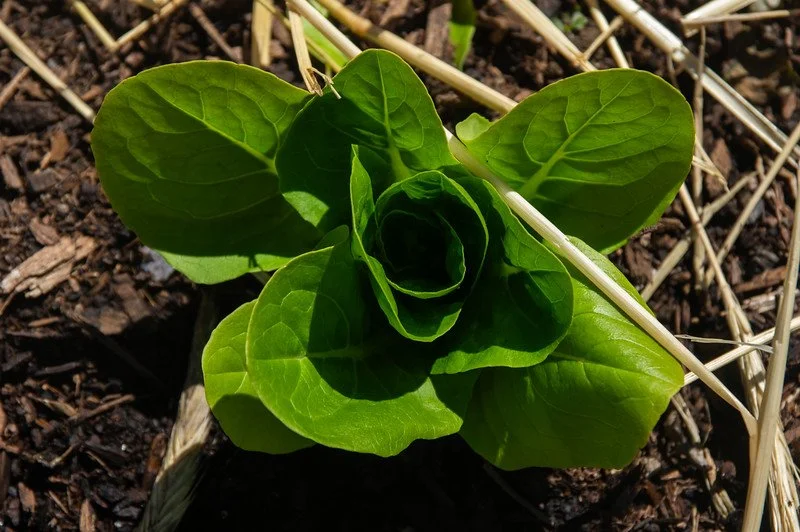
head lettuce transplant, photo by Adam Ford
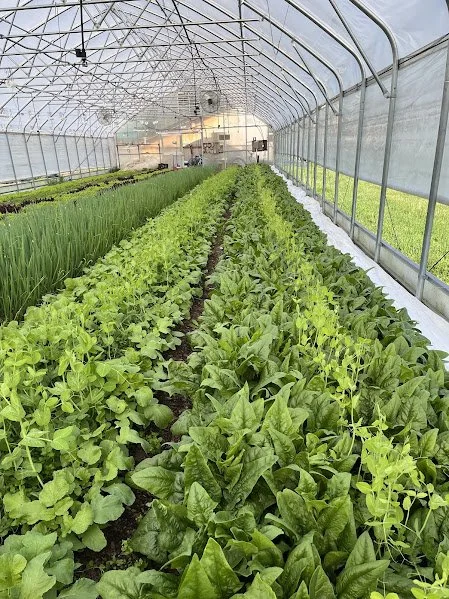
These are the two sugar snap pea rows, nestled in a spinach row and a red radish row. We will continue to harvest the spinach and radishes out, and once they are gone the peas will have all that space to themselves, photo by Ryan
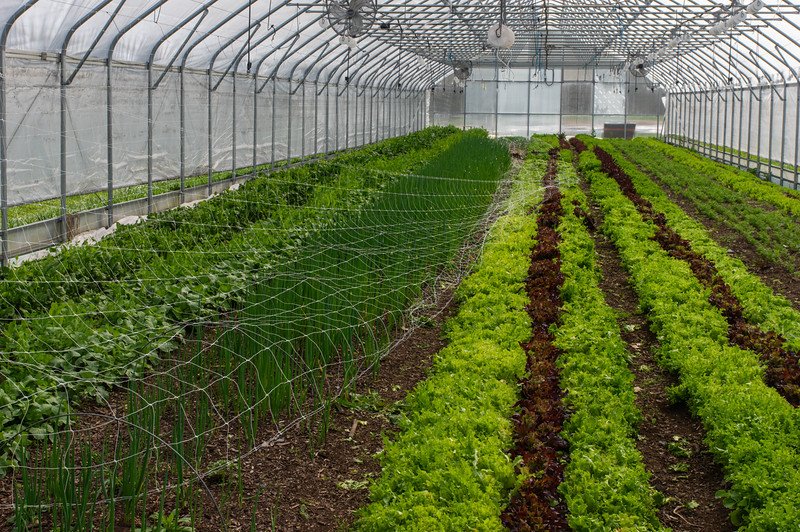
trellis going up, and gorgeous beds of baby lettuce, photo by Adam Ford
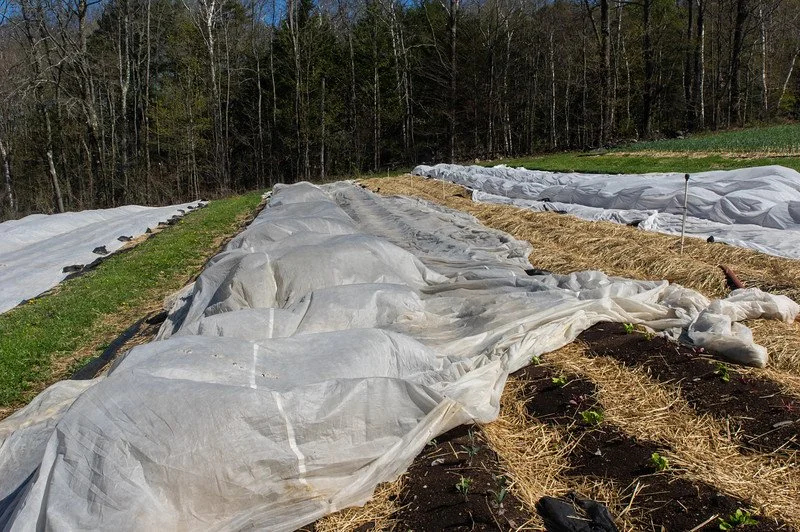
transplants tucked in under row cover to protect from cold and pests, photo by Adam Ford
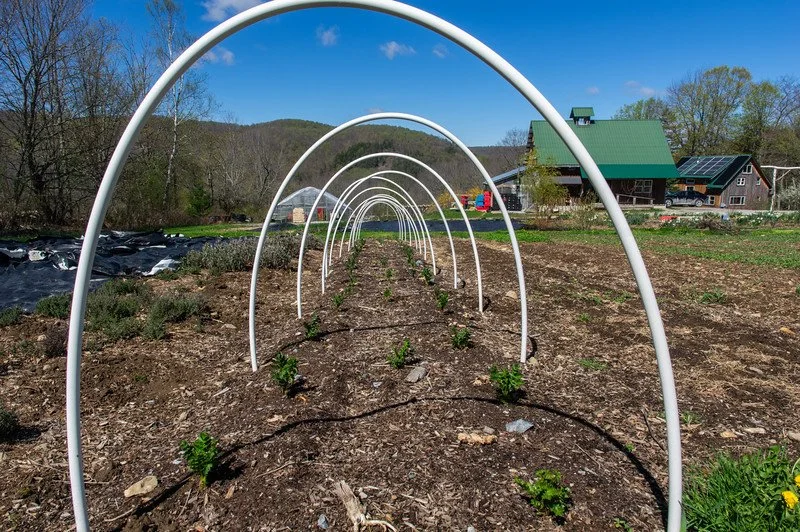
those little greens are tops of parsnips and onions that we planted this spring to grow for seed saving, photo by Adam Ford
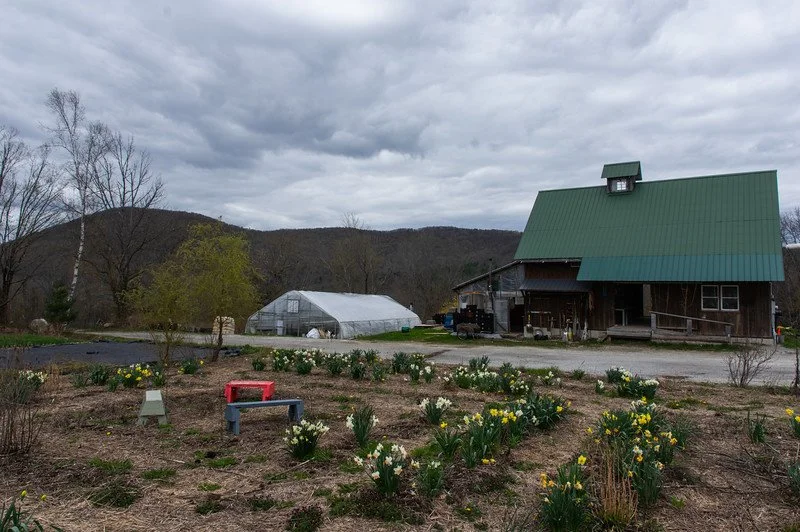
flower garden eagerly awaiting annual planting, photo by Adam Ford
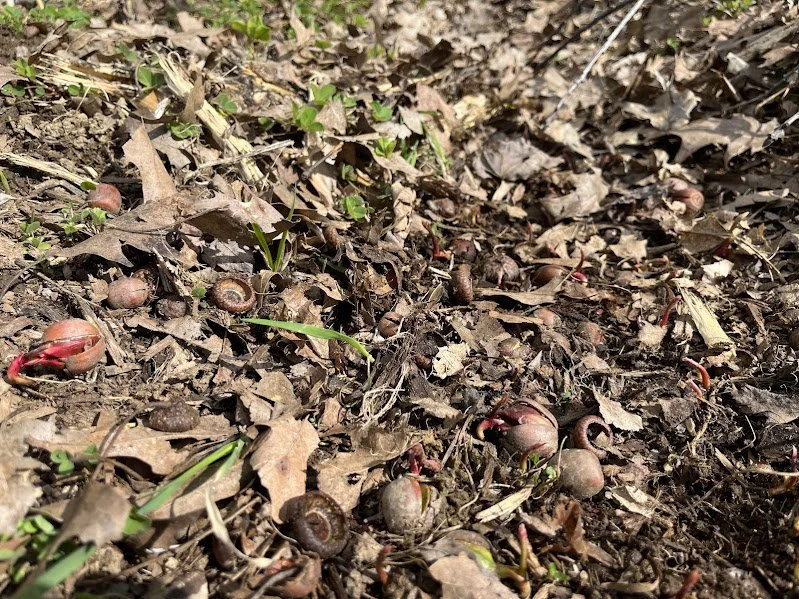
I love seeing the acorns sending out sprouts an imagining future magestic oaks… last year we collected a bunch of acorns and planted them to be able to spread oaks around the farm… trees that won’t mature until well after our lifetime, photo by Ryan
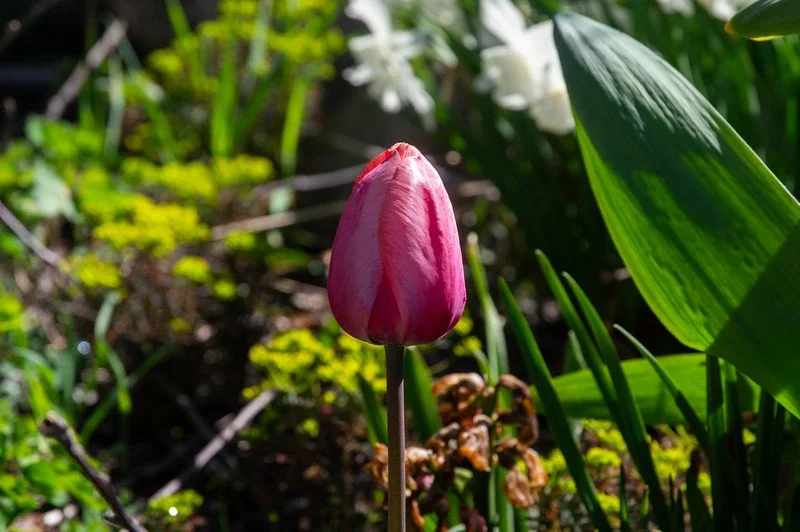
tulip! photo by Adam Ford
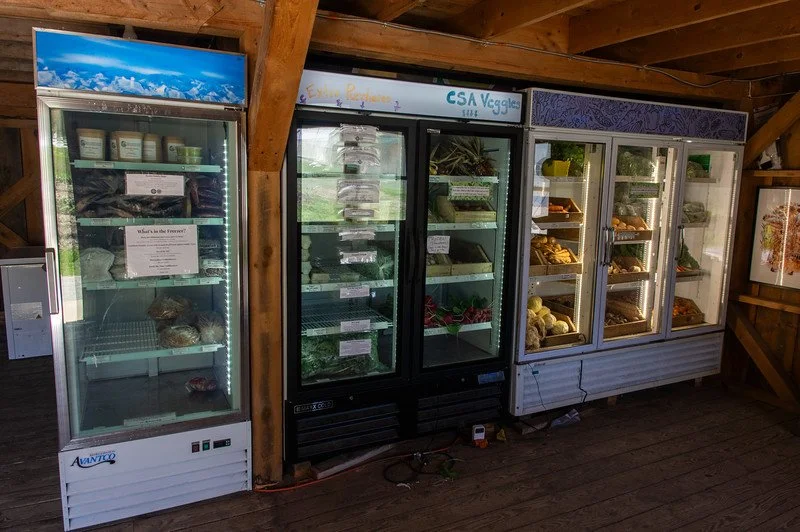
CSA display and other farm products at the barn, photo by Adam Ford
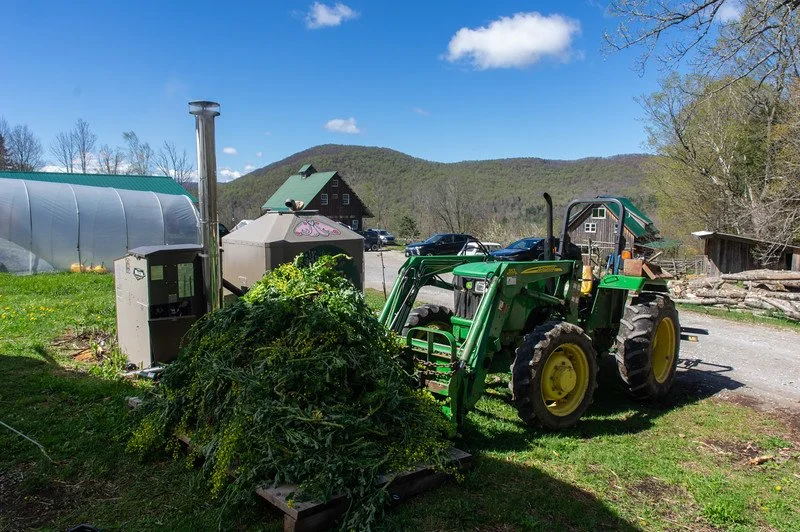
removing harvested kale plants, photo by Adam Ford
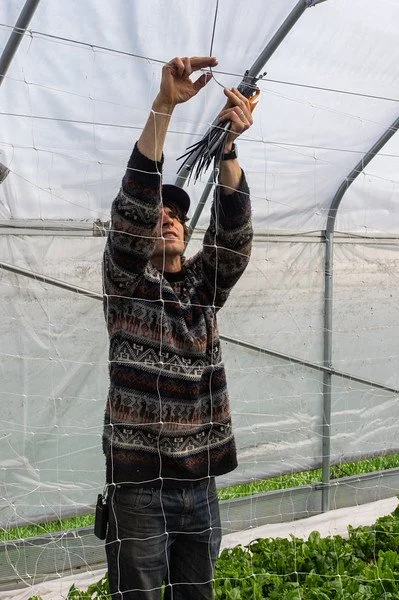
Ryan getting the sugar snap pea trellis up so the plants can climb. Last year the plants were so heavy, they pulled the trellis down in one section, so this year, Ryan is adding significantly more support to keep them up, photo by Adam Ford
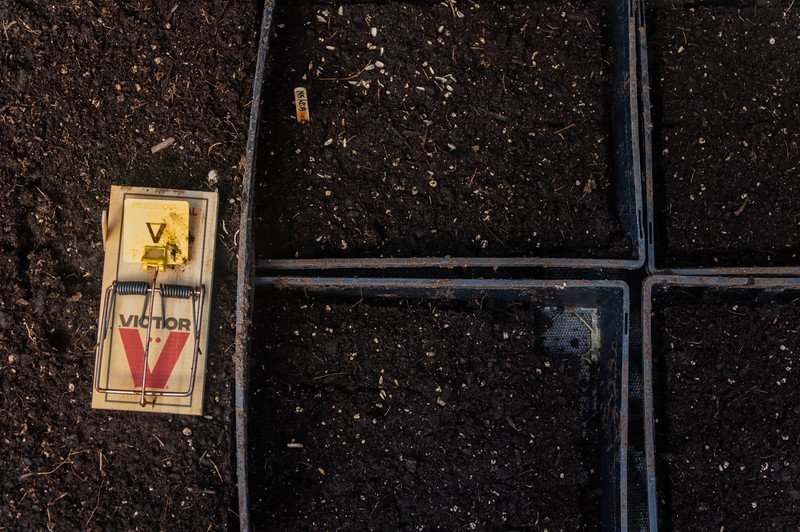
sneaky little rodents dig up cucurbit seeds, requiring lots of traps in the prop house, photo by Adam Ford
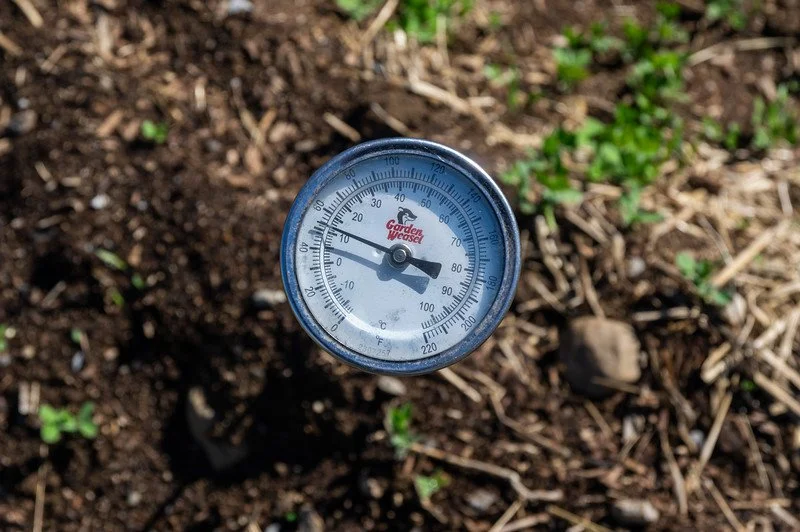
we check soil temp to gauge how the transplants will do in the field, photo by Adam Ford
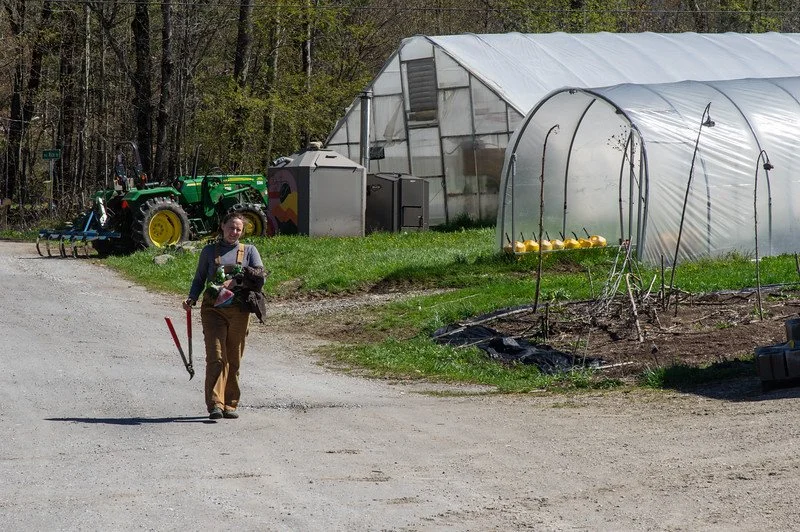
Stickney returning the loppers after removing the woody stalks of the kale plants from the tunnels, photo by Adam Ford
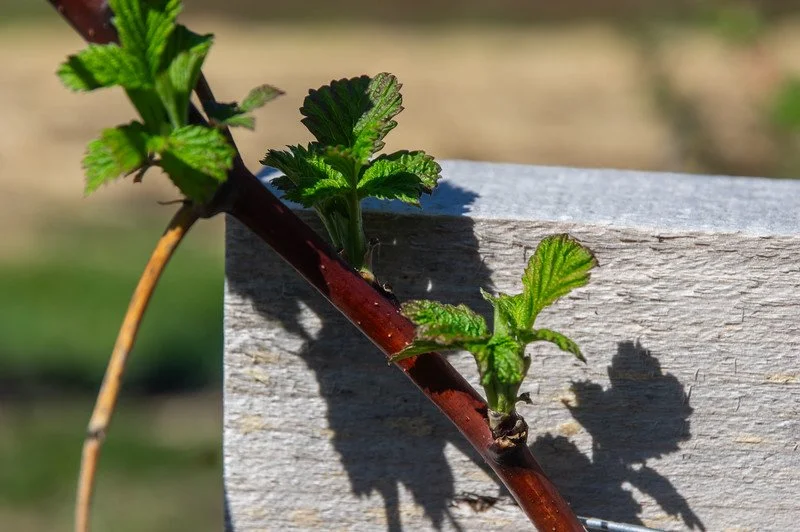
we may be switching from PYO strawberries to PYO blackberries, photo by Adam Ford
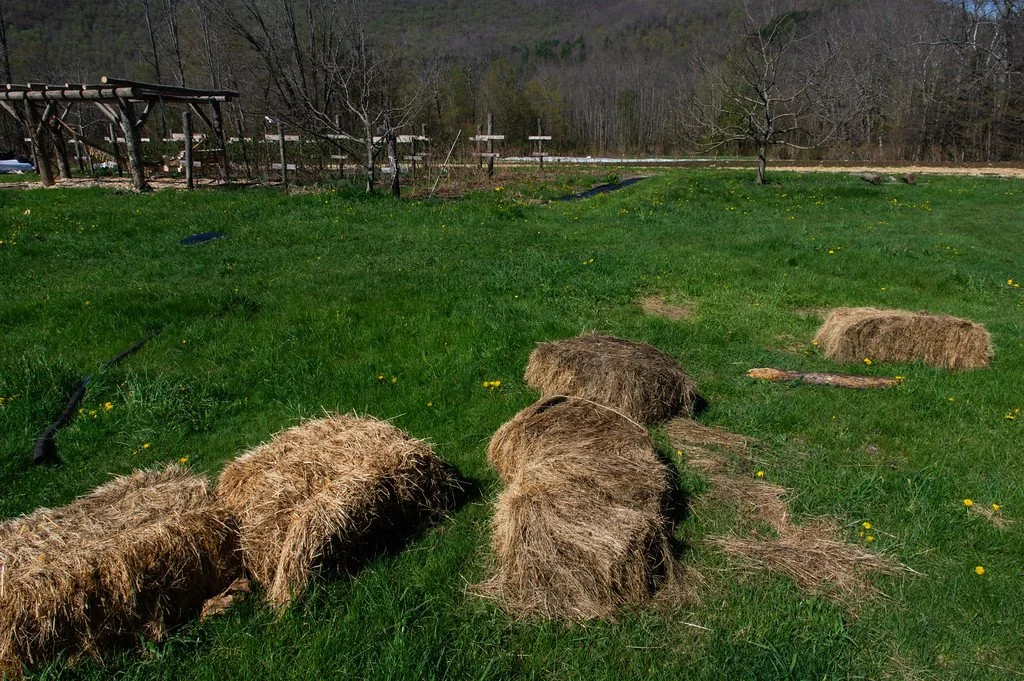
multi-use mulch: their first life is either to hold plastic in place for a pool at the end of a slip and slide, or stacked up to provide a target for pitching practice, and then eventually to the garden they go! photo by Adam Ford
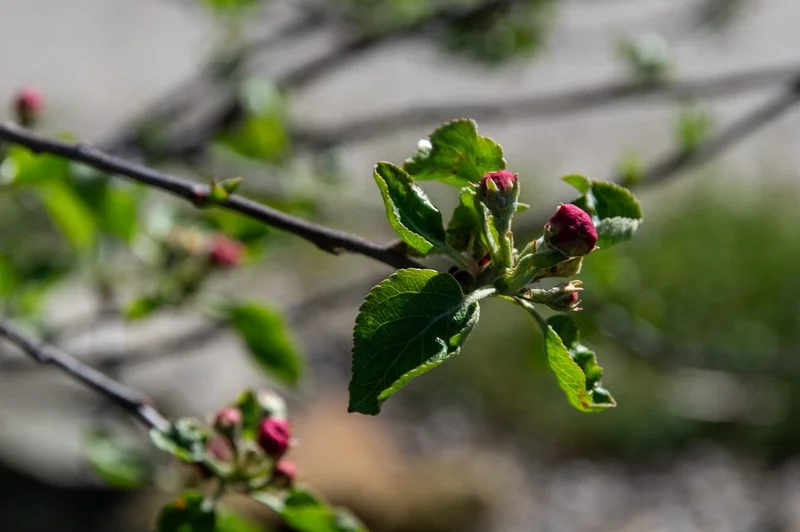
more fruit buds! photo by Adam Ford
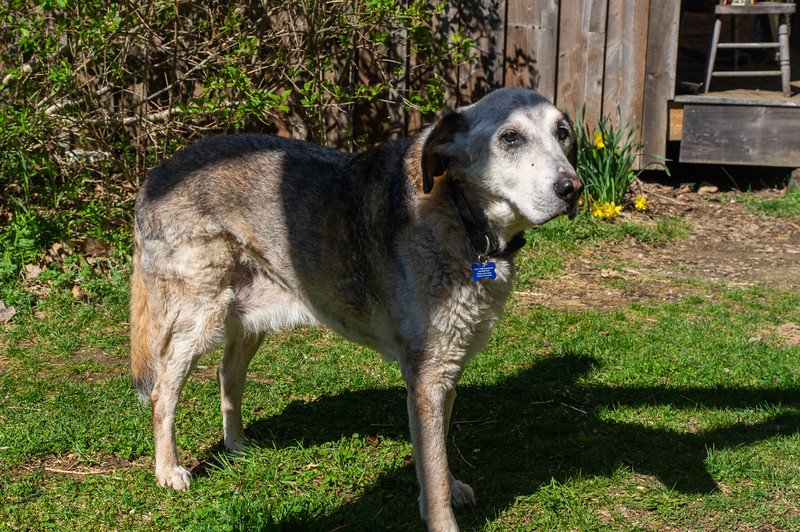
Echo still follows us around in the fields, keeping track of everyone, photo by Adam Ford