
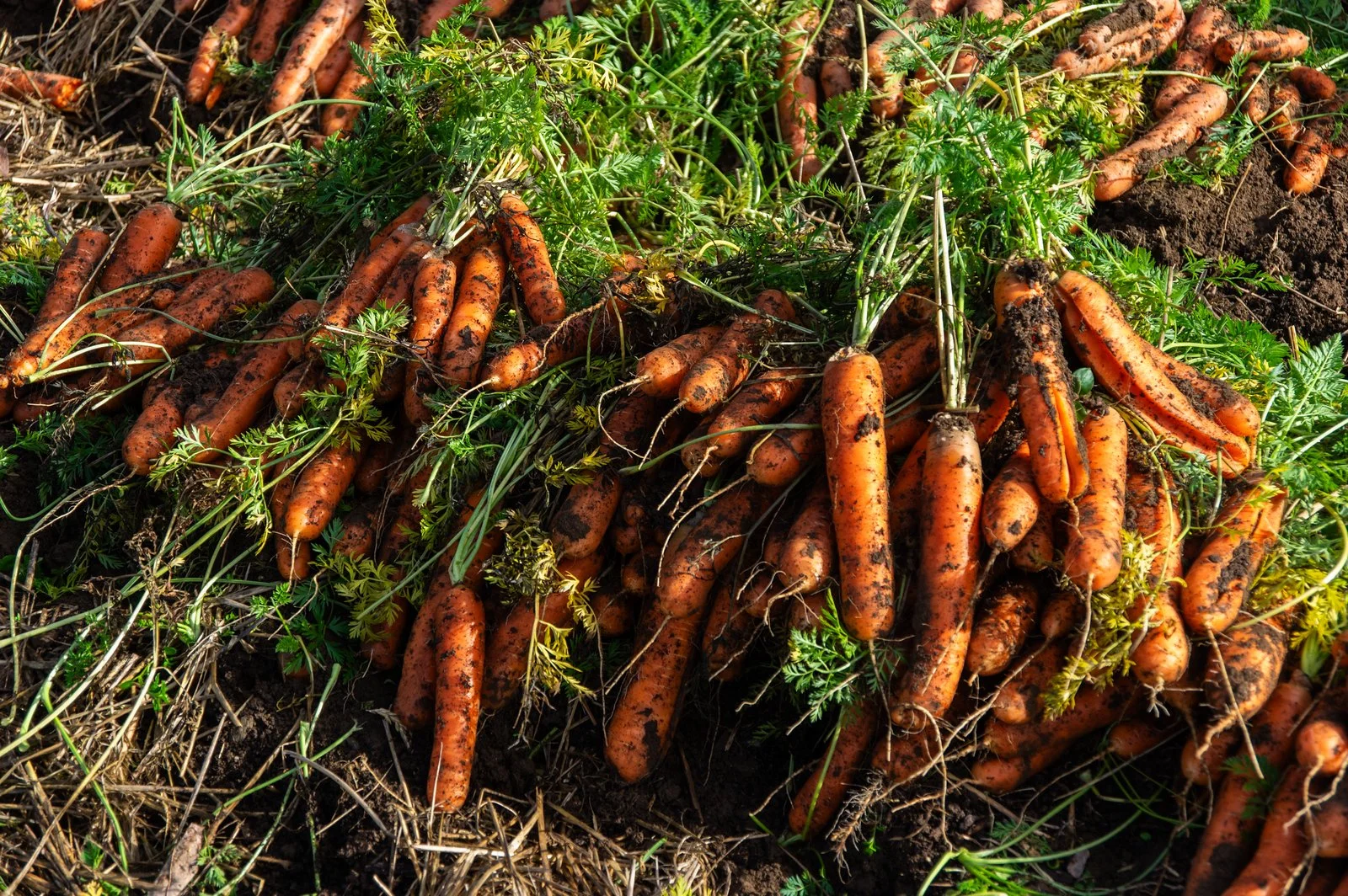
Harvesting lots of beautiful carrots, photo by Adam Ford
This Week’s Availability
This week we will have:
Greens: baby lettuce, green curly kale bunches, lacinato kale, rainbow chard, green cabbage, giant green cabbage, bok choi, brussels sprouts, green leaf lettuce, spinach, mesclun mix, baby arugula
Roots: salad turnips, red potatoes, yellow potatoes, red beets, yellow beets, carrots, baby carrots, parsnips, watermelon radish, mini daikon radish, large daikon radish, Gilfeather turnips, rutabaga, mini mixed root bags
Alliums: yellow onions, red onions, sweet onions, garlic bulbs, shallots, leeks, seed garlic
Herbs: parsley, cilantro
Fruiting crops: butternut squash
Miscellaneous: fennel
Crop Report
Have you had the salad turnips lately? They’re so good this fall. You can literally eat them like an apple. The bok choi is exceptional as well…so many good veggies for a stir fry this time of year.
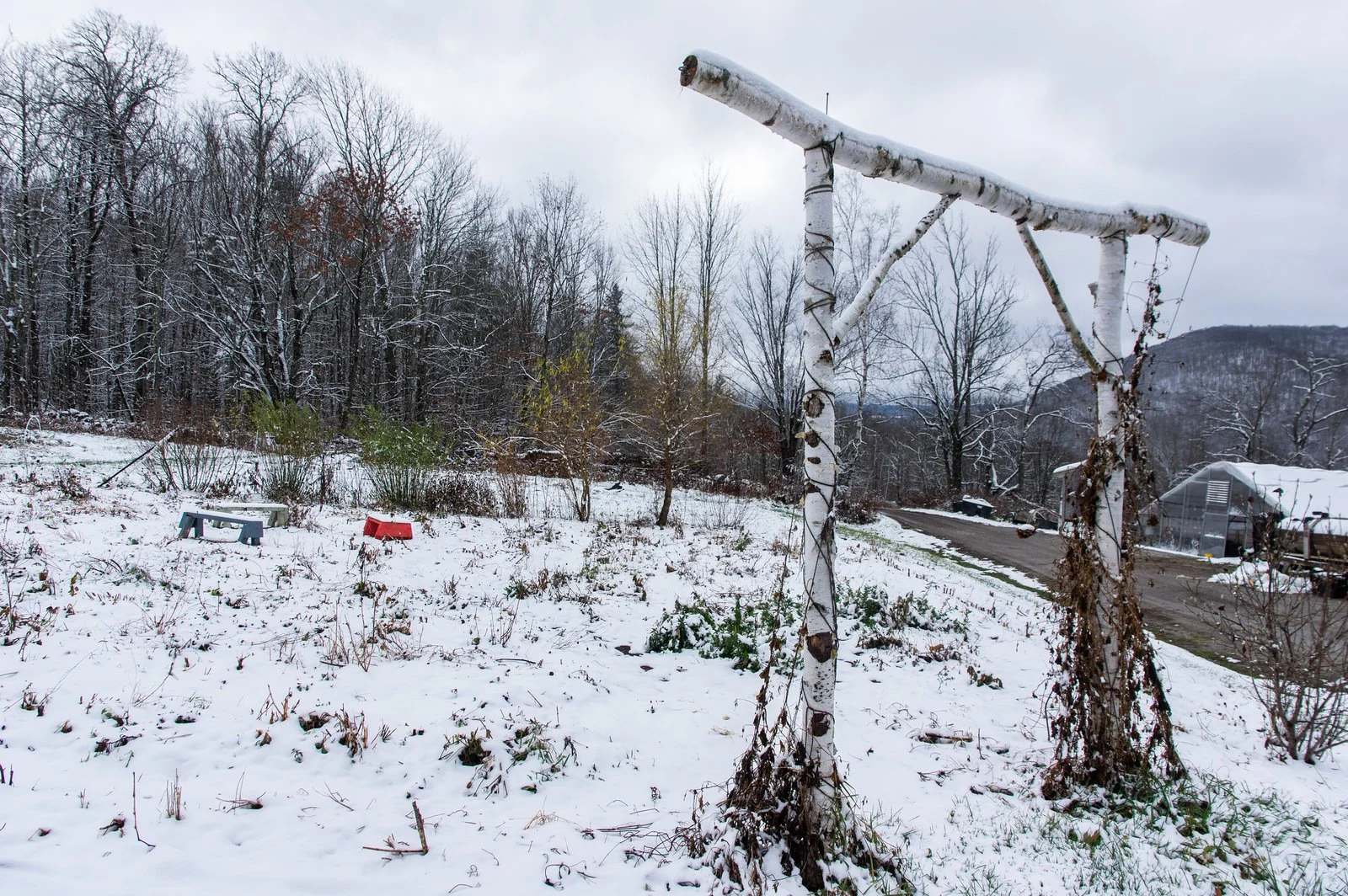
The first snow, photo by Adam Ford
Farm News
This week we collected many soil samples to mail out for analysis. Most of these samples are funded through an ongoing research project that’s being run by the Pennsylvania Association for Sustainable Agriculture (PASA), called the Soil Health Benchmarking Study. The goal of the study is to perform a broad analysis of soil from many farm fields over time, while also documenting the soil management practices of those farms. In so doing, the project aims to help farmers understand the health of their own soils while also developing a broader and farmer-driven understanding of agricultural management practices that can improve soil health across different soil types and production systems. It is neat to be a part of this project!
The particular soil testing PASA does for this project is much more than a traditional chemical analysis of soil (which for a long time was the extent of soil lab analysis). In reality, the ability of a soil to grow healthy crops depends not only on the chemistry of that soil, but also the physical structure of the soil and the biological activity of the soil. These tests include both physical and biological lab analysis to give a more complete view of how the soil is functioning. For example, these tests measure how well the soil can hold up to a pounding rain before the soil particles are smashed and washed away. They also measure the rate of respiration of the soil, which gives an indication of how much microscopic life is cycling in the soil ecosystem.
All of the fields we’ve sampled for the past two years for the Soil Health Benchmarking Study have scored very high on the physical, biological, and chemical metrics for soil health. This is rewarding to see, especially because the biggest motivation for us to grow the fertility of this soil came from our early years of farming this land, where we saw a degradation of the soil as a result of an overreliance on intensive tillage. It is rewarding to see through the lens of sophisticated lab analysis what we can also see with our own observation: that our soil is physically resilient, biologically active, and very good at growing healthy crops under a wide variety of weather conditions.
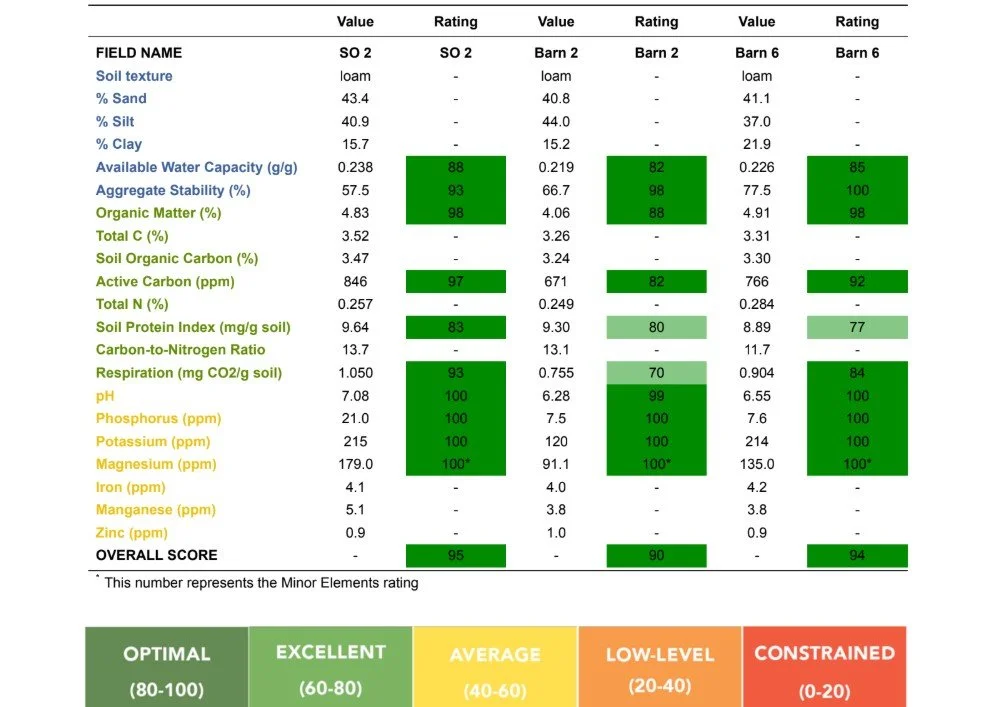
These color-coded ratings from our Soil Health Benchmarking Study show very healthy soil across different fields of our farm.
Have a great week,
-ESF Team: Kara, Ryan, Vanessa, Taylor, Katie, Galen, Leah, Natalie, Cindy, Amelia, Morgan, Kim, Hannah, and Grandpa Jim the delivery guy (and Sky and Soraya)
Tried this one tonight, and it’s a winner.
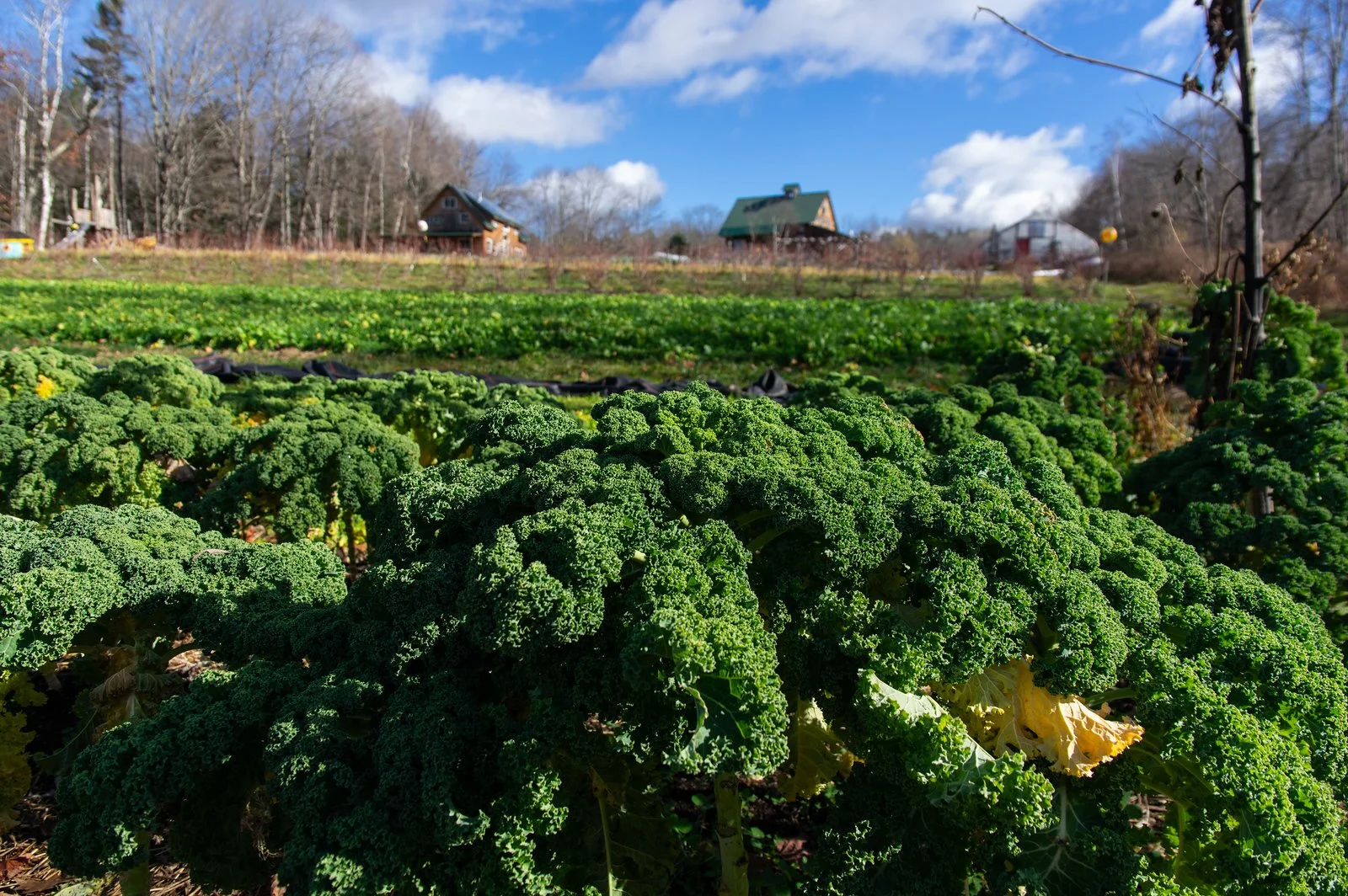
Outdoor kale, photo by Adam Ford
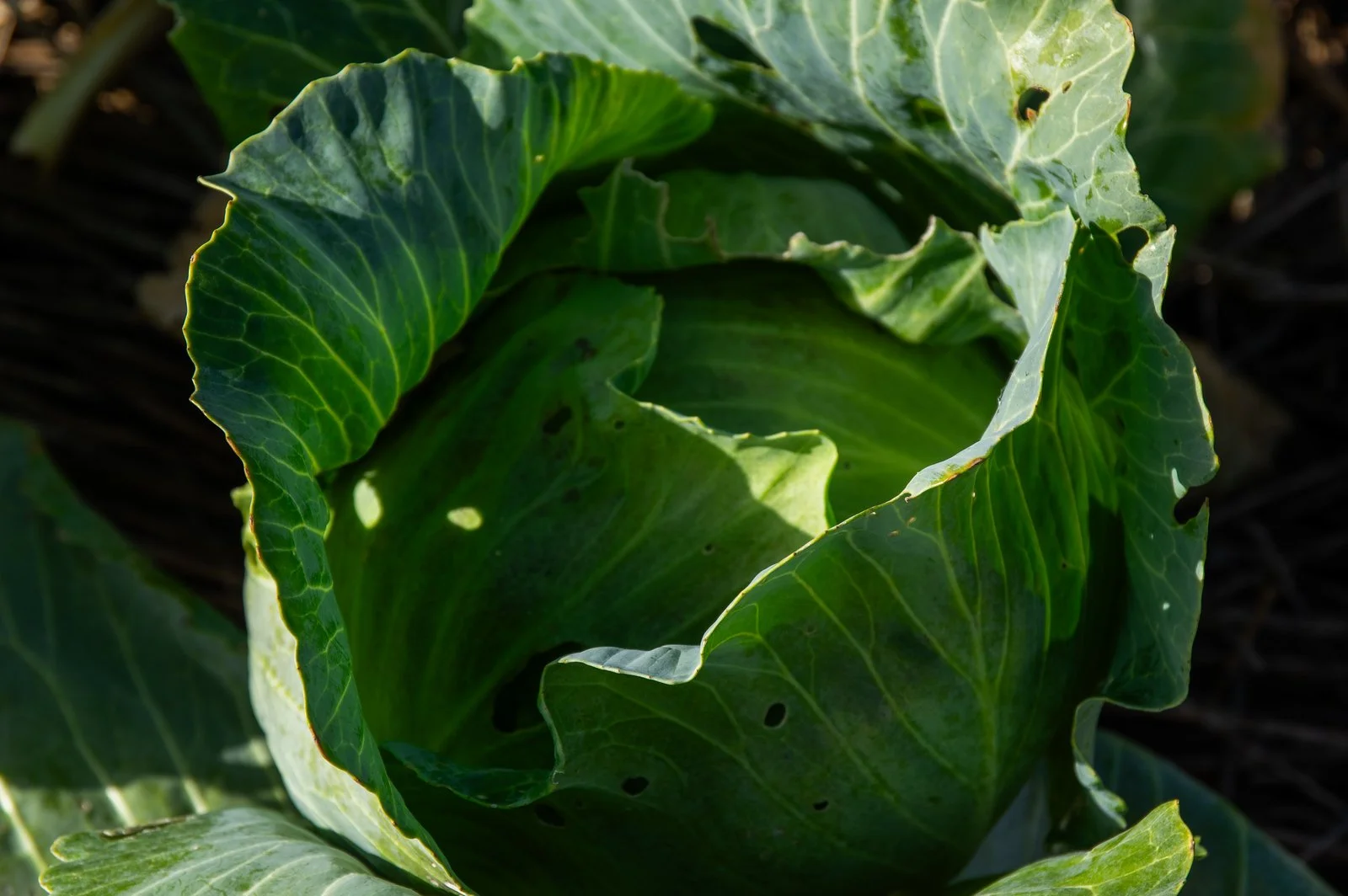
Beautiful cabbage, photo by Adam Ford
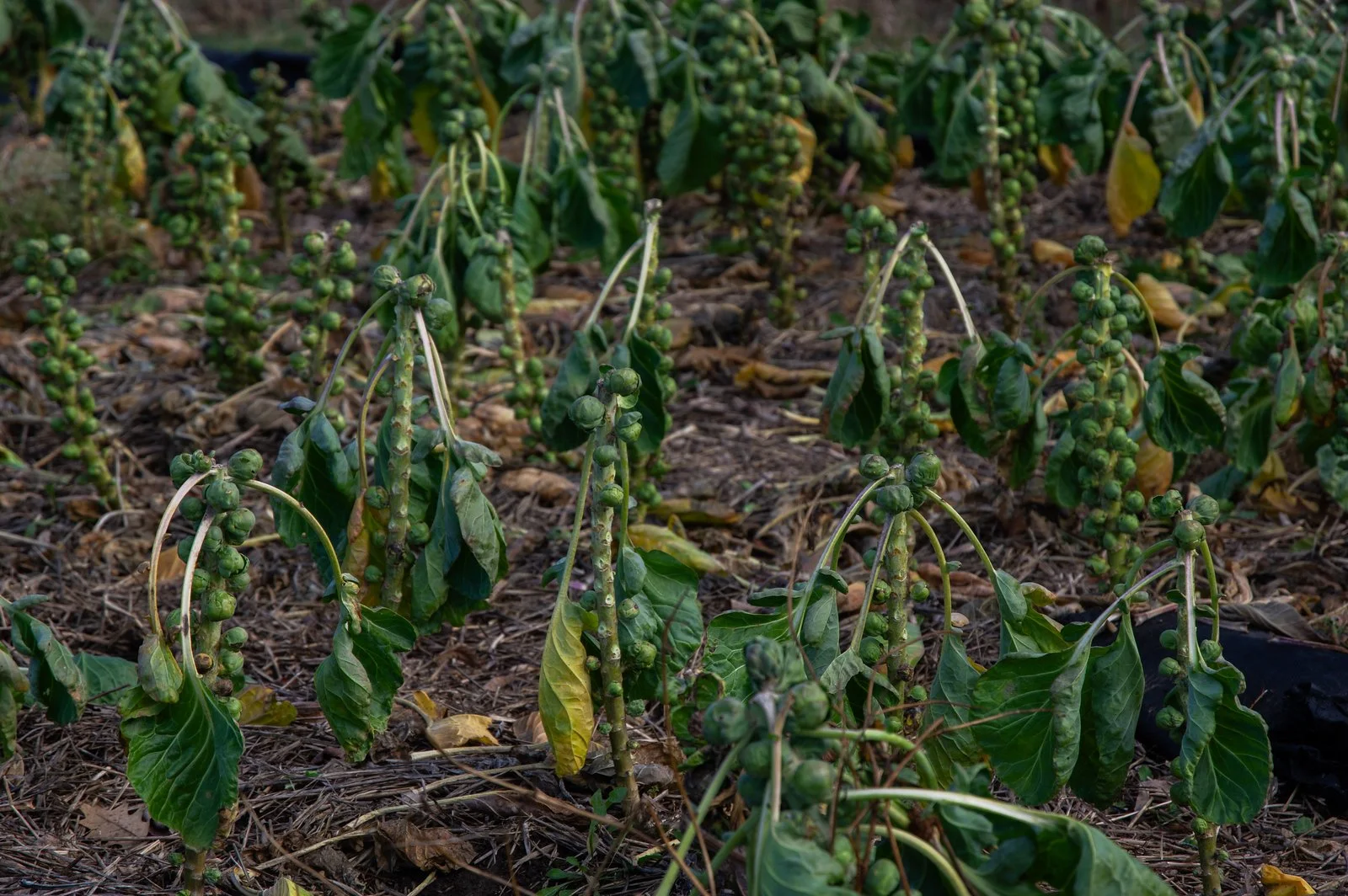
Brussels sprouts, photo by Adam Ford
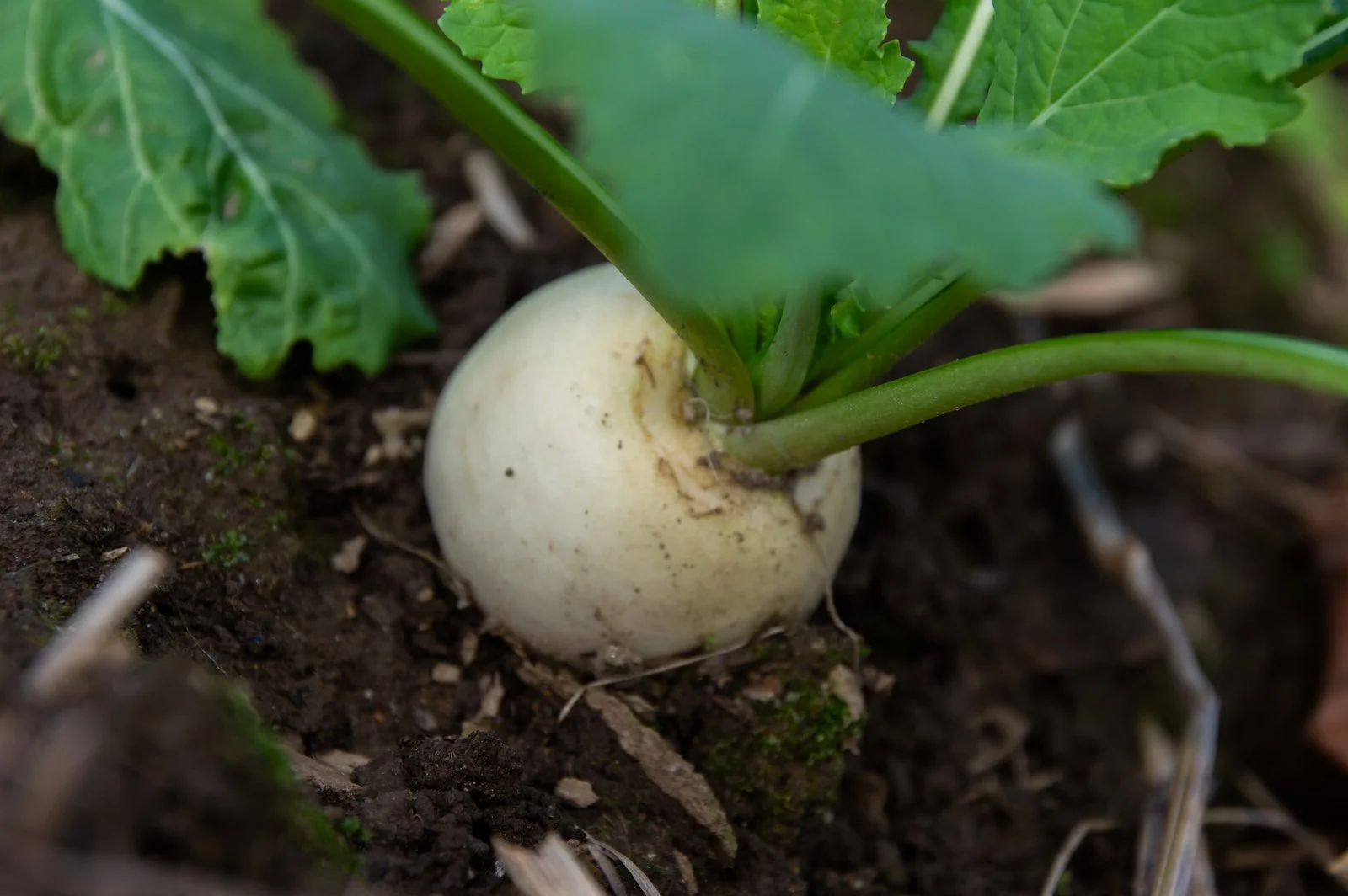
The salad turnips are good! photo by Adam Ford
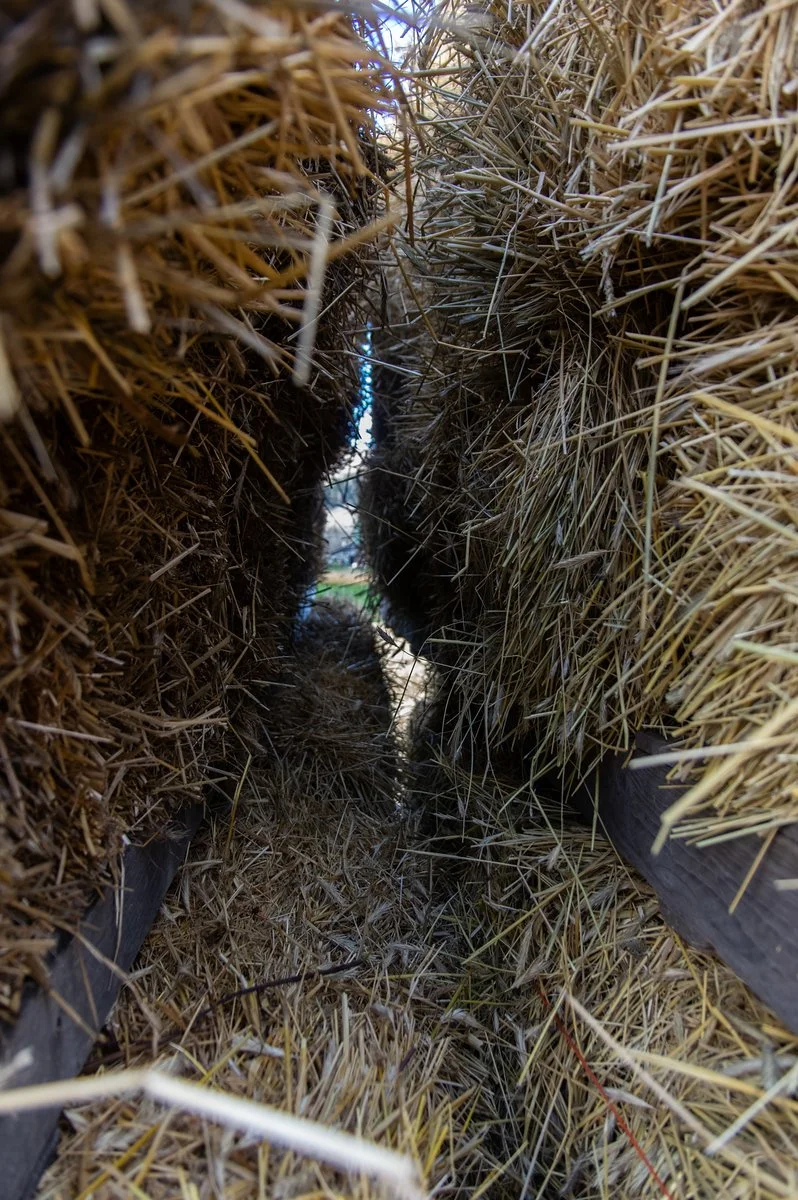
peeking through the straw bales, photo by Adam Ford
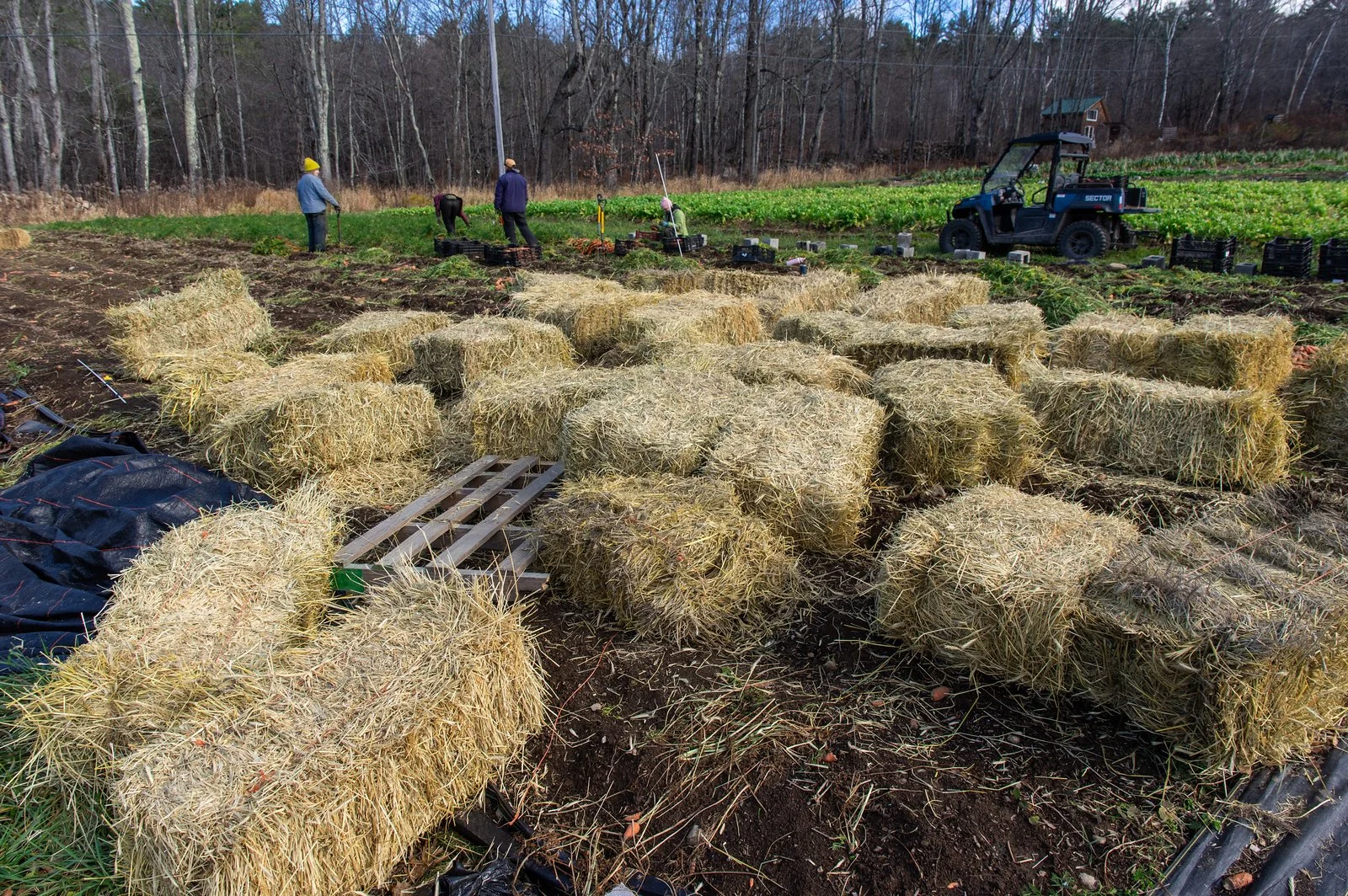
As we finish harvesting the carrots, straw bales are ready to mulch the field, photo by Adam Ford
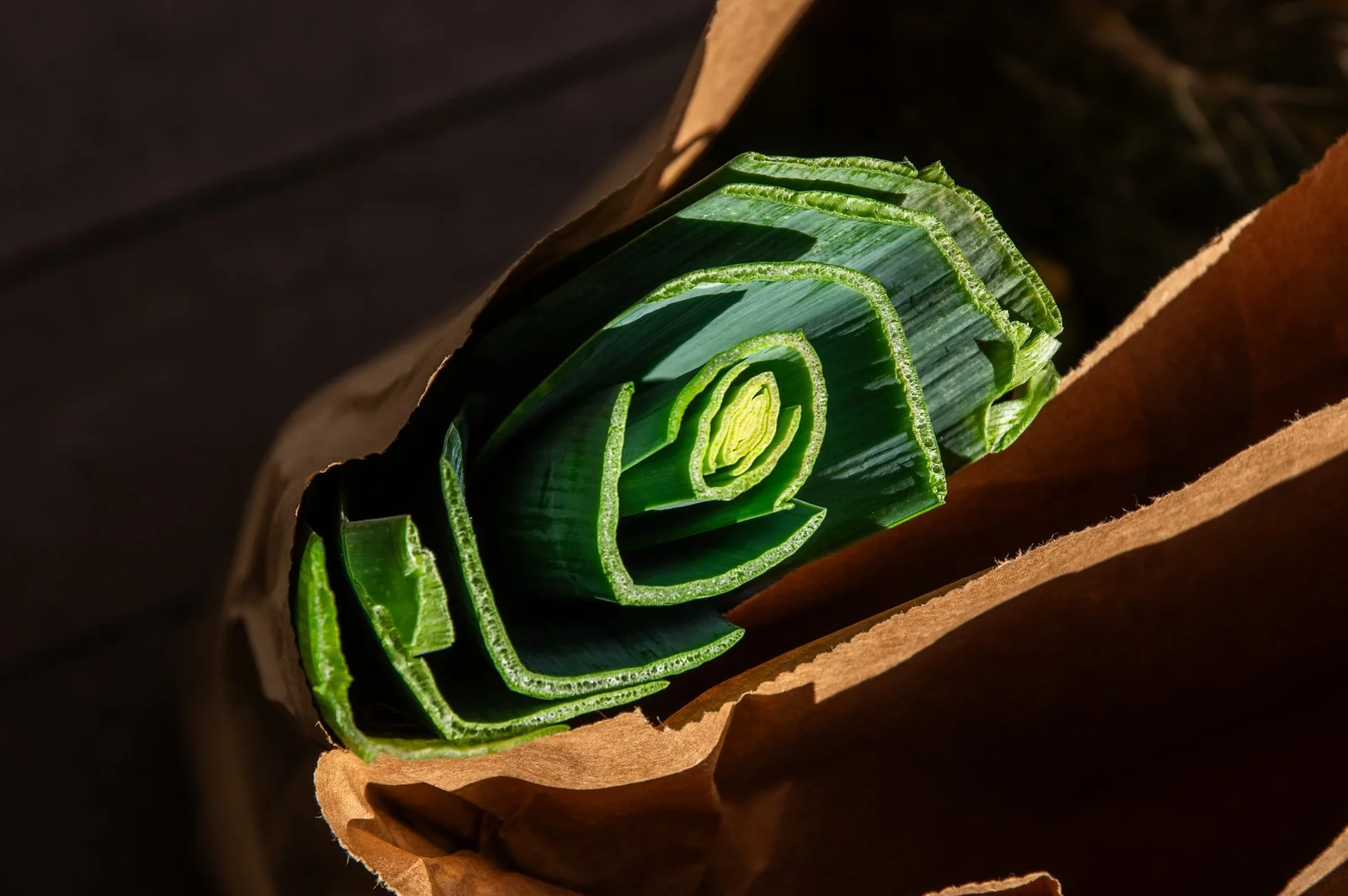
Leek geometry, photo by Adam Ford
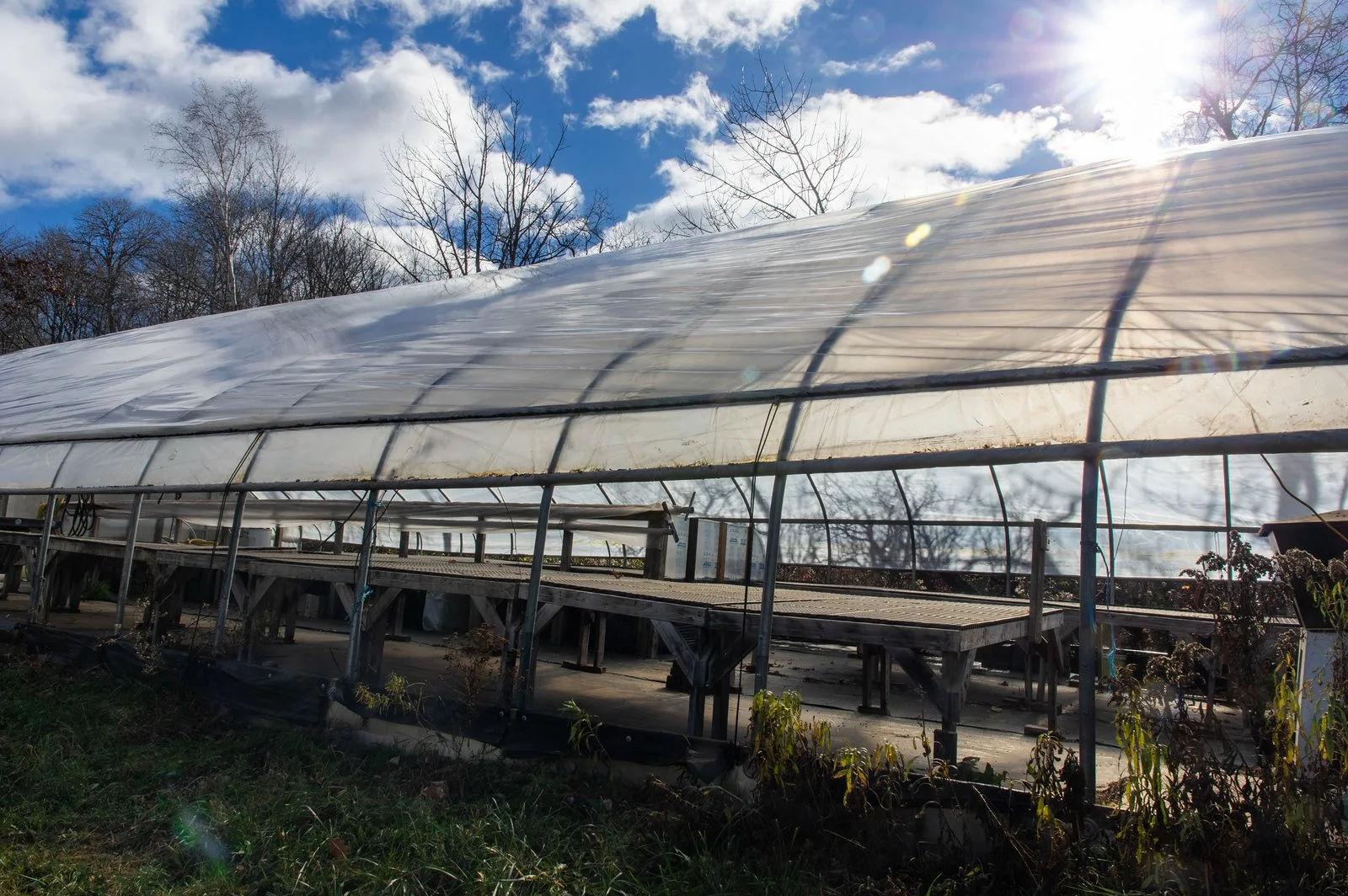
The propagation house is all cleaned out, photo by Adam Ford
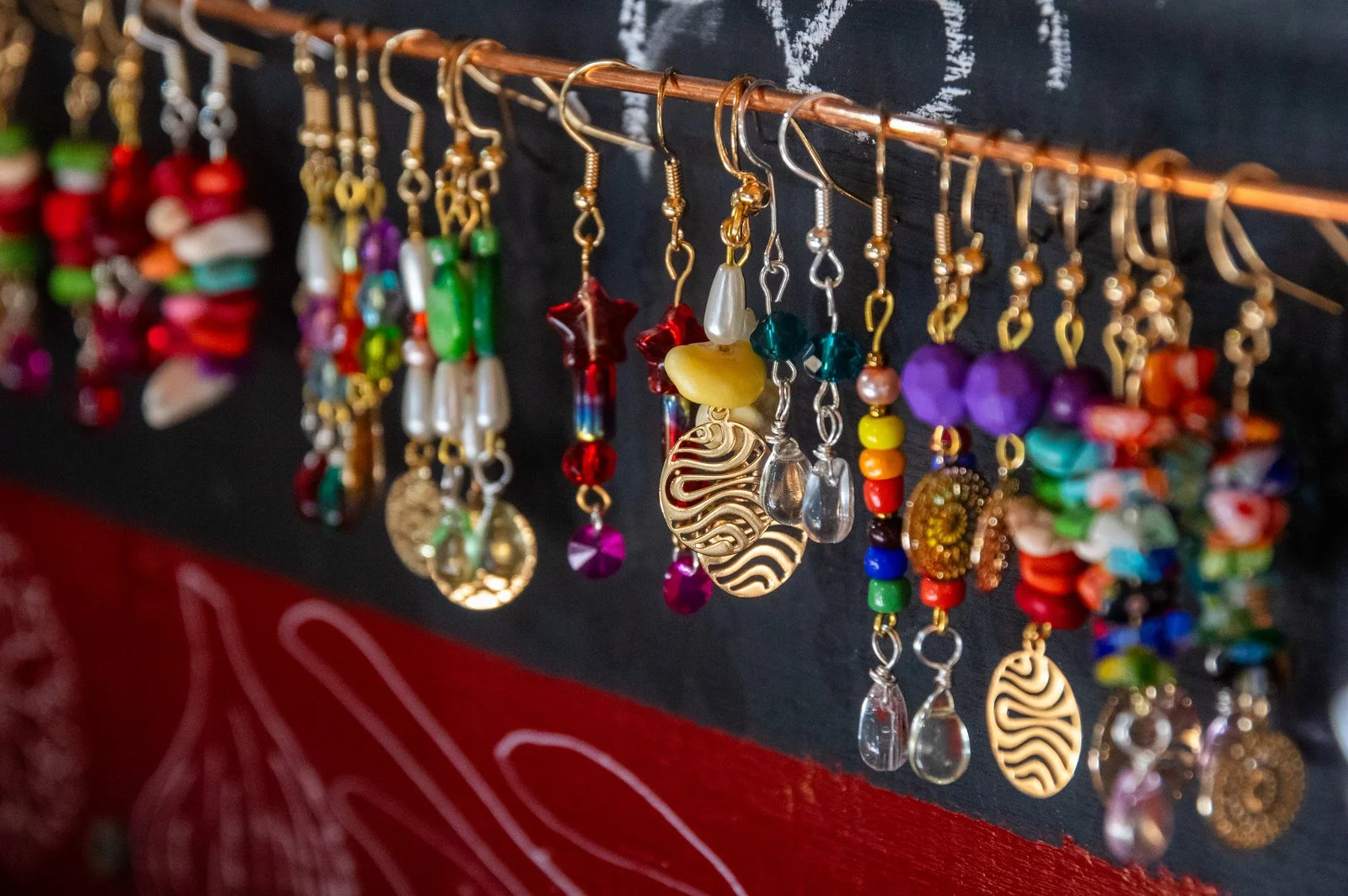
A few of Soraya’s earrings, photo by Adam Ford
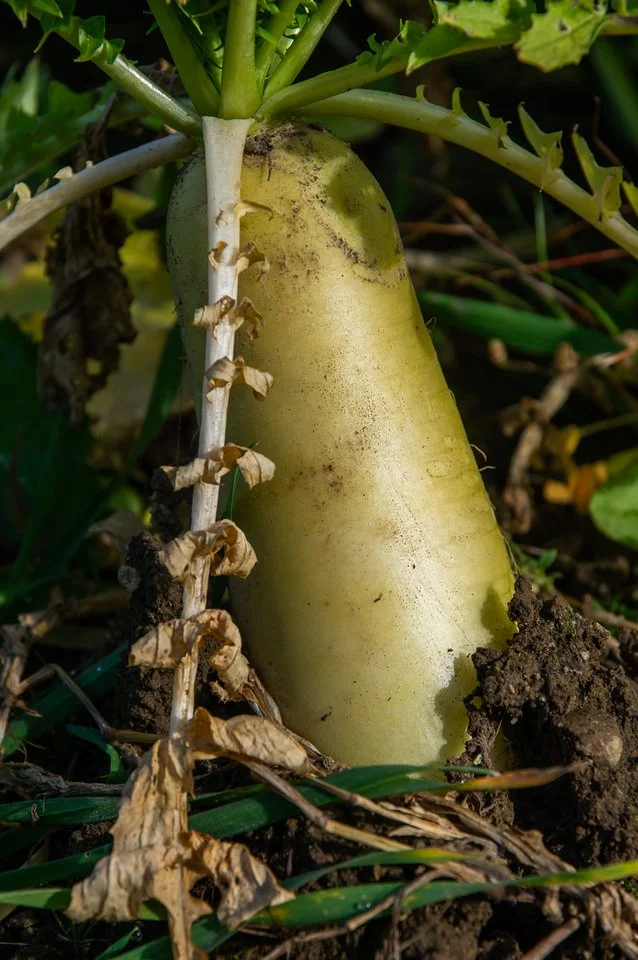
Ye mighty daikon, photo by Adam Ford
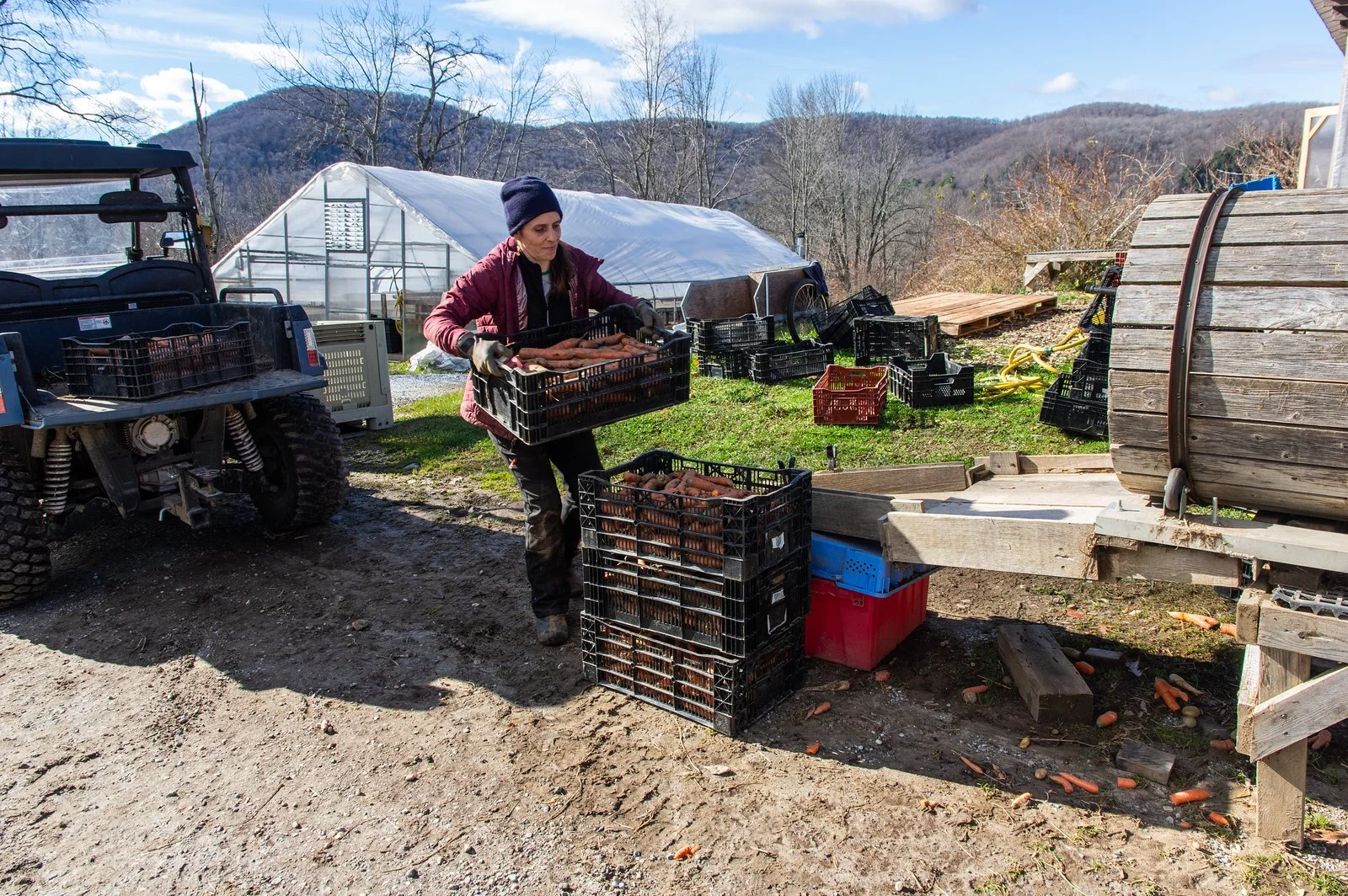
Taylor stacking carrots to bag for winter storage, photo by Adam Ford
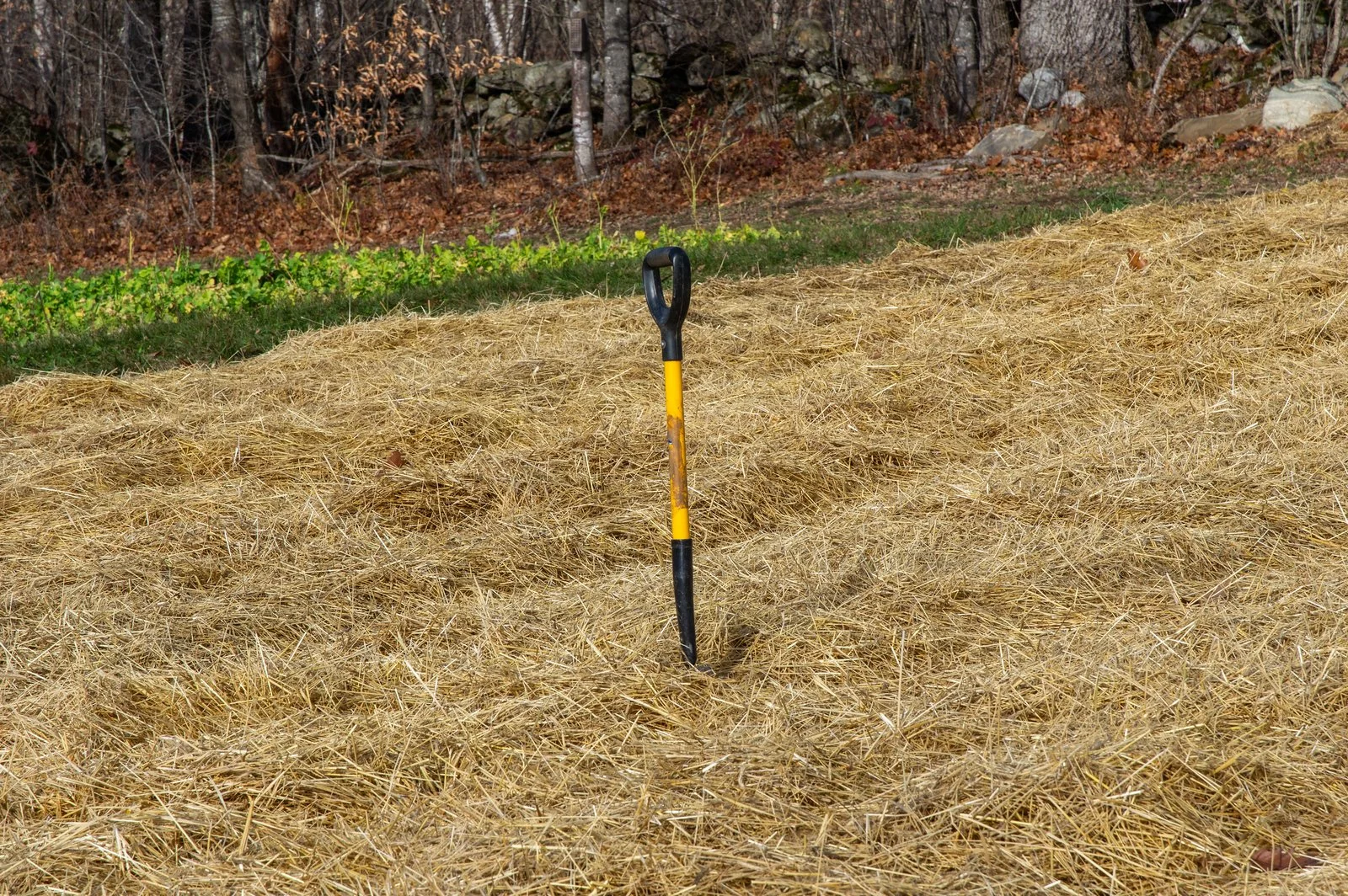
Mulched garlic, photo by Adam Ford
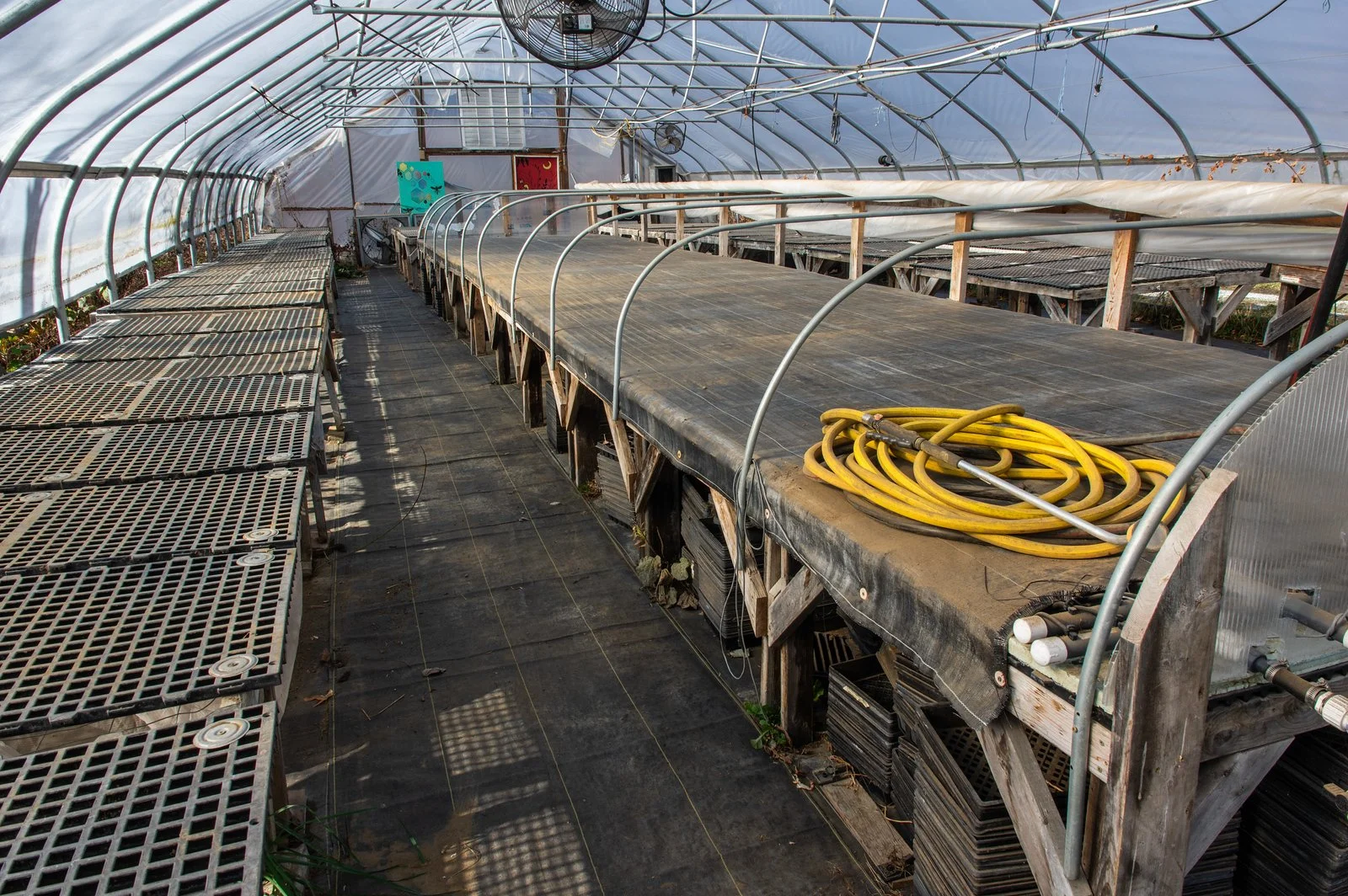
Ready for seedlings next spring! photo by Adam Ford
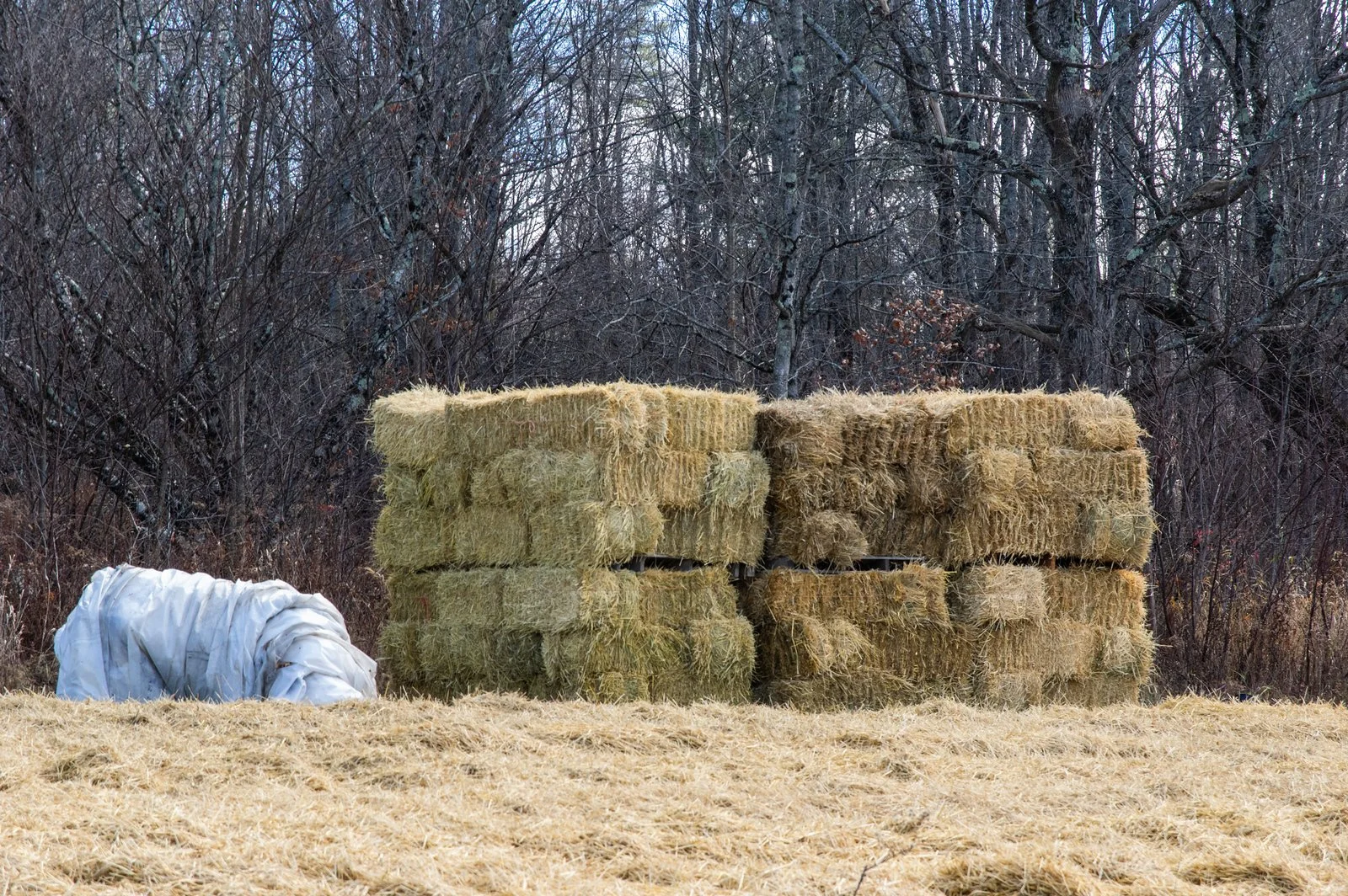
Straw for mulching, photo by Adam Ford