
3rd Week of the Spring CSA Season: Week of March 18th
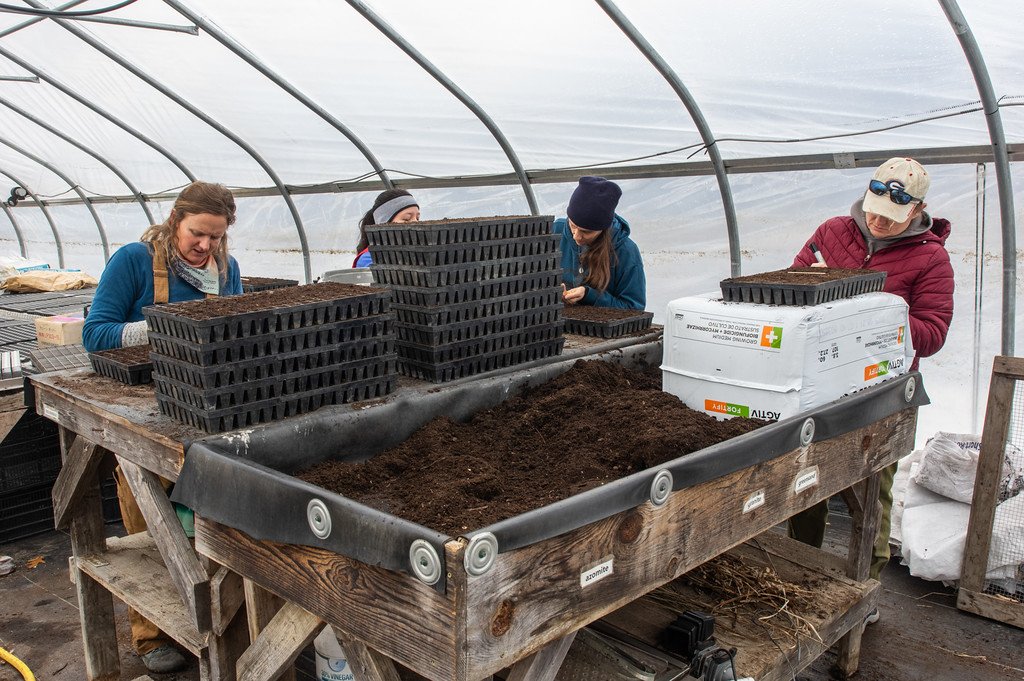
It’s a joy to be back working in the tunnels on a sunny day! photo by Adam Ford
This Week’s Availability
This week we will have:
Greens: green curly kale, spinach, mesclun mix, claytonia, baby kale, green cabbage
Roots: red beets, yellow beets, chioggia beets, carrots, watermelon radish, yellow potatoes, daikon radish, Gilfeather turnip, rutabaga, parsnips
Alliums: garlic, yellow onions, leeks, shallots
Fruiting crops: frozen heirloom and beefsteak tomatoes*, Painted Mountain grain corn
*When we hit the most booming week of tomato yields, we vacuum seal packages of whole tomatoes, and this time of year they are a delicious way to make a simple small batch of sauce or in other recipes that call for a stewed tomato.
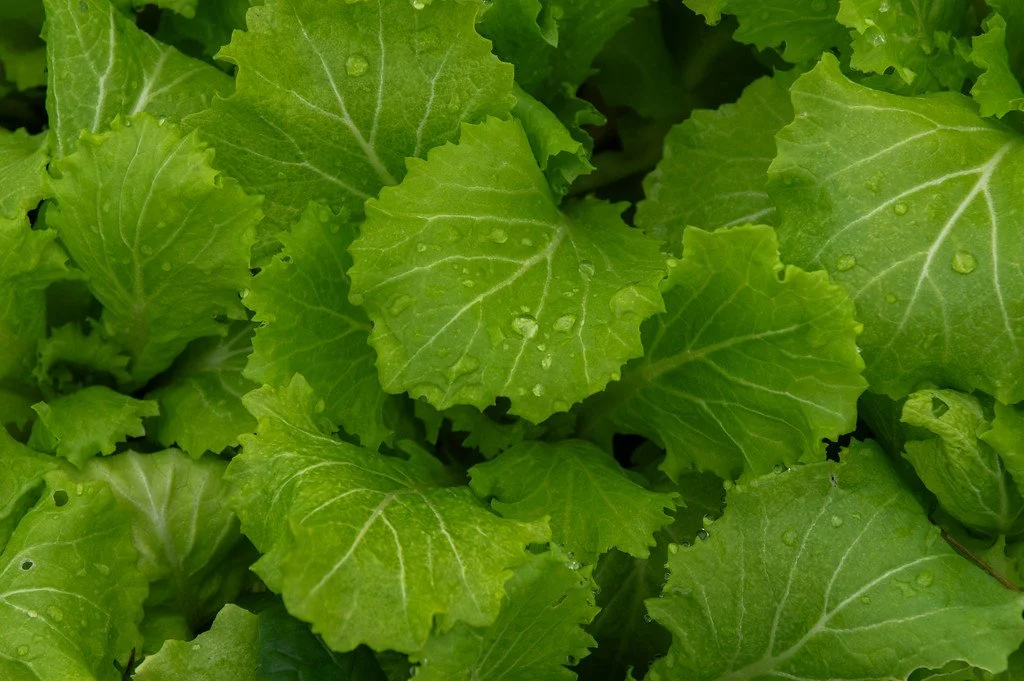
Tokyo bekana is a delightful mild green in the mesclun mix, photo by Adam Ford
Farm News
We did so much work in the propagation house this week: seeding onions, leeks, shallots, lettuces, beets, cilantro, alyssum, husk cherries, eggplant, peppers, and parsley. (The cilantro and alyssum are grown as flowering plants to establish around fields as food sources for predatory insects that can control various aphid species. Aphids cause a lot of issues around here, and cultivating a robust and diverse ecosystem in the veggie fields is our main defense against this annoying little pest.) We also started potting up snap dragons, perennial herbs, and the first round of tomatoes and peppers, who are now happily in their larger cells growing nicely. Ryan also got a little frost seeding done outside which is always fun to squeeze in between snow melt and new snow. These plantings don’t necessarily have the best success rate, they are kind of a bonus gamble in early season farming, but even if just a portion of the seedings germinate in the cold frozen early spring soil, then we have some early outdoor greens to supplement our harvests from the tunnels as they wind down later this spring.
Sometimes I write about my extracurricular farming activities which include my work on NOFA-VT’s policy and advocacy committee, and while there are usually myriad irons in the fire with that work, one of the issues near and dear to my heart that has been bubbling up recently is how to bring to fruition a large scale shift from chemical food to organic food, so that organic food isn’t a luxurious choice for people, but rather it’s chemical-based food that comes with a warning label on it. When I think about it, it’s actually kind of wild to me that we don’t require labels on conventional food. But I suppose it would be tough to fit “This food may have significant levels of chloropicrin, 1,3-Dichloropropene, metam sodium, dozamet, fenhexamid, pyraclostrobin, azoxystrobin, myclobutanil, trifloxystrobin, propiconazole, carbendazim, iprodione, tebucanoazole, bifenthrin, malathion, methomyl, thiamethoxam, methoxyfenozide, dimethoate, fenpropathrin, bifenazate, hexythiazox, spiromesifen, that are not able to be removed with water” on a package of strawberries. But when I think about the realities of conventional food, these items start feeling more like little servings of dangerous chemicals, dressed up in their Halloween costumes as food items. (Is that a pepper or sachet or carcinogens and endocrine disruptors?)
It doesn’t have to be this way: our food system is a product of our engineered political policies. For some super rough numbers, it is estimated that about $30 billion is spent on agricultural subsidies annually, but only some tens of millions of dollars are spent on programs associated with organic agriculture which are predominantly for research, market development, transition programs, and certification cost share (which has been suspended for the past year, and small organic producers, like us, really feel the cost of losing that program, and are considering dropping certification for the first time because of the cost.) But notably, the small pot of money that goes towards organic agriculture does not help offset the cost of production or help lower the cost of organic food to consumers the way complicated subsidy programs do for conventional chemical products.
Writing about this topic in a CSA newsletter for a certified organic farm is really a silly topic to blather about since you all have made continued commitments to accessing the healthiest food available. But yet, I keep talking about it, even with people who get it, because somehow, we need to build a collective consciousness and voice to take control of our food system so it safely nourishes all of us, and honestly doesn’t have to feel like a lifestyle choice that re-organizes your monthly budget. If you are the type of person that likes concrete action steps, becoming a member of NOFA-VT to support their work is always a low hanging fruit. (And memberships start at $1! They offer that to grow their membership and show decision makers that a lot of the general public supports this work.) Another action can be to send your opinions and thoughts to Peter Welch’s office. We are tremendously lucky to have a supportive US senator on the Agriculture Committee, and while he shares a lot of these concerns and opinions, direct words from constituents are an important piece he collects for work on the ag committee. (I submitted our own take on how the suspension of the certification cost-share program has made us reconsider certification. For clarity, we would never change our growing practices… we have just becomes curious if it’s a smart business decision to spend thousands of dollars and so many extra hours on paperwork for certification without the financial support of the federal certification cost share program. I can’t actually imagine us dropping certification because it’s also essential to just augment the organic movement.)
We are lucky to live in VT which has one of the most robust local food system per capita in this country. I am incredibly lucky to source so many of our family’s food from area farms who I either personally know, have been able to learn about their growing practices, or have that awesome organic certification label. In a country of chemical-intensive farming, it’s a treasure to live and eat here.
When I write about the essential aspect of organic agriculture, I feel tremendous gratitude for our CSA members: that you are choosing to support this mission. Thank you for being part of a healthy food shed!
Have a great week,
-ESF Team: Kara, Ryan, K2, Vanessa, Taylor, Katie, Galen, Cindy, and Hannah (and Sky and Soraya)
I make a lot of quick Indian or Ethiopian dishes that center veggies and pulses, because it’s nice to have one of these in the fridge all the time for a quick leftover meal.
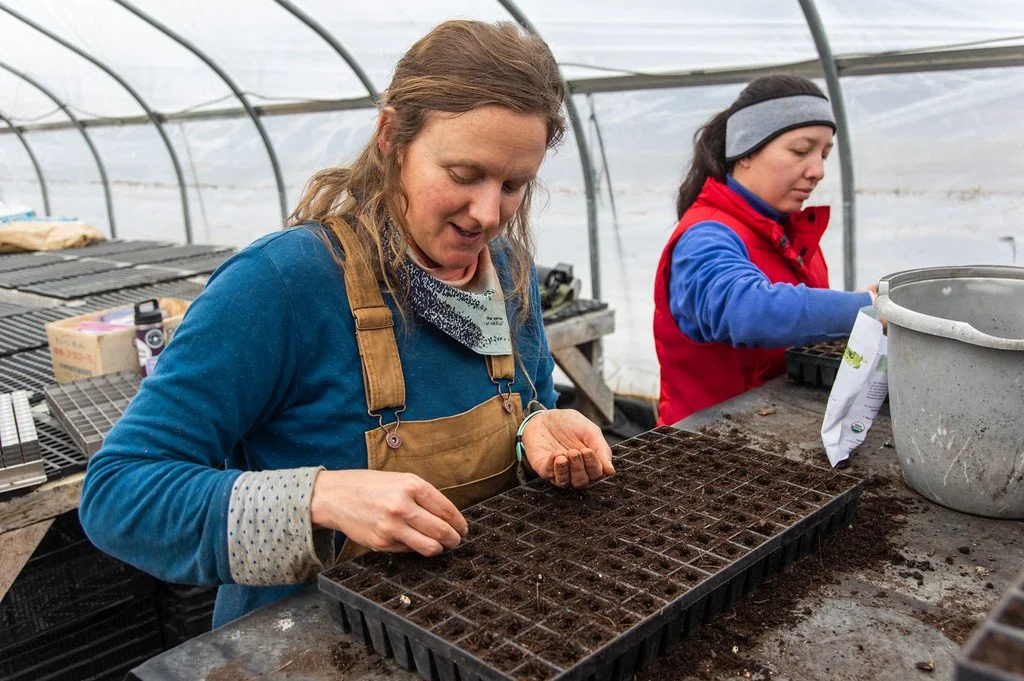
Katie and Vanessa seeding onions, photo by Adam Ford
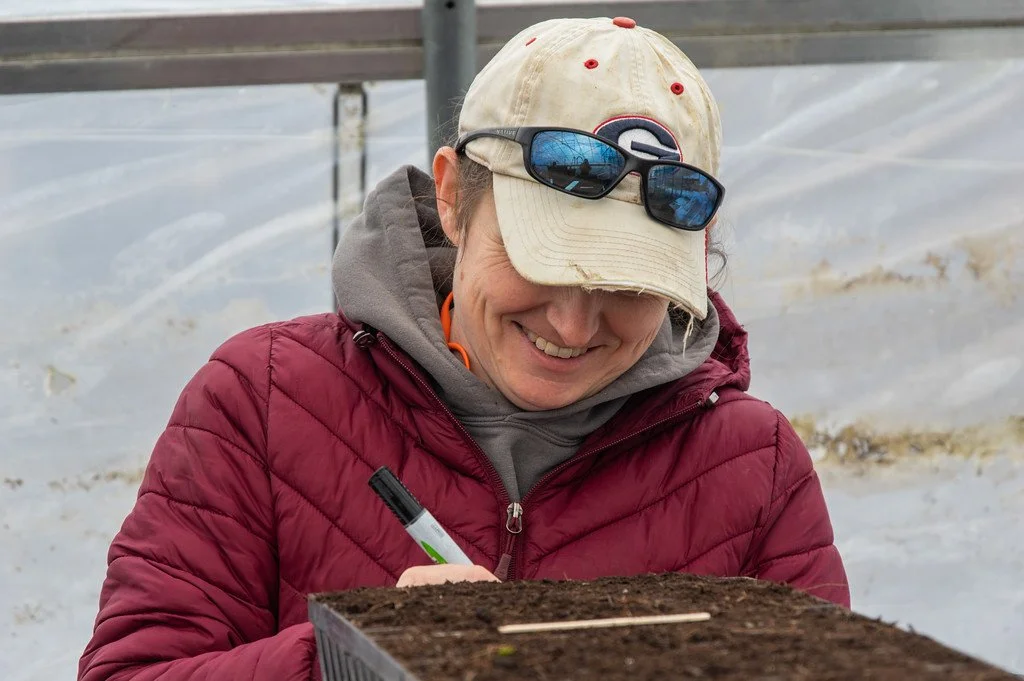
K2 writing out plant tags, photo by Adam Ford
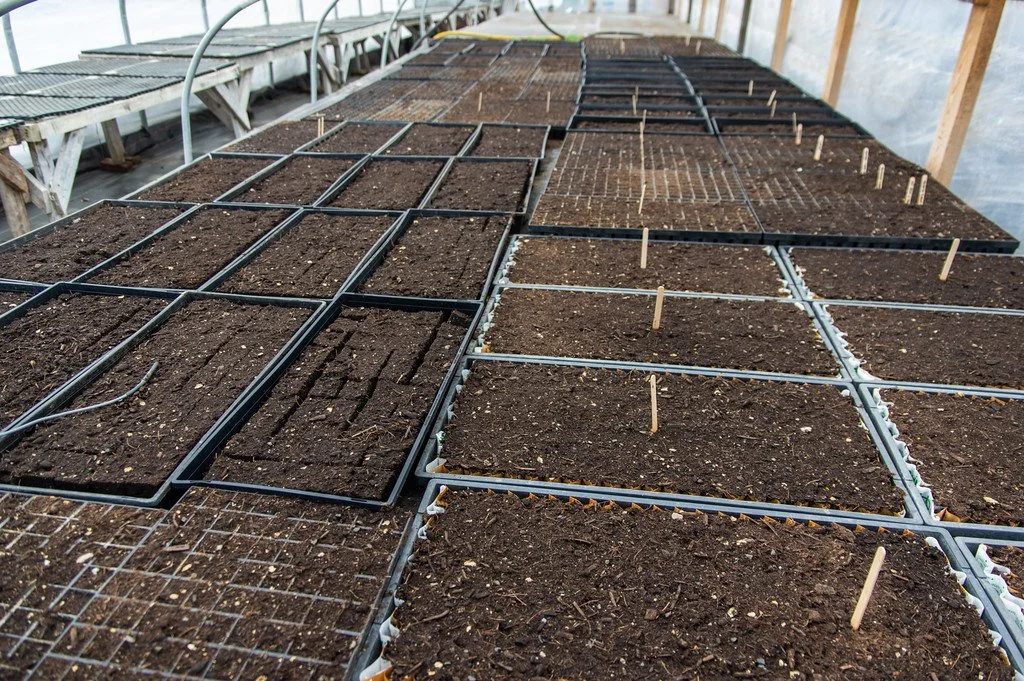
lettuces, cilantro, alyssum, beets, onions, photo by Adam Ford
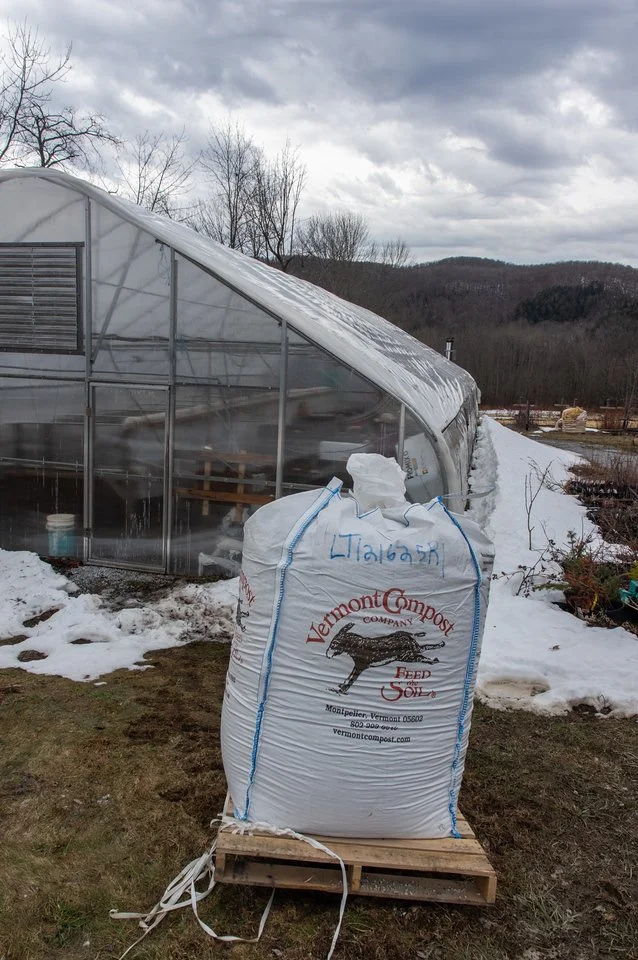
another sling of potting mix, photo by Adam Ford

wash gloves to keep warm in the cold, photo by Adam Ford
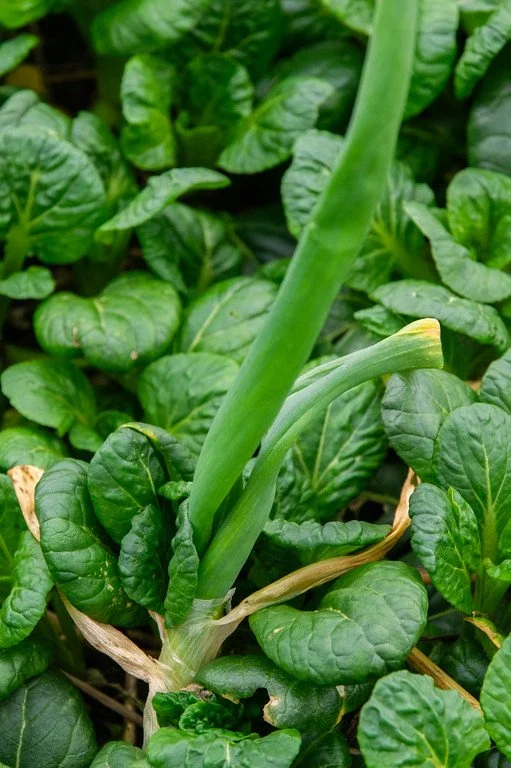
scallion in the komatsuna, photo by Adam Ford
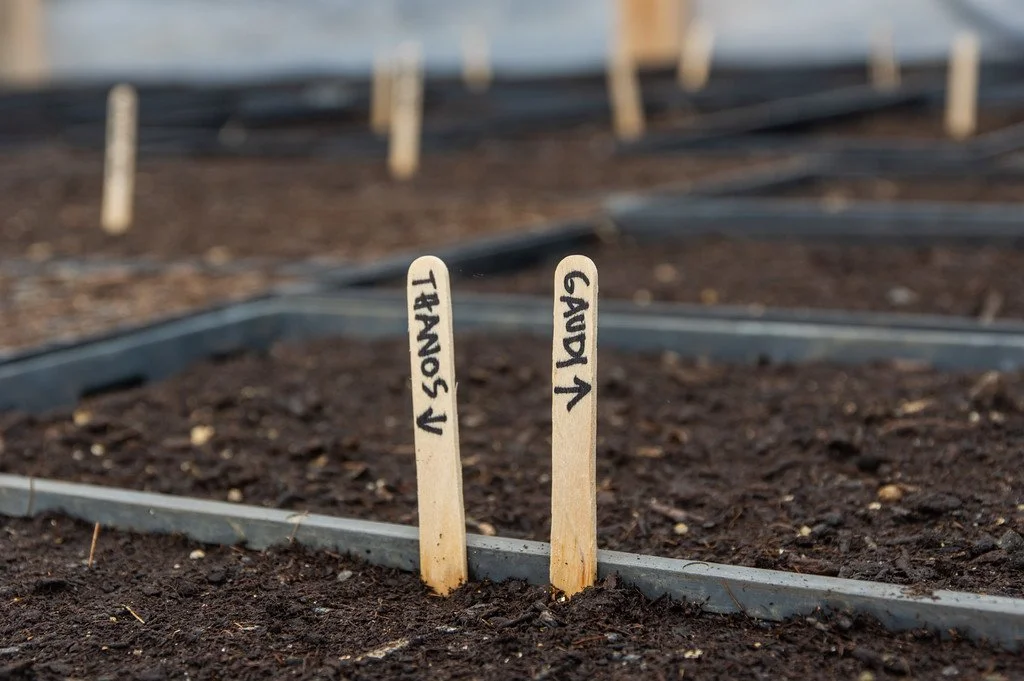
eggplant, photo by Adam Ford
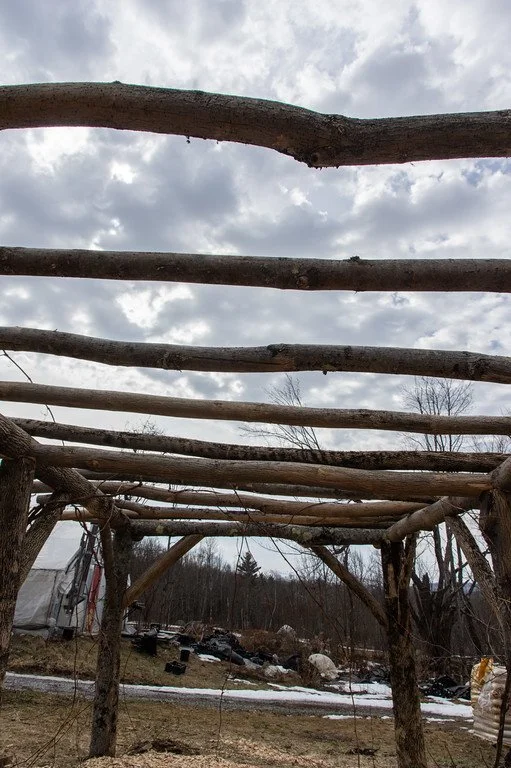
new grape arbor, photo by Adam Ford
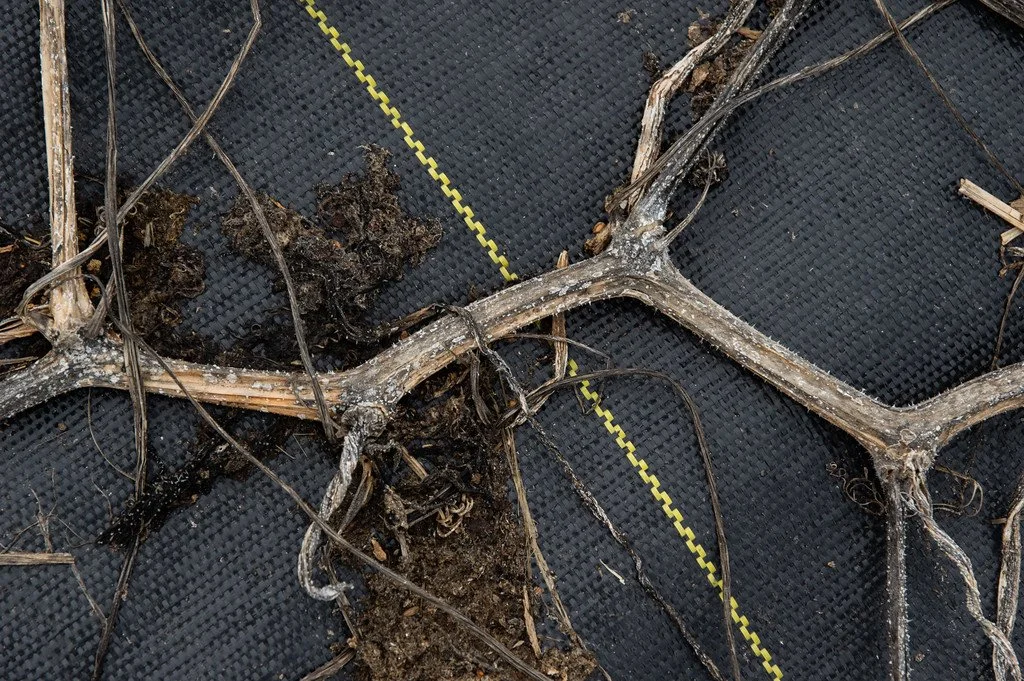
last year’s squash vine, photo by Adam Ford
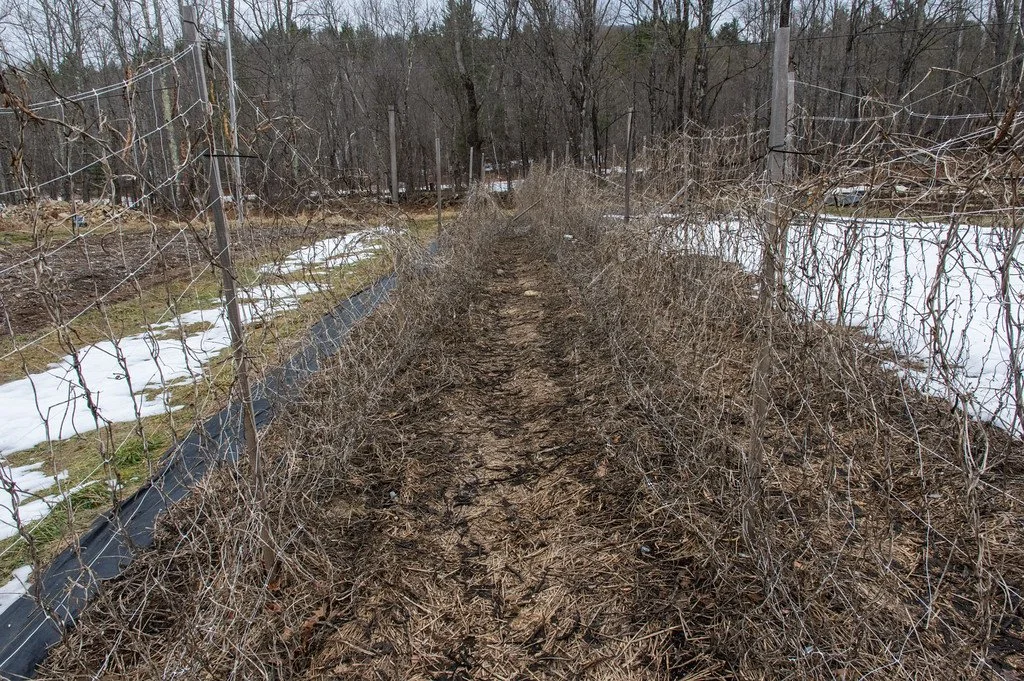
last year’s green beans, photo by Adam Ford
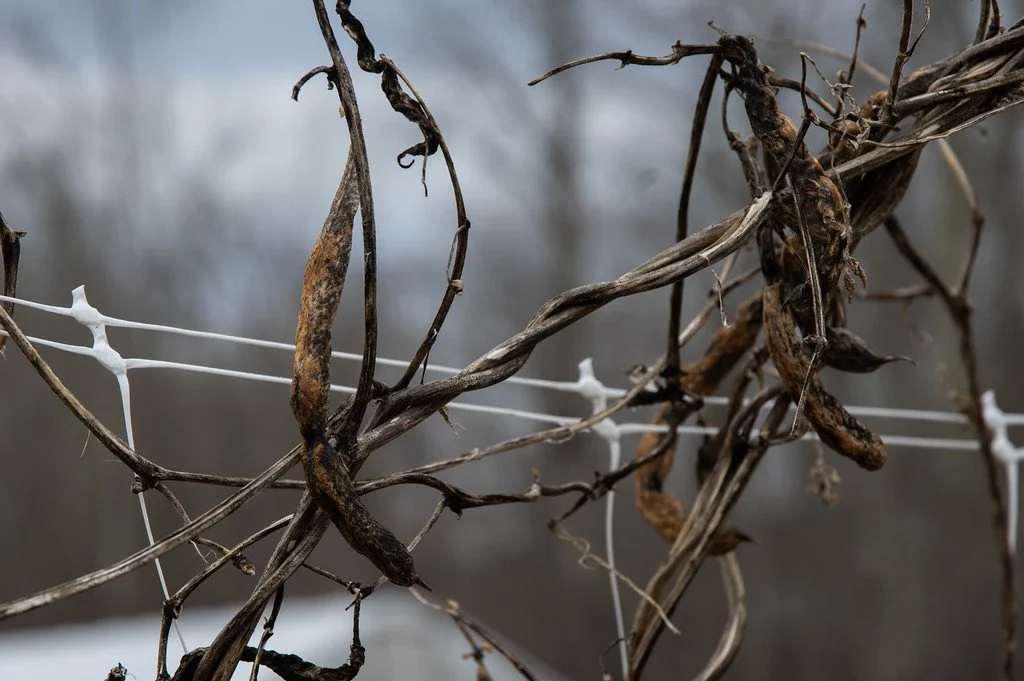
still some seeds in those pods, photo Adam Ford
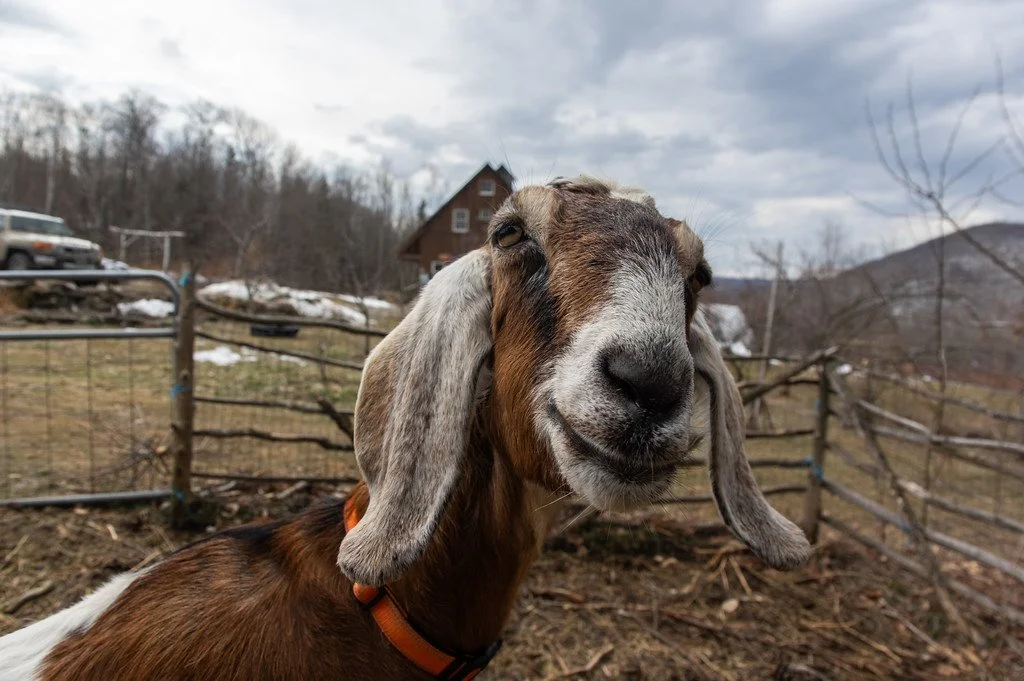
Phoebe (and Nina) are very eager for the grass to green up to head back out to pasture this season. I really enjoy keeping dairy goats for our family because it tethers me to some of my early experiences with farming. I believe the first farm activity I participated in was milking a cow, and as a little kid, it really blew my mind that milk was acquired that way. Over the years, I worked on farms with micro cow dairies and loved the energy of cows, and the type of work that came with pasturing big animals. For my 23rd birthday, Ryan got me a baby goat, because he knew how much I wanted a dairy cow at some point in my life, but a dairy calf was not in the budget from our $150/month Americorps salaries that year, so baby goat it was! At that point, I hadn’t worked with goats, and despite their health and care being different from cows, it was a quick learning curve, and I soon became a “quirky goat lady” and have gotten the privilege of caring for many goats over the years. I have come to appreciate goat milk far more than cow milk, and they are much easier to pasture around the small patches of fields that aren’t taken up by vegetable production. My favorite part is just starting every morning with the rhythm of greeting my animals, in whatever weather it is, smelling the hay, getting fresh, warm milk for my tea. Vegetable production is my business, but goats have my heart, photo by Adam Ford