
13th Week of the Summer CSA: August 24-27

Morgan in the cherry tomato jungle. Photo by Adam Ford
This Week’s Availability
This week we will have spaghetti squash, cantalope*, watermelon*, canary melon**, purple kohlrabi, red and yellow beets, slicing cucumbers, pickling cucumbers, Ailsa Craig sweet onions, carrot bunches, summer squash, zucchini, fennel, garlic, green cabbage, red cabbage, caraflex cabbage, red and yellow potatoes, brococli, garlic scapes, sweet peppers, jalapeno peppers, green curly kale, lacinato kale, baby lettuce, mini romaine heads, pea shoots, arugula, basil, cilantro, parsley, oregano, thyme, heirloom tomatoes, beefsteak tomatoes, grape tomatoes, and cherry tomatoes!
*Depending on how many are ripe for this week, melons may be limited to one melon per share. Feel free to order as many as you want, and just make sure you list some preffered substitions in your order form. With melons, we really can’t estimate the harvest accurately until we our hands are literally picking them from the vine. They are so particular to pick at the best moment, so we anticipate a lovely harvest, but knowing your preffered backup will be helpful.
**Canary melons are a wonderful melon with a bright yellow rind and green flesh like honeydew. They store for over 2 weeks at room temperature. If you let them continue to ripen in your home for 5-7 days, they sweeten up amazingly with an incredible fragrance.
Bulk vegetables available for processing
When we have bulk amounts available with veggies, we like to pass along our wholesale prices to CSA members in case you want to do some processing. Now is the time! Below are the current wholesale prices for certain veggies. If you are interested in getting a bulk amount of anything, send us an email. Thanks!
Roma tomatoes: $28 for 10 pounds, $50 for 20 pounds
Cherry Tomatoes: $40 for 12 pints, $70 for 24 pints
Heirloom Tomatoes: $28 for 10 pounds, $50 for 20 pounds
Basil: $12 per pound, $22 for 2 pounds, $30 for 3 pounds
Parsley: $20 for 10 bunches, $36 for 20 bunches
Onions: $20 for 10 pounds, $35 for 20 pounds
Green Curly Kale: $14 for 5 bunches, $24 for 10 bunches
Lacinato Kale: $14 for 5 bunches, $24 for 10 bunches
Cilantro: $20 for 10 bunches, $36 for 20 bunches
Garlic: $12 per pound
Garlic Scapes: $20 for 10 bunches, $34 for 20 bunches
Broccoli: $33 for 10 pounds $60 for 20 pounds (This broccoli is in good shape, but won’t hold past the weekend, so should be processed soon.)
Zucchini: $15 for 10 pounds
Summer Squash: $15 for 10 pounds
Pickling cucumbers: $15 for 10 pounds
Slicing Cucumbers: $15 for 10 pounds
Oregano: $20 for 10 bunches, $36 for 20 bunches
Thyme $20 for 10 bunches, $36 for 20 bunches
Jalapenos: $6 per pound, $25 for 5 pounds
Want to know what we do to preserve these items?
For the freezer: Tomato basil soup, chimichurri, chermoula, kale (chopped up, lightly sauteed with olive oil, to use in omelettes, stews, pastas in the winter), fake-a-mole, broccoli (chopped, lightly sauteed with olive oil), shredded zucchini and summer squash (for winter zucchini bread and zucchini pancakes), basil pesto, parsley pesto, cilantro pesto, and garlic scape pesto. (We use garlic scapes in place of garlic in all our pestos… much faster to process than peeling garlic! We also add parsley to our basil pesto, similar effect of speeding up the process) .
For the pantry: Tomato sauces, salsas, dried cherry tomatoes (covered in a blend of olive oil, salt, and basil for an extra amazing flavor!), pickles (slicing cucumbers actually work nicely like pickling cucumbers for lacto fermented recipes), dried herbs, fermented hot sauce (which we put in the fridge after it ferments.)
Maybe one day we will take an organized picture of our pantry and freezer after it’s all stocked for winter!
Fill out the delivery form by noon on Tuesdays.
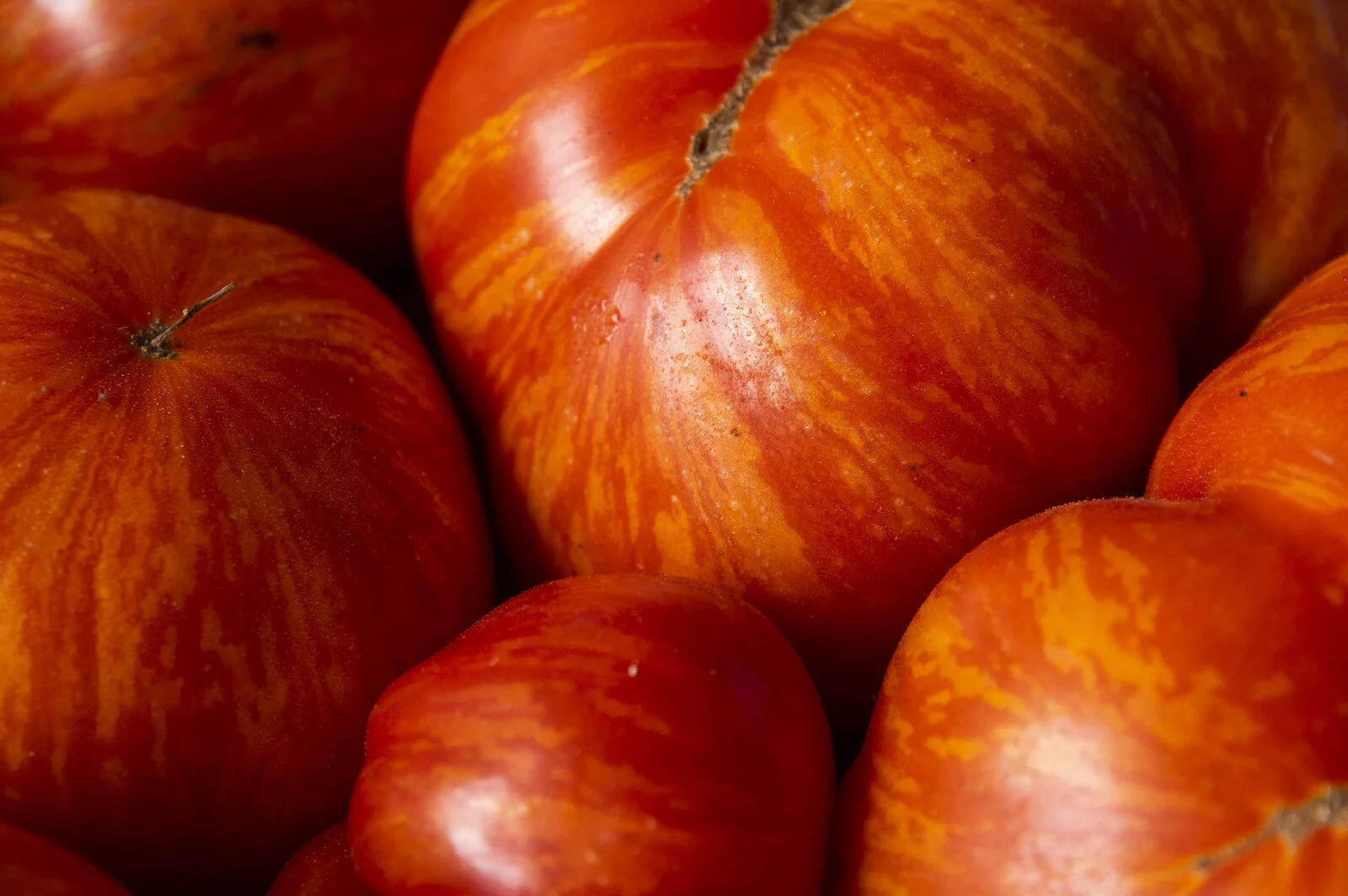
We tried a few new tomato varieties this season. This variety-Solar Flare—is a keeper. It’s possibly Kara’s favorite flavored tomato. Photo by Adam Ford
Volunteering at the Farm!
The next couple of weeks we would have some good projects to have volunteers join us if you have ever wanted to interact more with the farm. We love bartering our volunteer helpers for veggies, so if you want to plug in for a couple hours and trade for some bulk veggies, send us an email, and we can share more details of the projects and connect about your availability.
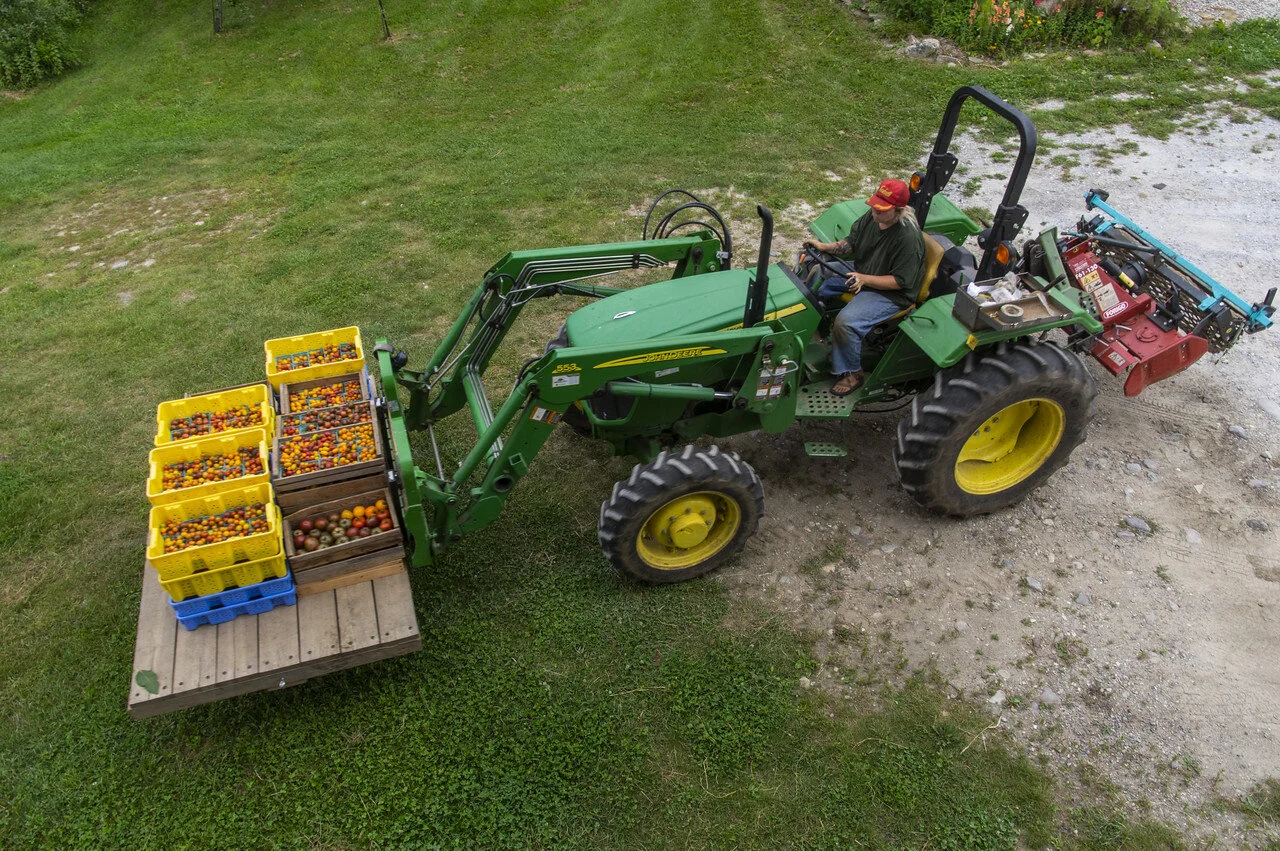
Morgan is transporting about $2000 worth of tomatoes… don’t mess up! photo by Adam Ford
Farm News from Ryan
This week we were very grateful for our team to hold down all the farm responsibilities so that our family could take a little beach vacation! While we were gone, one of the most impressive reports was the volume of tomatoes harvested from the high tunnels: 360 pints of cherry tomatoes, and over 1,000 pounds of slicing tomatoes. Wow! But the real challenge that our team took on was navitgating all the detail management and time management that’s needed to keep this farm humming from day to day. On a week like last week, we harvest over 30 different vegetable crops to distribute to over 250 families, as well as filling orders for local businesses like Pierce’s Store, the Rutland Co-op, Stemwinder, Plew Farm, Squire Family Farm, and many other others. Each week we distribute several hundred pounds of vegetables to the Farmacy Project, a collaboration between the Vermont Farmer’s Food Center and several local farms. In this project, Vermonters with health issues for which healthy food can be a support receive a prescription from their doctor to receive vegetables free of charge. With distribution help from friends in the community, our farm also donates hundreds more pounds each week to the Vermont Foodbank, Black River Good Neighbors, and Springfield Hospital to be distributed throughout the community. It takes a lot of focus to use our time wisely in order to follow through on all the different crops to harvest and all the different places they go to, and our crew did an amazing job making it happen… Thanks, team!

I can prety much taste pesto looking at this picture, photo by Adam Ford
Another layer of our crew’s work this past week is managing crops for the future. It’s hard to imagine, but in 4 weeks our high tunnels—with their towering rows of tomato plants heavy with fruit—will be cleared of summer crops to make way for hardy greens to be harvested November through April. Our team seeded thousands of lettuce, chard, kale, and parsley, which will be transplanted in our tunnels in late September. Our propagation house is also home 3,500 strawberry runner tips, which will be transplanted into our fields this fall to harvest strawberries next June. These runner tips, some harvested from our own strawberry plants and some purchased from a Canadian strawberry farm, are strawberry shoots that don’t have any roots but are biologically ‘programmed’ to send out roots when they make contact with the soil. In the field, they would root in the soil while they’re still connected to the mother plant, so the runners can receive water from the roots of the mother plant to stay alive before it grows roots of its own. But to root these plants in our greenhouse requires cutting them off of the mother plant, which mean that they need precise care to keep from wilting and dying while they are establishing their own roots in the potting soil. The possibility of next year’s strawberry harvest is kept alive by a misting system that sprays mist on the leaves: 15 seconds of mist every 5 minutes to keep the leaves covered in tiny droplets of water, preventing dessication. Our misting system is cobbled together with surplus irrigation supplies and some special nozzles, and it periodically experiences malfunctioning nozzles that need to be futzed with. Hats off to Morgan for keeping a diligent eye on the misting system to keep those plants alive through their vulnerable transition!
Also, this year’s strawberry tip aquisition was more complicated than before… partly due to Covid, partly due to a strike at the border, partly due to the extra steps it takes to move agricultural products across an international border, but the the tips eventually made it through. Pleasant Valley Farm in New York coordinates a big straberry tip order among dozens of regional farms for this divine variety from a Canadian grower. Then then travel up there to get them for all of us. This year, they were stuck at the border for a couple days, had to hire a broker to try to get them through, eventually had to leave them in cold storage with a Canadian farm to return to their own farm, and eventually had all the correct hoops jumped through to have someone else return to get them. So even more than last year, next year’s berries will feel like actual golden berries.
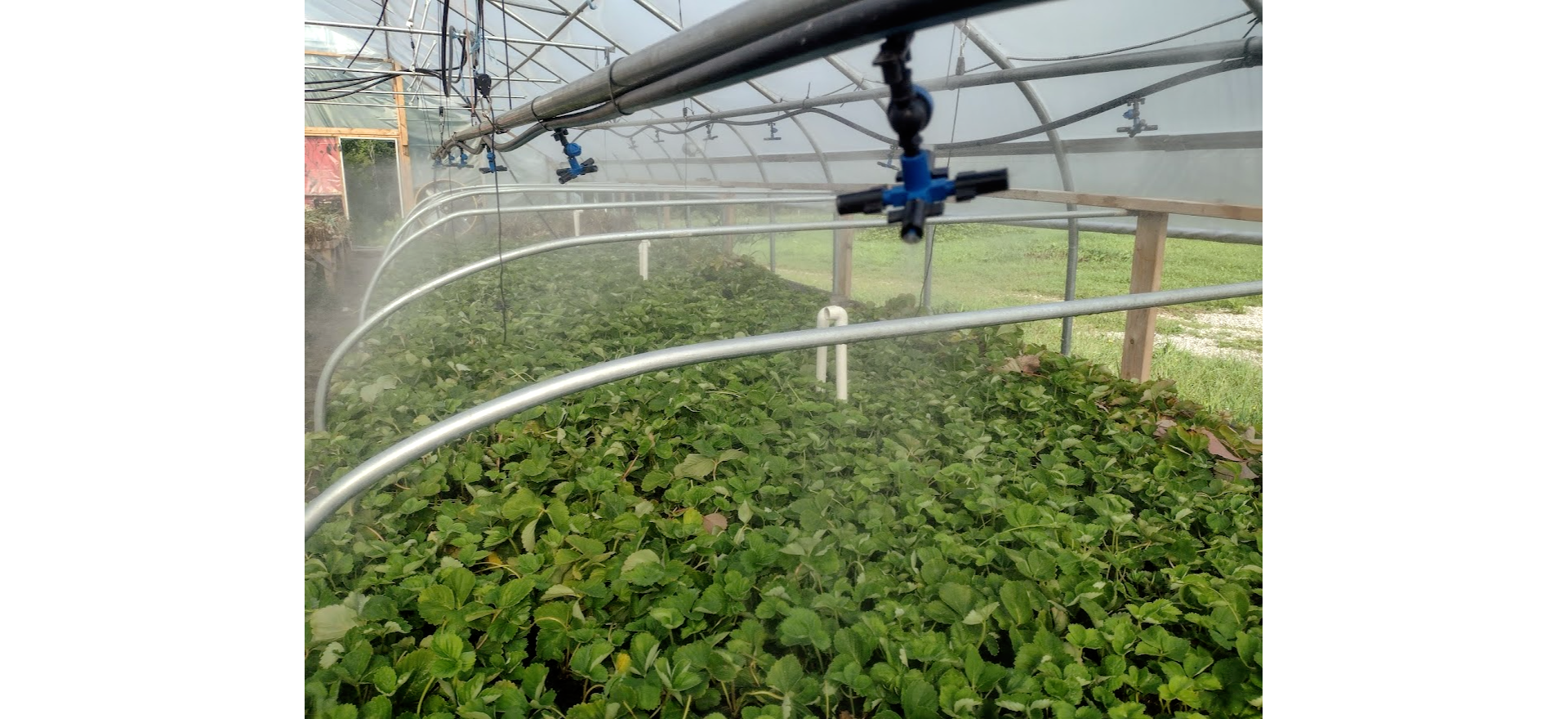
Next year’s strawberry plants with the misters on. We lower the sides of the propagation house enough so the breeze doesn’t blow the mist off the leaves.
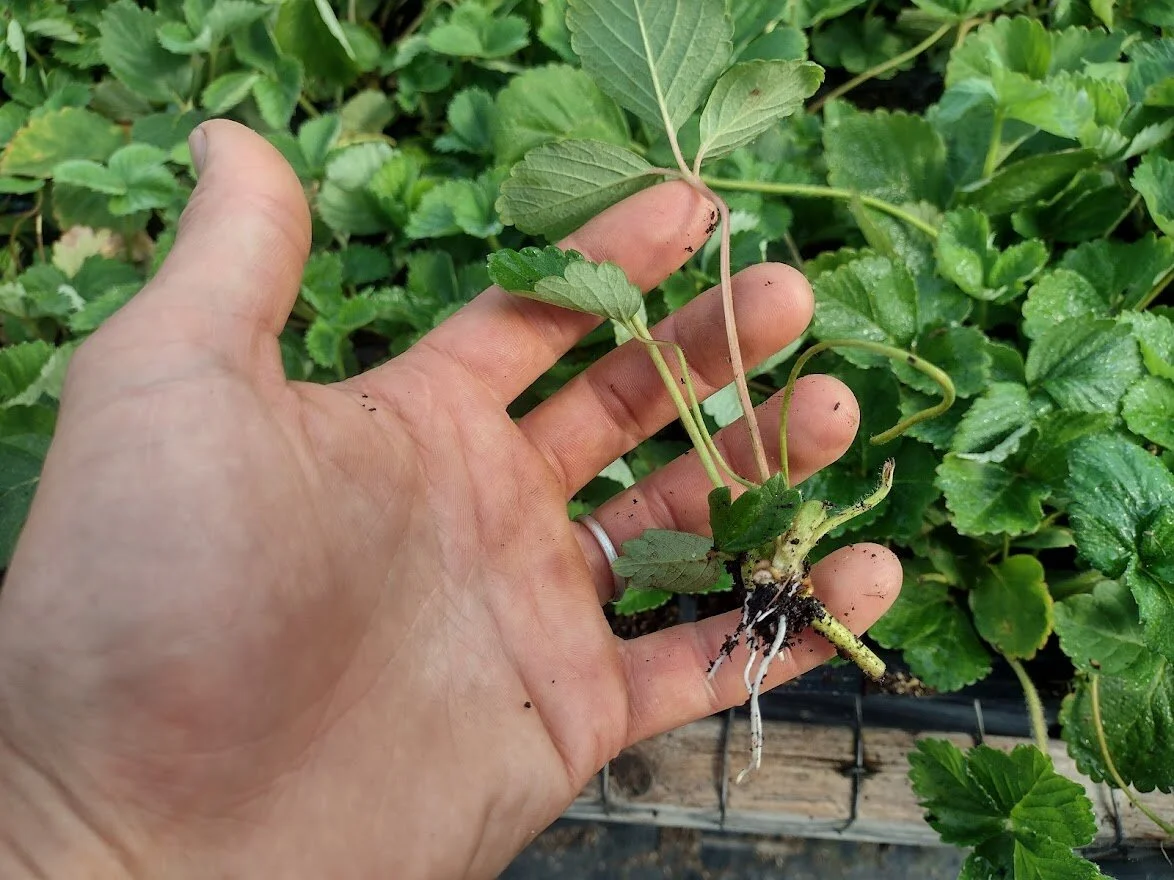
I temporarily removed a plant from the potting mix to see how the rooting was progressing. 8 days after planting, this strawberry runner is beginning to grow roots. These plants will be fully rooted to transplant in the field in about 3 weeks…so cool.
One other joy for the week is another honeybee swarm caught…bringing our total to 4 hives. The photos and video below show the process of moving the swarm into one of our hive boxes.
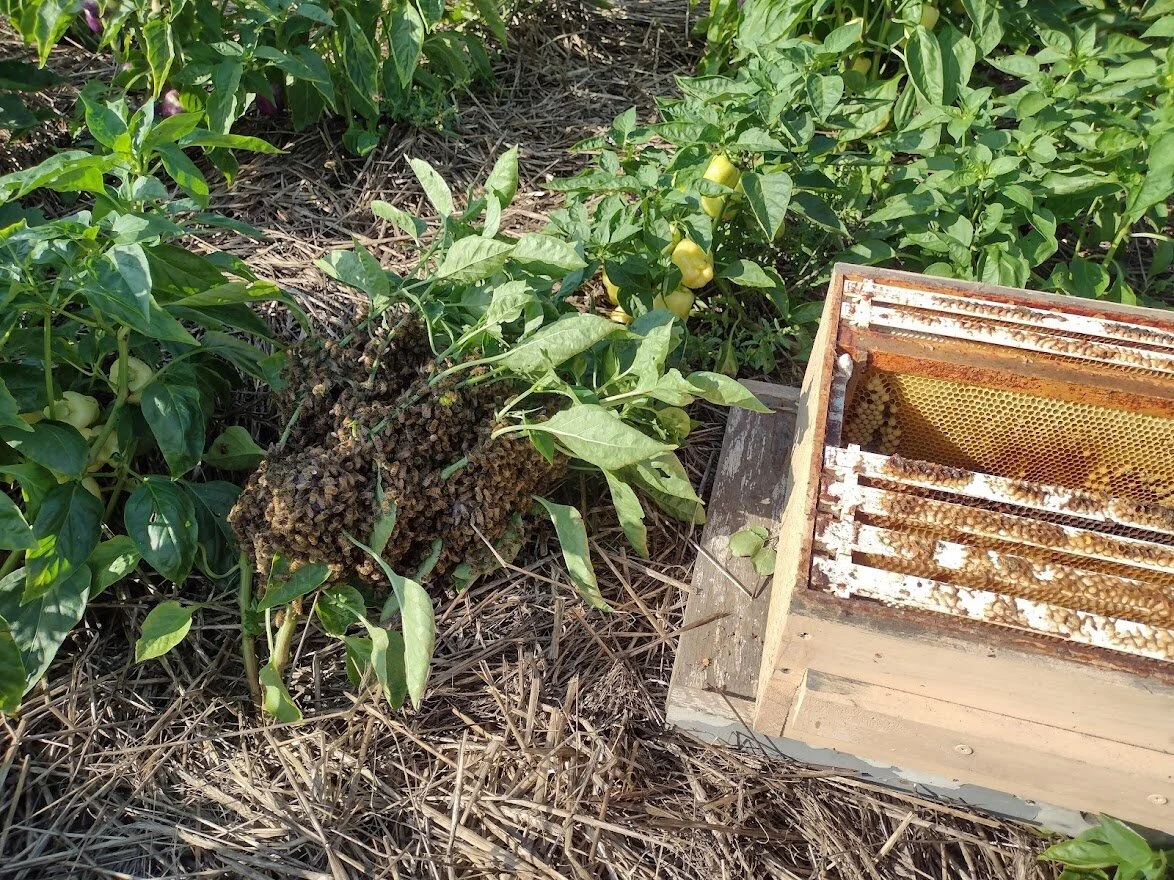
The swarm on the left made a temporary landing on a pepper plant while scout bees searched for a suitable home. I brought up one of our hive boxes to transfer the bees into. The capped off cells in the frame to the right are drone brood: male bee larvae maturing inside the cells, getting ready to hatch. My dad taught me that placing a frame of brood in a hive box helps encourage the bees to stay rather than continue searching elsewhere: they have a strong urge to care for the growing bee larvae.
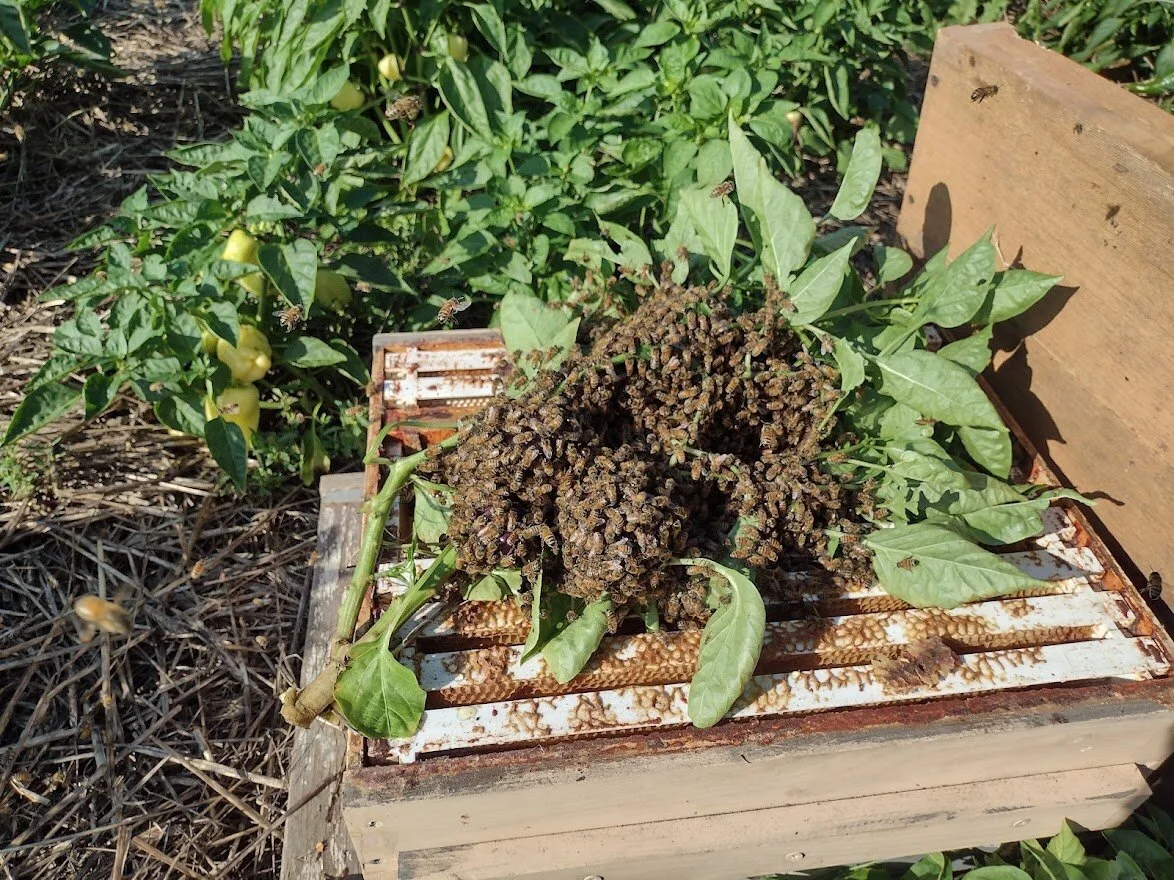
I cut the pepper plant and set it on an empty hive box. Shortly after taking this photo a firm shake transfered most of the honeybees into the box. The video below shows many of the bees migrating into the box, following the scent of the queen. If you look closely, you can see many bees outside the entrance to the hive fanning their wings with their bottoms up in the air. They are spreading the scent of the queen into the air so that the rest of their hive can find their new home: honeybees are highly attuned to phermone signals from the queen.
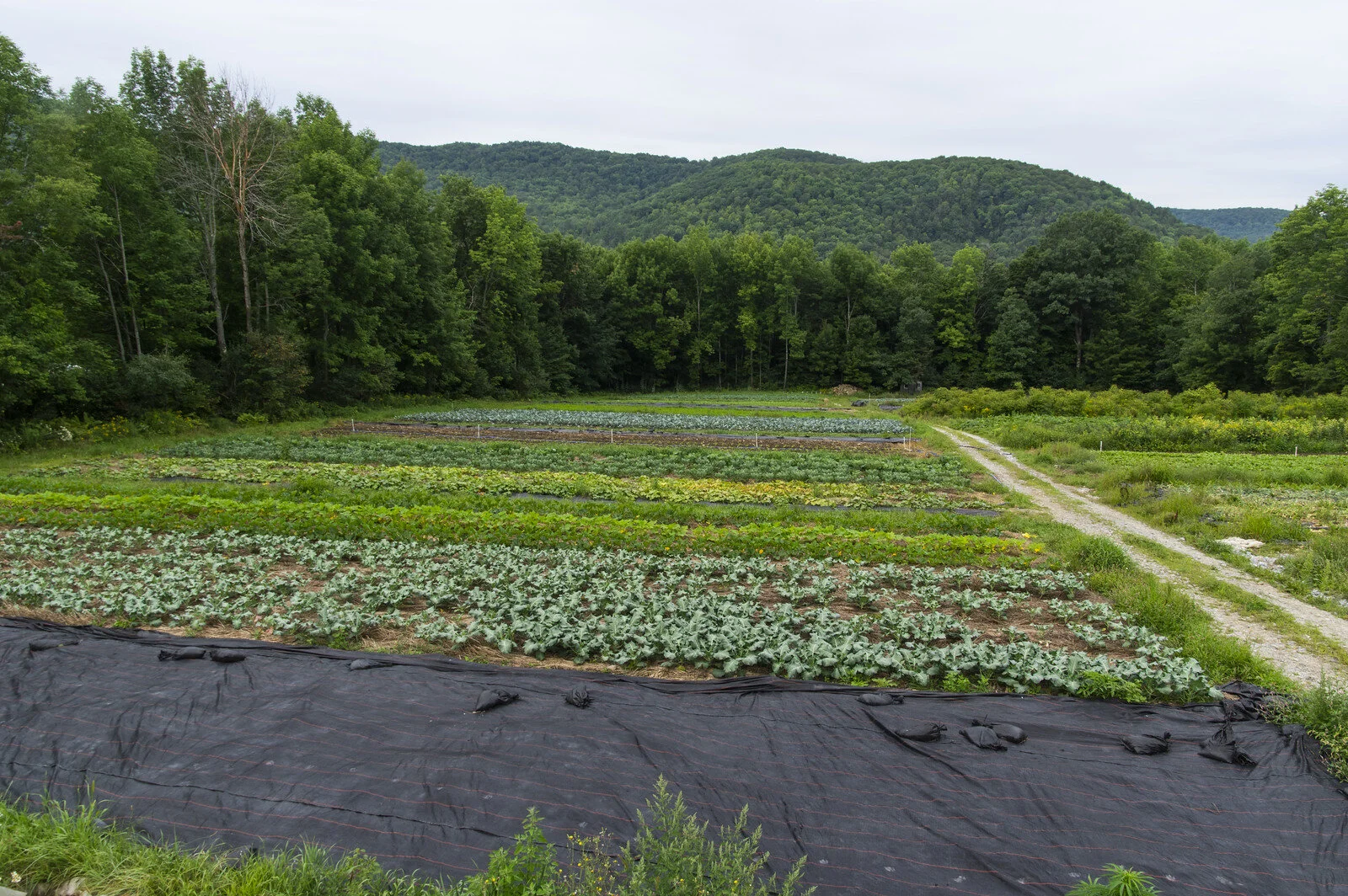
This photo shows much of what we call the open field, beyond the barn and below the driveway. Photo by Adam Ford
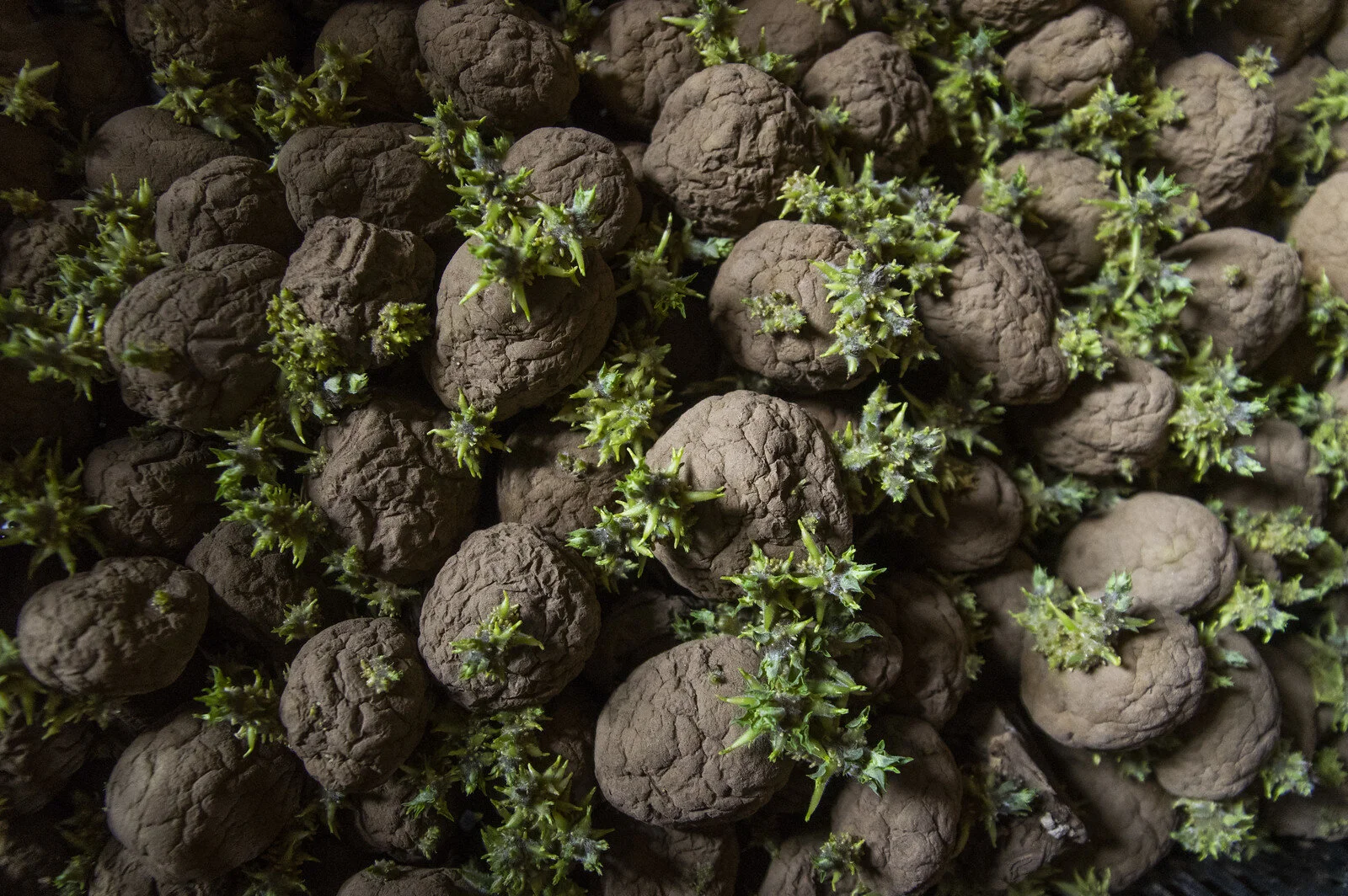
Unplanted potato seed with vigorous sprouts. Photo by Adam Ford

Vigorous and tenacious morning glory vines. Photo by Adam Ford
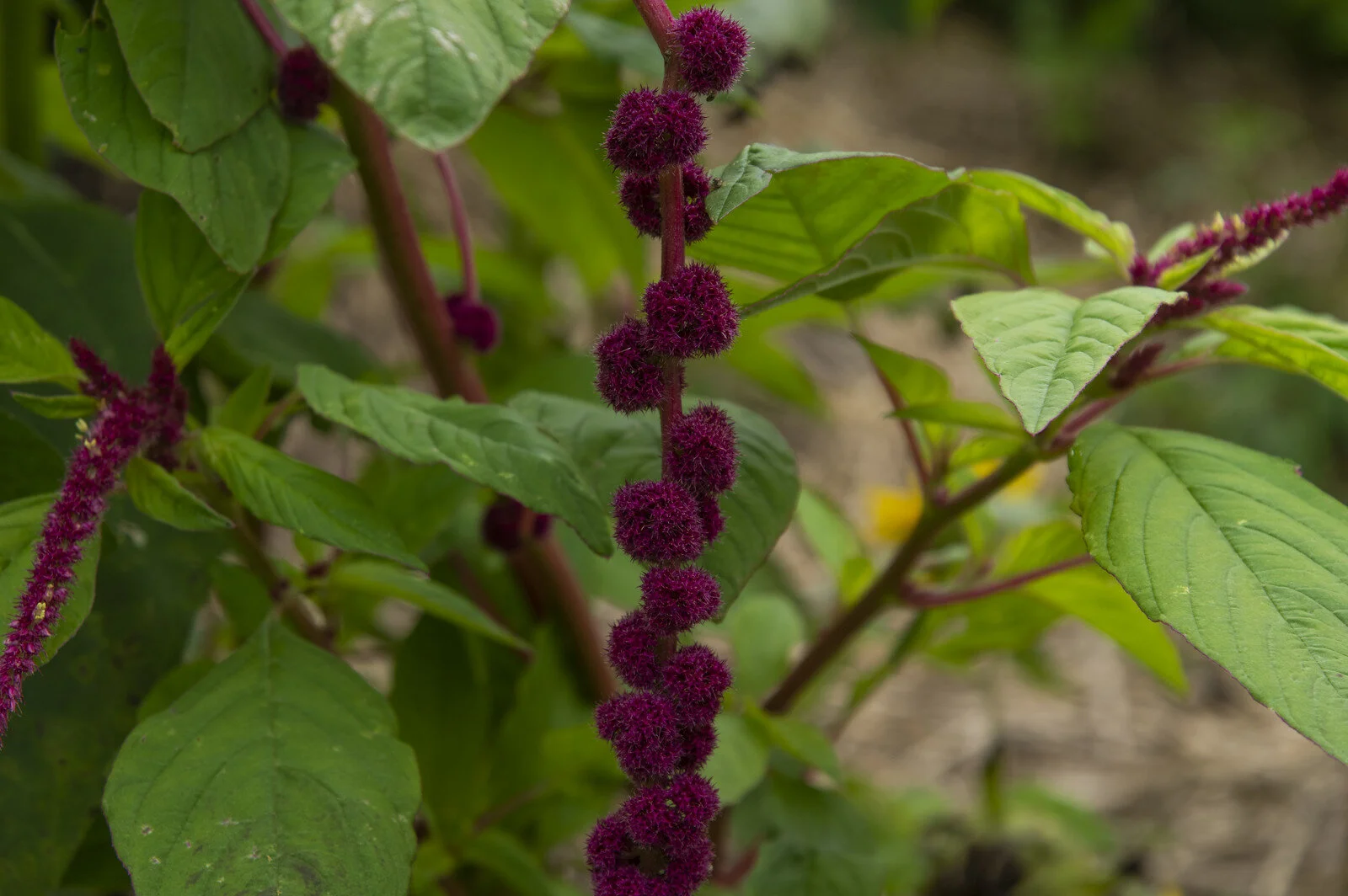
Love-lies-bleeding. Photo by Adam Ford
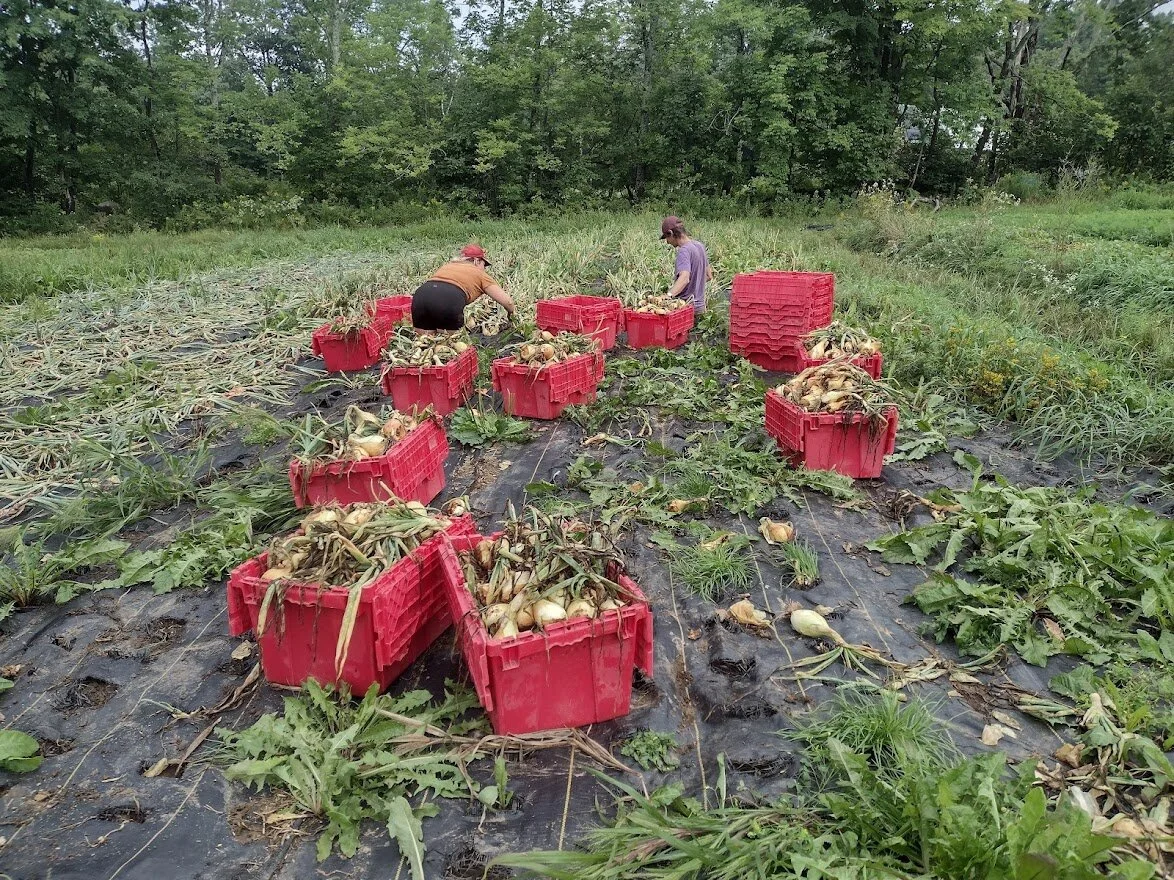
Morgan and I harvesting all the Ailsa Craig sweet onions from the field. Photo by Adam Ford

Cleome. Photo by Adam Ford
Have a great week,
-ESF Team: Kara, Ryan, Morgan, Taylor, Sam, Grace, Molly, Katie, and Cindy

We’re grateful to be able to spend time away as a family while this farm is well cared for.
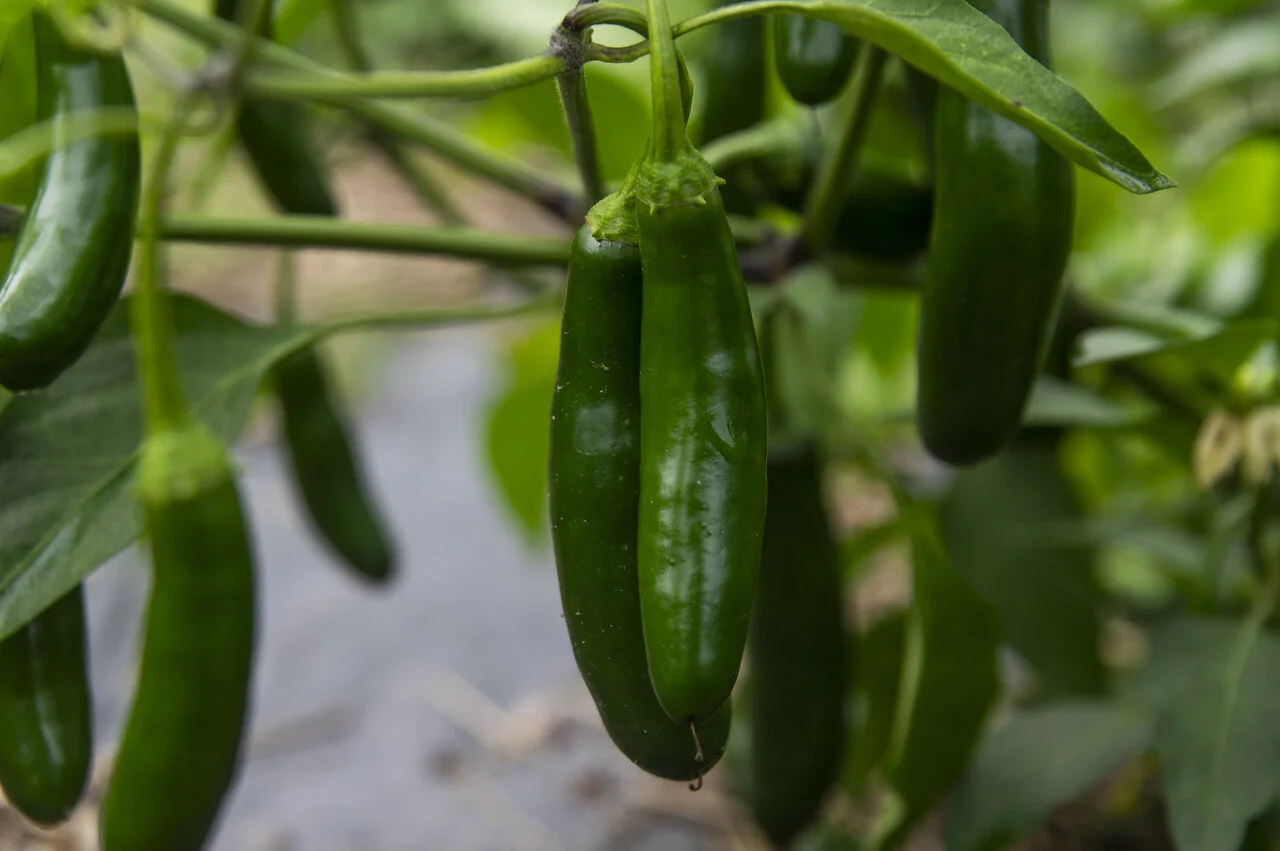
jalapenos, photo by Adam Ford

Pickler on mulch, photo by Adam Ford

greens harvester after harvesting arugula, photo by Adam Ford
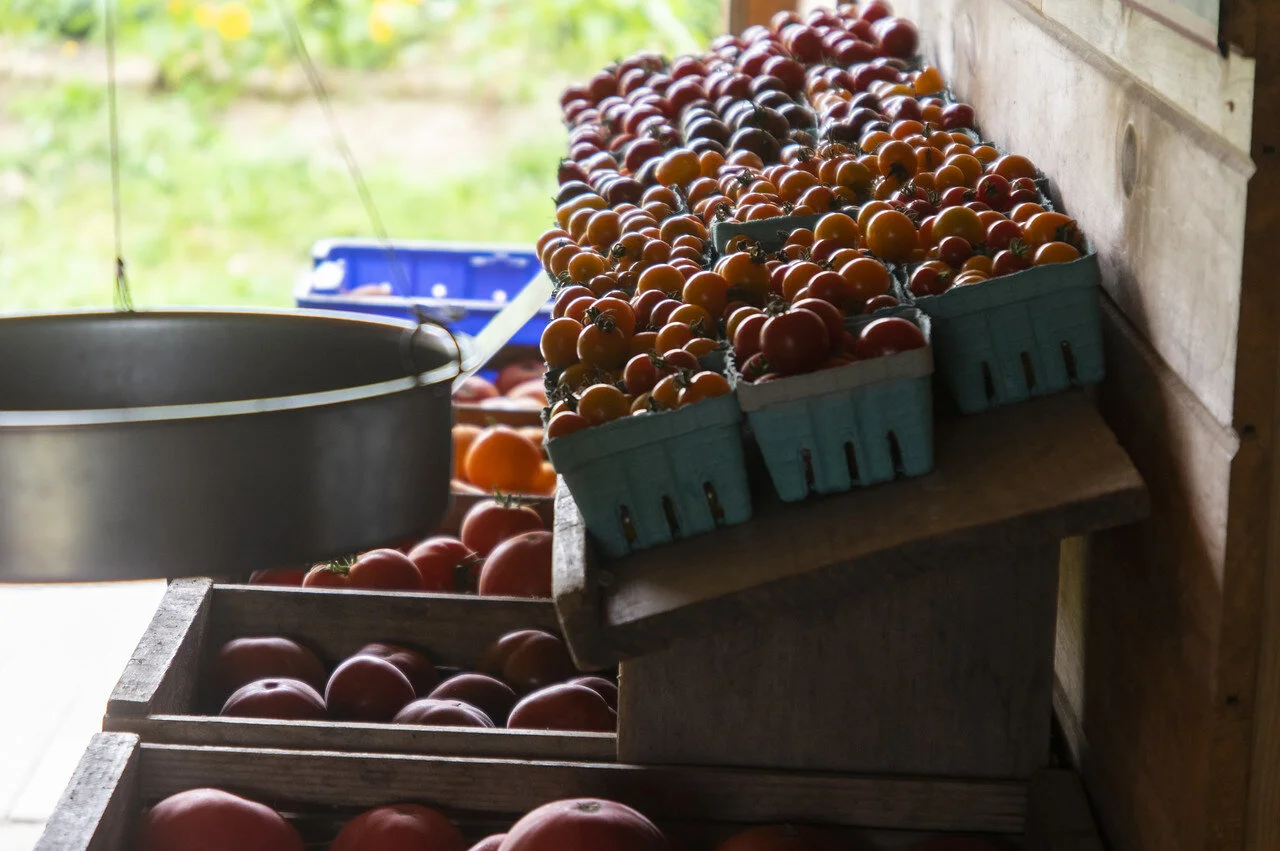
Tomato display at CSA pickup, photo by Adam Ford

Oranos, photo by Adam Ford
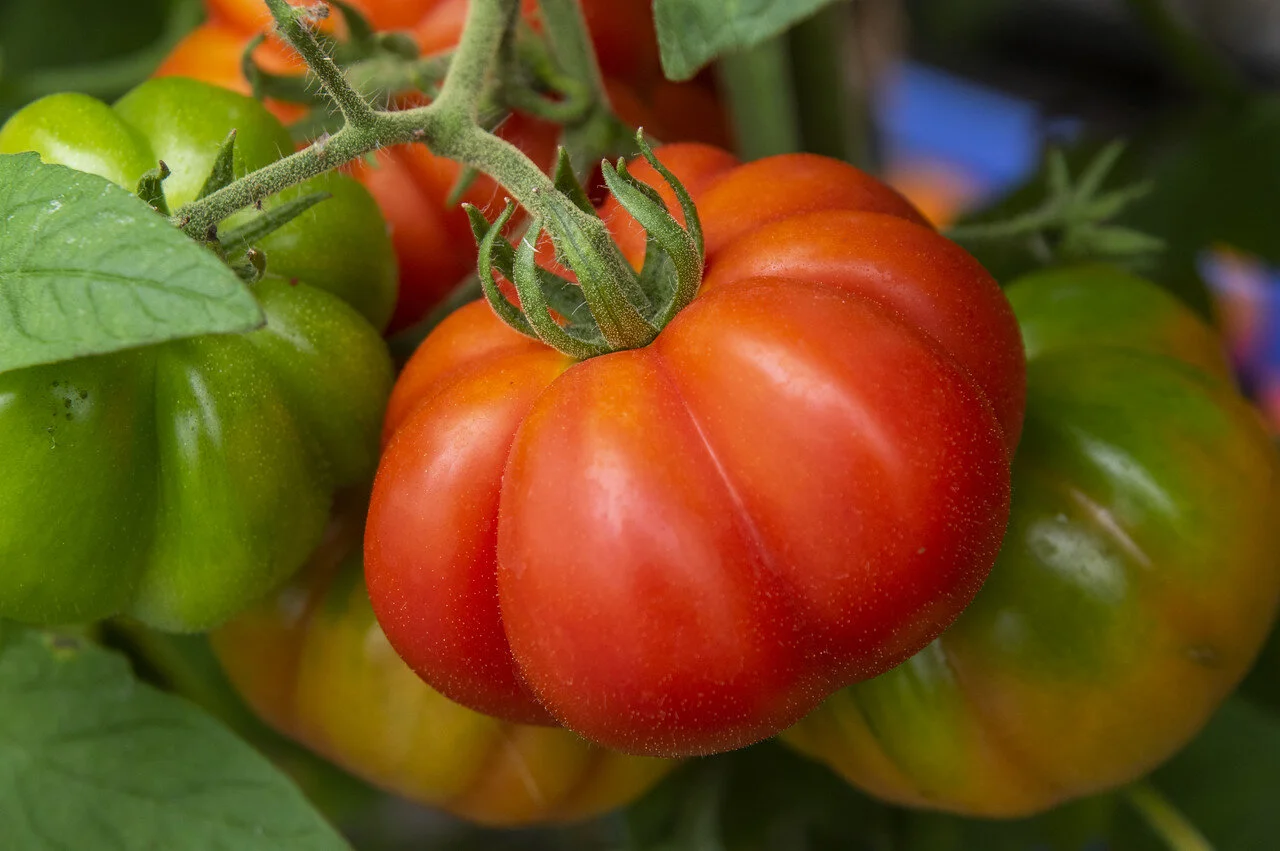
summer, photo by Adam Ford
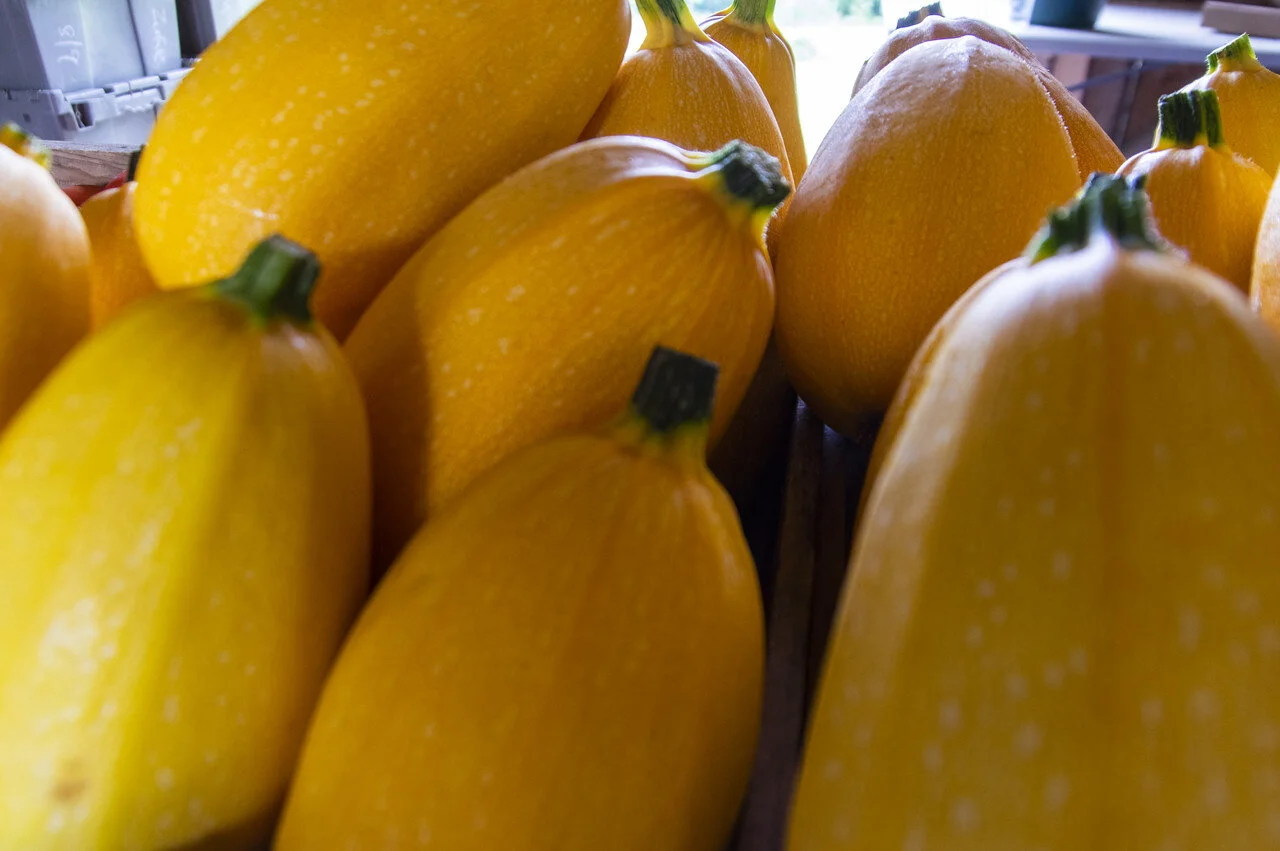
spaghetti squash, photo by Adam Ford

spider webs are gorgeous, photo by Adam Ford

even our most sophisticated systems have some tape on them, photo by Adam Ford
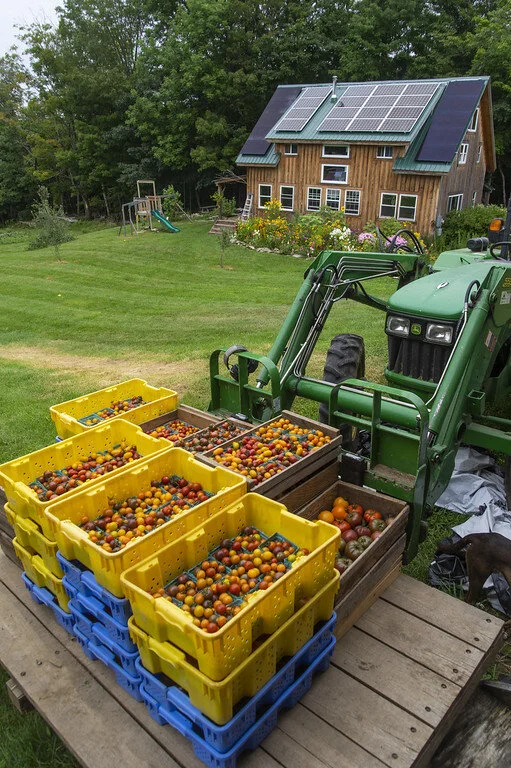
so many solanums, photo by Adam Ford