
19th Week of the Summer CSA: Week of October 5th
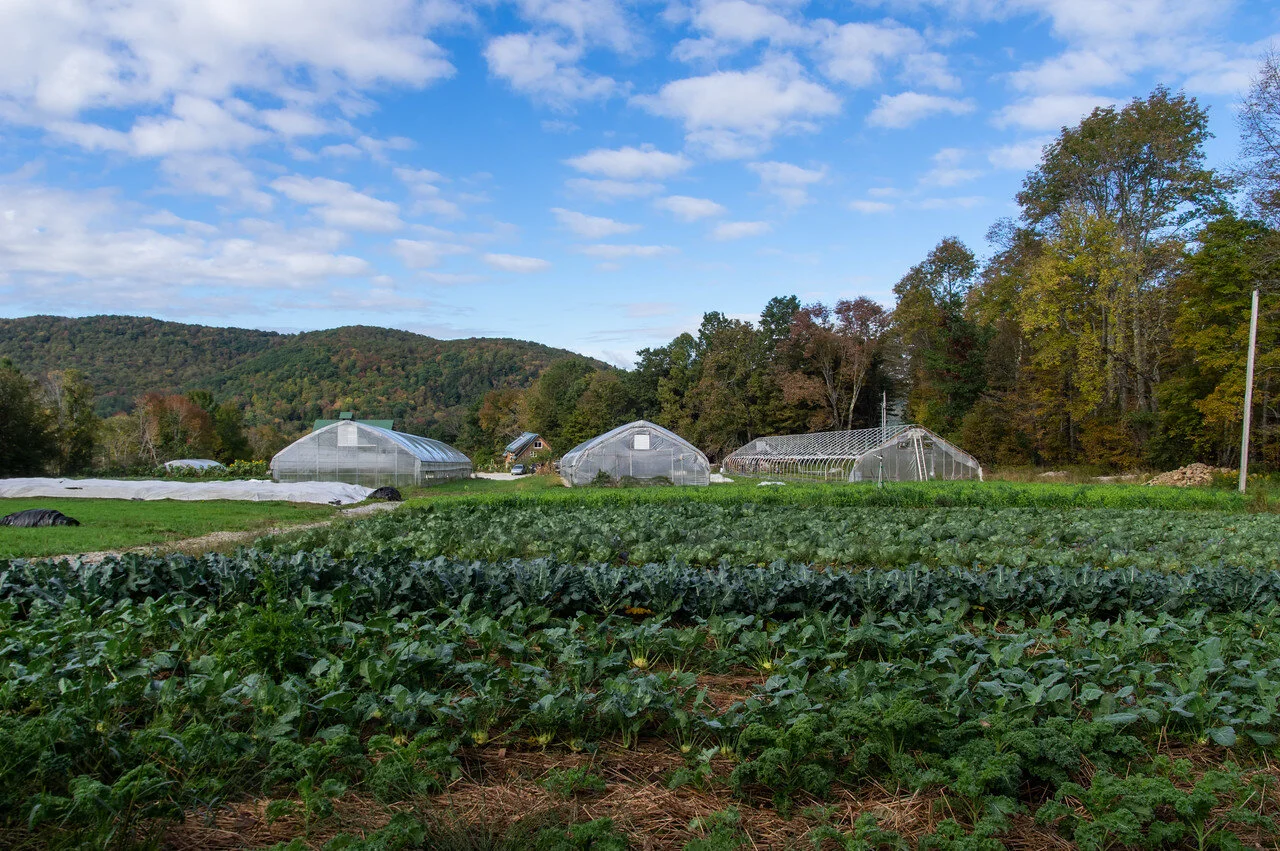
fall brassica field above the tunnels, photo by Adam Ford
This Week’s Availability
This week we will have leeks, spaghetti squash, delicata squash, butternut squash, broccoli, purple kohlrabi, red beets, yellow beets, chioggia (pink anbd white striped) beets, Ailsa Craig sweet onions, shallots, carrots, garlic, seed garlic*, green cabbage, red and yellow potatoes**, sweet peppers, poblano peppers, painted mountain flour corn, jalapeno peppers, red and green napa cabbage, baby bok choi, salad turnips, green curly kale, lacinato kale, arugula, baby lettuce, spinach, mesclun mix, spicy greens mix, baby kale, mini romaine lettuce, parsley, tomatillos, and husk cherries!
*Seed garlic is the same garlic that has been available for CSA, but we set aside the largest heads for seed: these larger cloves will grow bigger garlic than smaller ones. We generally plant our garlic seed around October 15th and mulch thickly with straw. We will have two varieties available: Music (4-6 huge cloves per head) and German Red (8-10 large cloves per head). Garlic can be planted as closely as 6 inches apart, but 12 inches apart will grow larger heads. If you select it on your order form and have a variety prefence, make that note in the comment section. (Or if you prefer purchasing a larger bulk amount of seed garlic instead of an item’s worth, the seed garlic is $14 per pound.)
**Sourced from Atlas Farm, certified organic.
It’s possible we will have a few tomatoes left this week, but we don’t know yet: If you are excited about tomatoes, you can make a note in your comment form for us to add an item’s worth if we have them available, and what item they should replace.
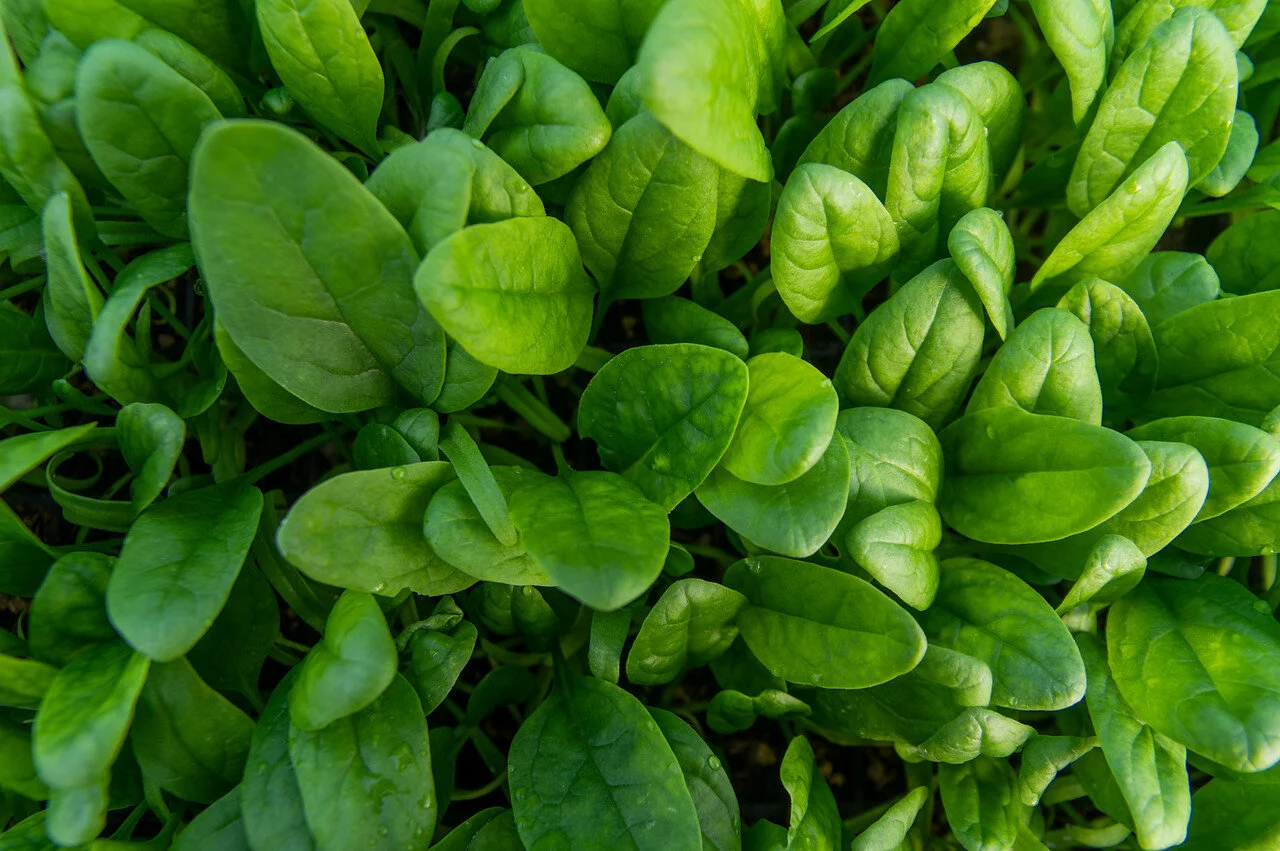
spinach transplants waiting to go out, photo by Adam Ford
Bulk vegetables available for processing
When we have bulk amounts available with veggies, we like to pass along our wholesale prices to CSA members in case you want to do some processing. Below are the current wholesale prices for certain veggies. If you are interested in getting a bulk amount of anything, send us an email. Thanks!
Onions: $20 for 10 pounds, $35 for 20 pounds
Green Curly Kale: $14 for 5 bunches, $24 for 10 bunches
Lacinato Kale: $14 for 5 bunches, $24 for 10 bunches
Garlic: $12 per pound
Seed Garlic: $14 per pound (German Red and German White available)
Jalapenos: $6 per pound, $25 for 5 pounds
Fill out the delivery form by noon on Tuesdays.

the naked Trunchbull….. Every 4 years greenhouse plastic needs to be replaced to address the degredation from the sun and avoid a failure during a winter snow load. last week Ryan and Cindy led the plastic removal part of the project with help from other members of the team, photo by Adam Ford
Fall CSA Sign Up
If you haven’t already, now is a good time to sign up for the fall CSA share. We prioritize making space for current and past CSA members, and lately our CSA seasons fill up fast, so don’t wait too long to jump on it.
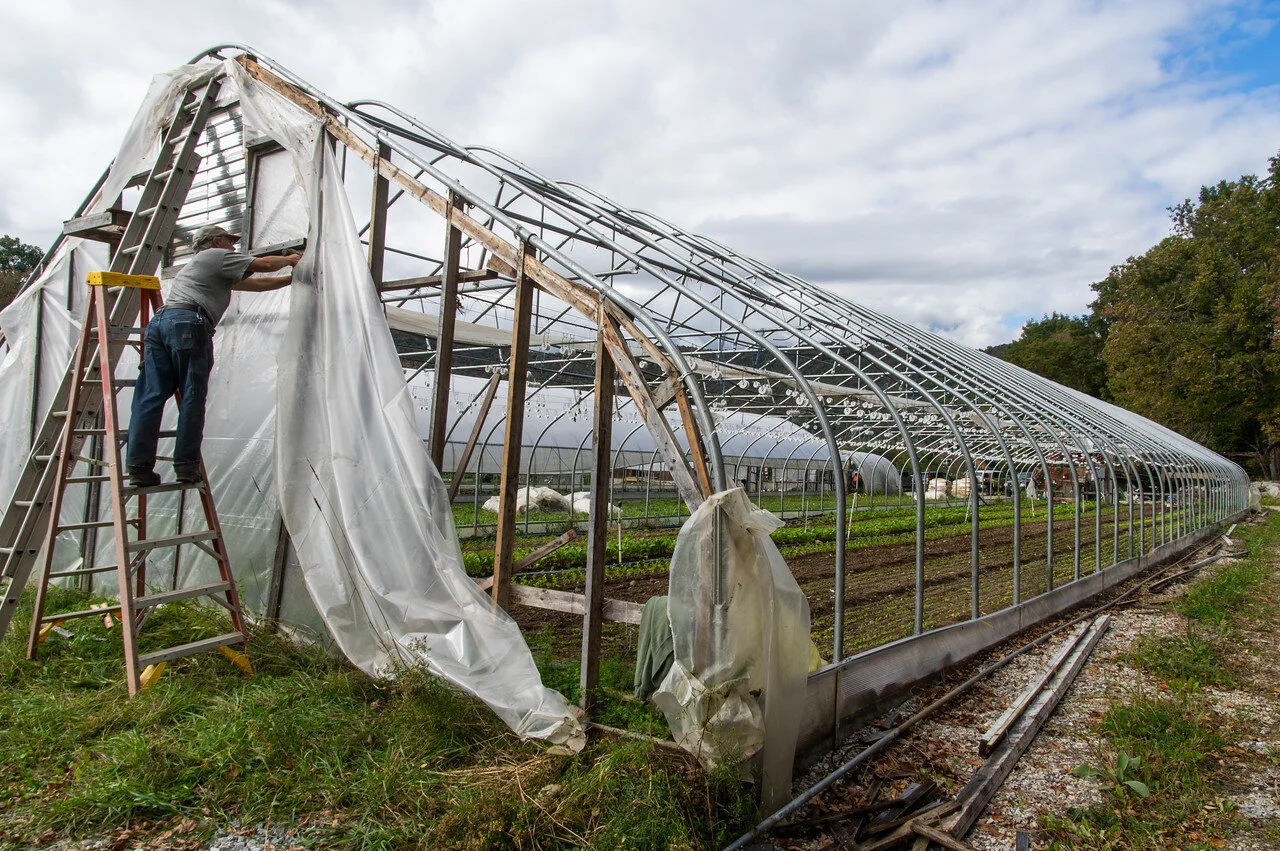
Cindy removing the old plastic from the endwalls… and if you cringe at plastic use like us…. we reuse it in the field to solarize and kill weeds, photo by Adam Ford

Happy winter greens growing in the tunnel got some natural rainfall while the plastic was off, photo by Adam Ford
Farm News from Ryan
One of the most rewarding parts of doing the work of vegetable farming year after year is gradually getting to learn how to grow vegetables without needing to work quite so hard! One of the biggest ways that we’ve worked on making our vegetable production more efficient is getting better at managing weeds. This is especially important to manage for the winter greens in our high tunnels…if a crop becomes overtaken by weeds in the fall, there are no second chances to plant it again!
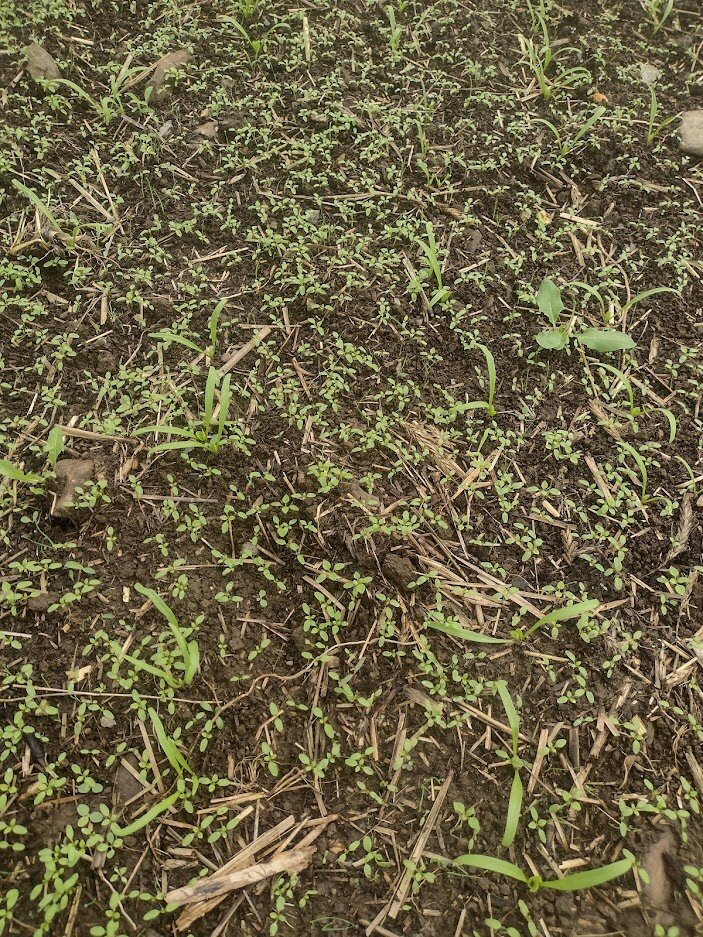
Yikes! The plants with the very long leaves are spinach seedlings. (I am counting about 14 of those.) All the other little plants? Chickweed, sowthistle, dandelion, and bluegrass...aggressive winter weeds that quickly take over. This is what the whole tunnel would look like if we were to simply prepare our winter greens beds and seed right into them. It would take many dozen hours of tedious handweeding to save a whole tunnel that looks like this!
The biggest help for reducing our workload in growing winter greens is tricking the weeds to germinate before we set any seeds or plants in the bed. We plan ahead to remove our summer crops at least two weeks before we need to plant the winter greens. Beds are prepared ahead of time and the tunnel is irrigated to create the conditions for weed seeds to germinate. When the weeds have emerged, like they have in the photo above, we quickly roll a set of propane burners over the bed, which allows us to kill those weeds without disturbing the soil and bringing more seeds to the surface. After that, we have a ‘clean’ bed, ready to seed or transplant our winter greens. There are still some weeds that emerge, but it’s a tiny fraction of the amount that we would have to manage if we were to skip the step of intentionally germinating weed seeds in advance of planting. When I see how easily we’re able to establish greens in the high tunnel with minimal weed pressure, I’m so thankful that we learned this technique: it saves us hours and hours of hard work.
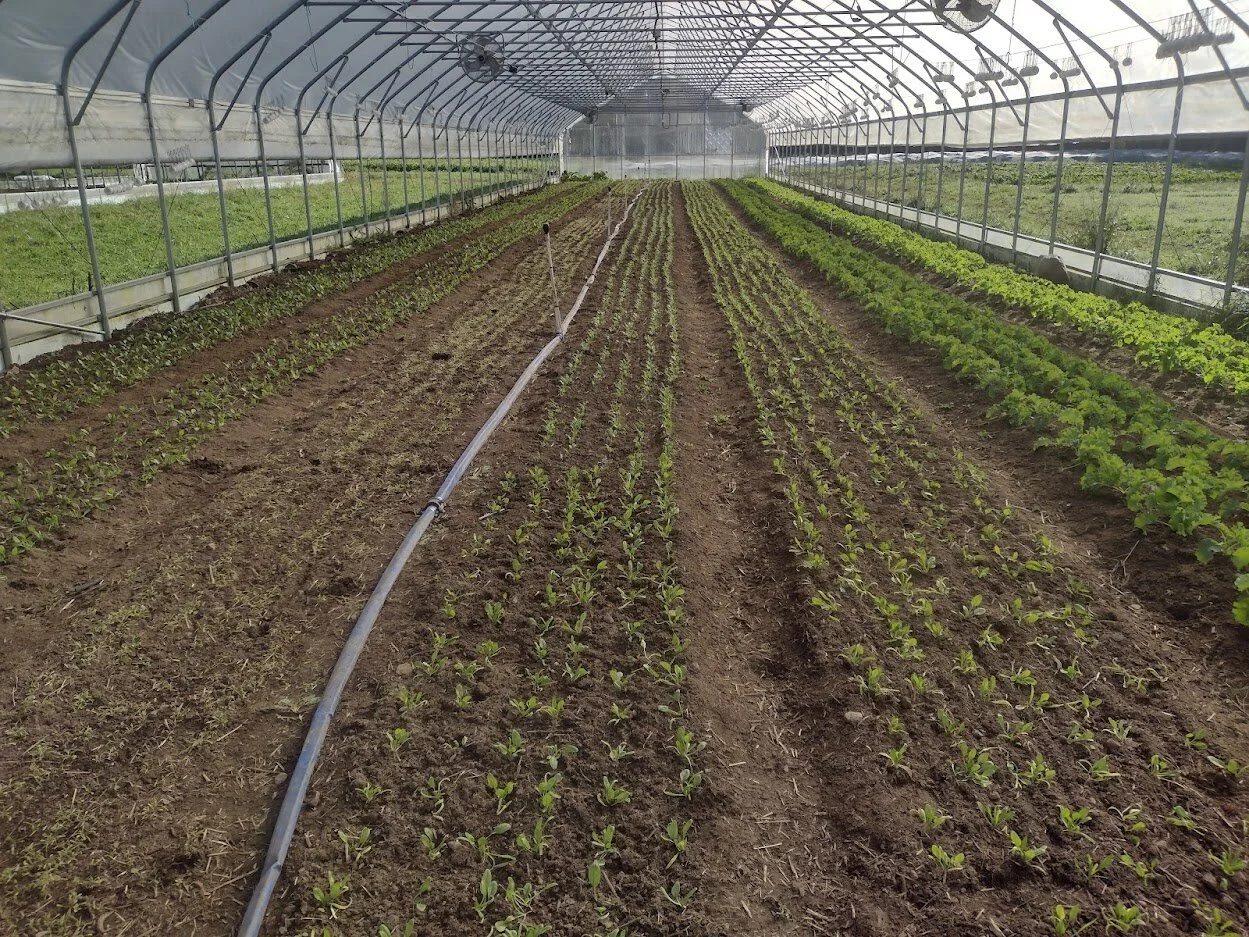
It brings me joy to see a whole tunnel planted to greens with minimal weed competition. This photo was taken after our team went through to quickly hoe and handweed these beds. In here is spinach, claytonia (new to us this year), and kale, which we’ll harvest in November through April.
Have a great week!
ESF Team: Ryan, Kara, Molly, Grace, Taylor, Morgan, Katie, and Cindy
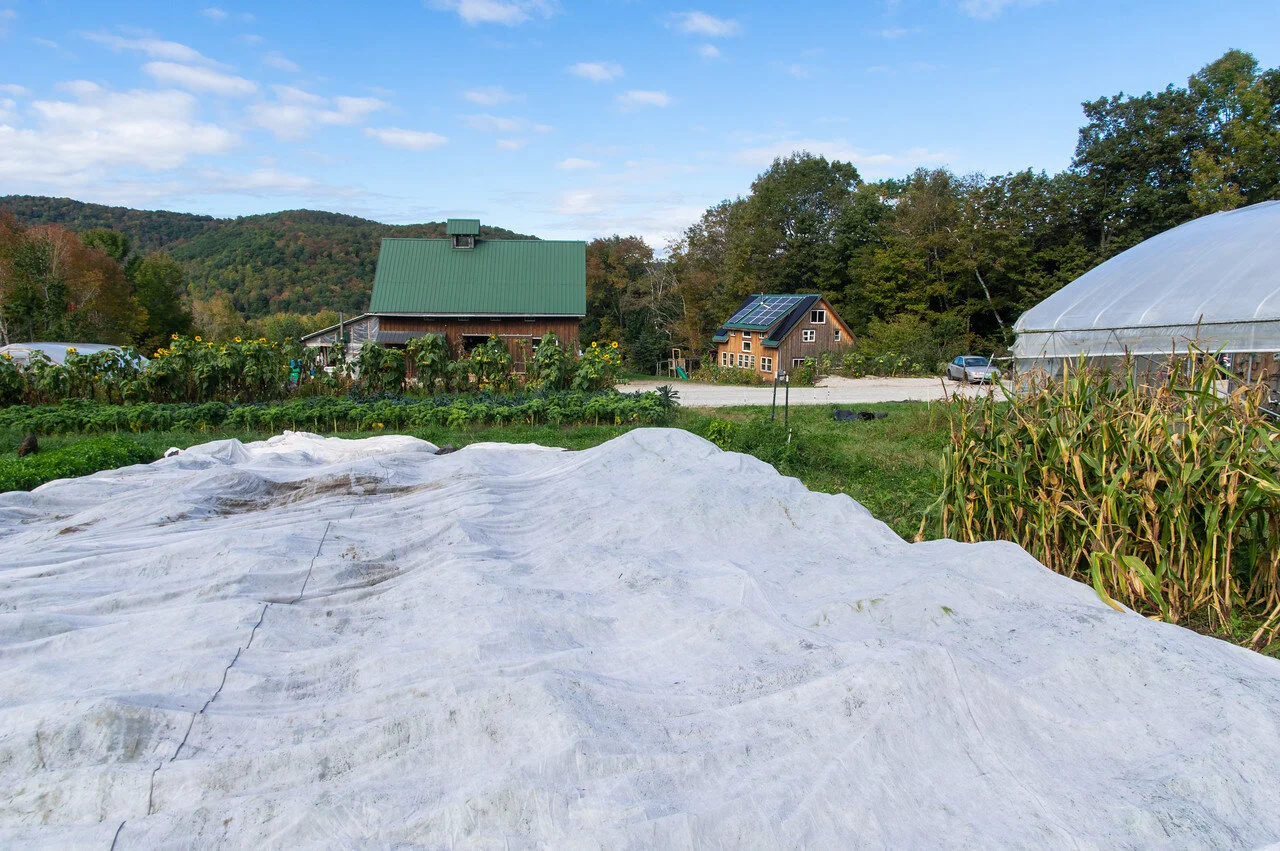
row cover on the husk cherries for the risk of the first light frost of the fall season last week, photo by Adam Ford

a tear in the row cover gives us a cute little peak at the sweet peppers under cover for the cold, photo by Adam Ford
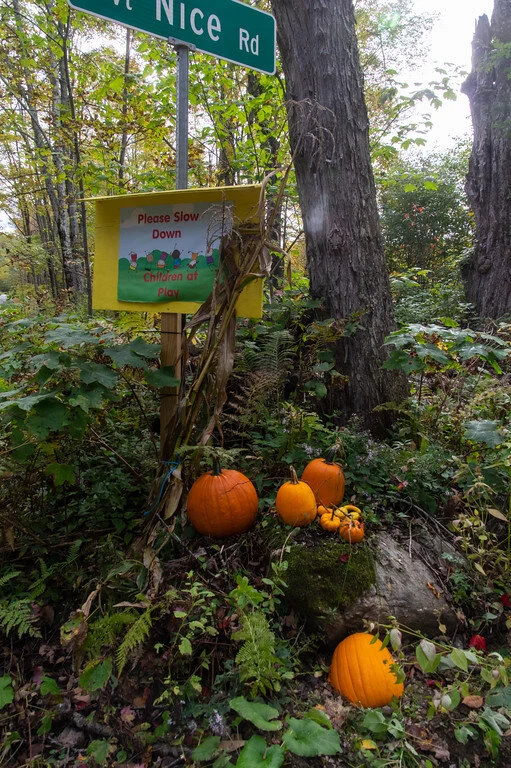
Nonna and the kiddos decorated, photo by Adam Ford
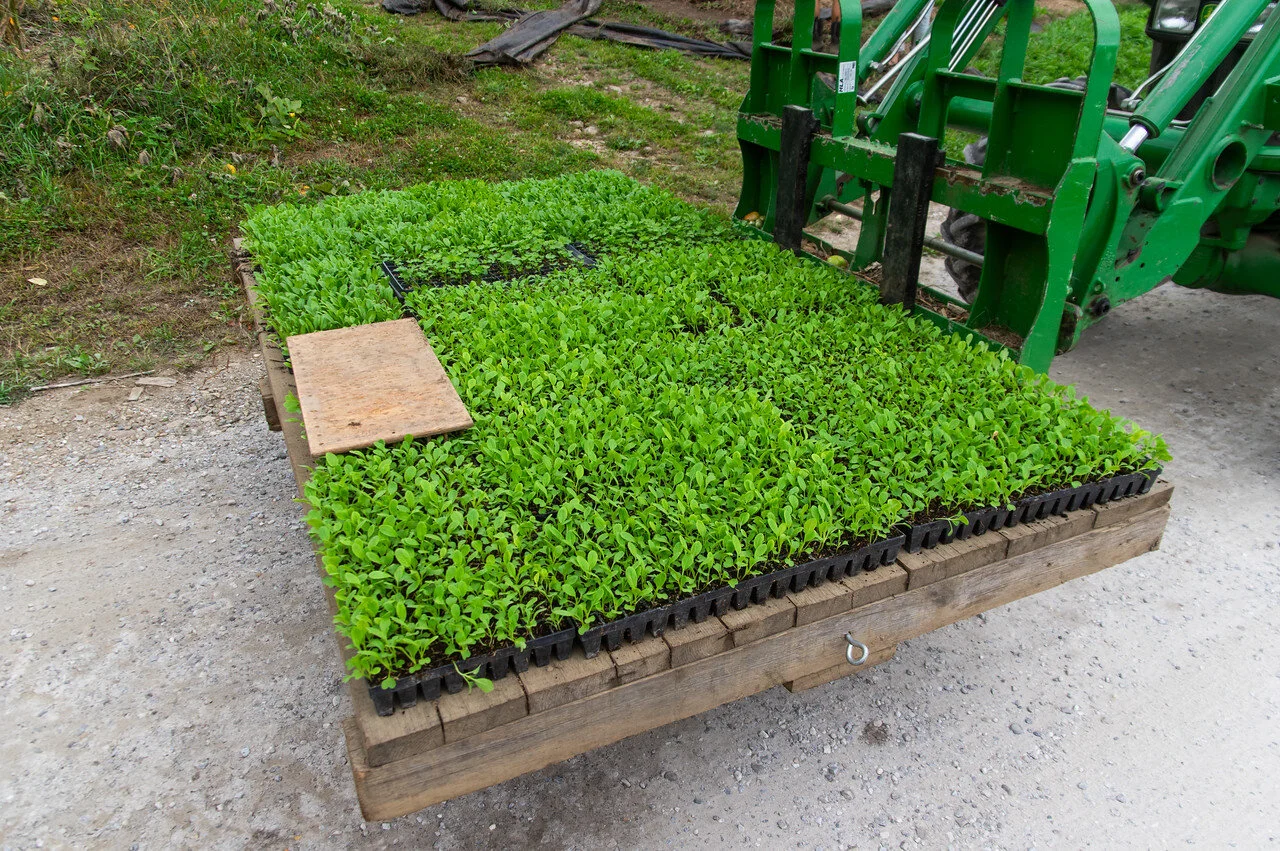
moving spinach transplants on the tractor pallet, photo by Adam Ford
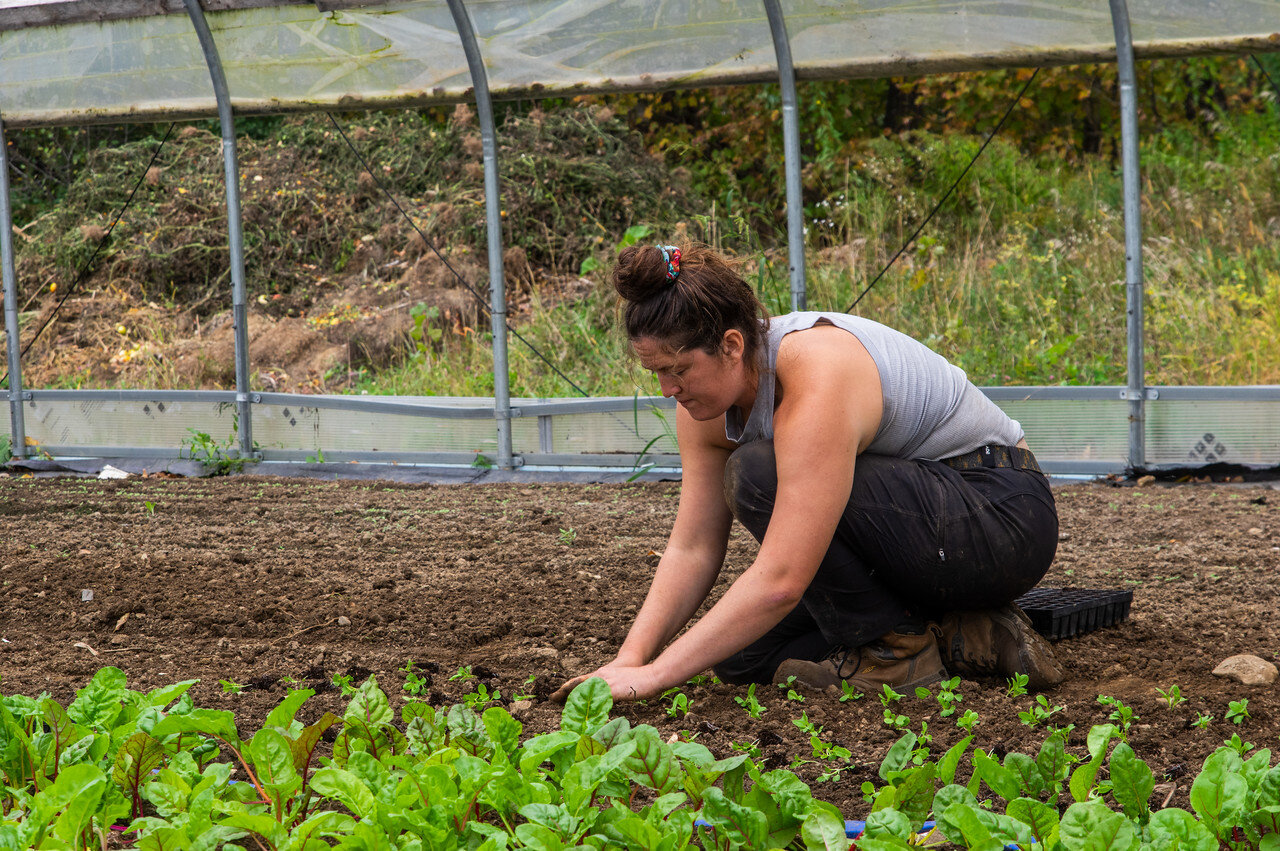
Molly transplanting winter greens, photo by Adam Ford

Sunflower posing for its headshot as most majestic diety, photo by Adam Ford
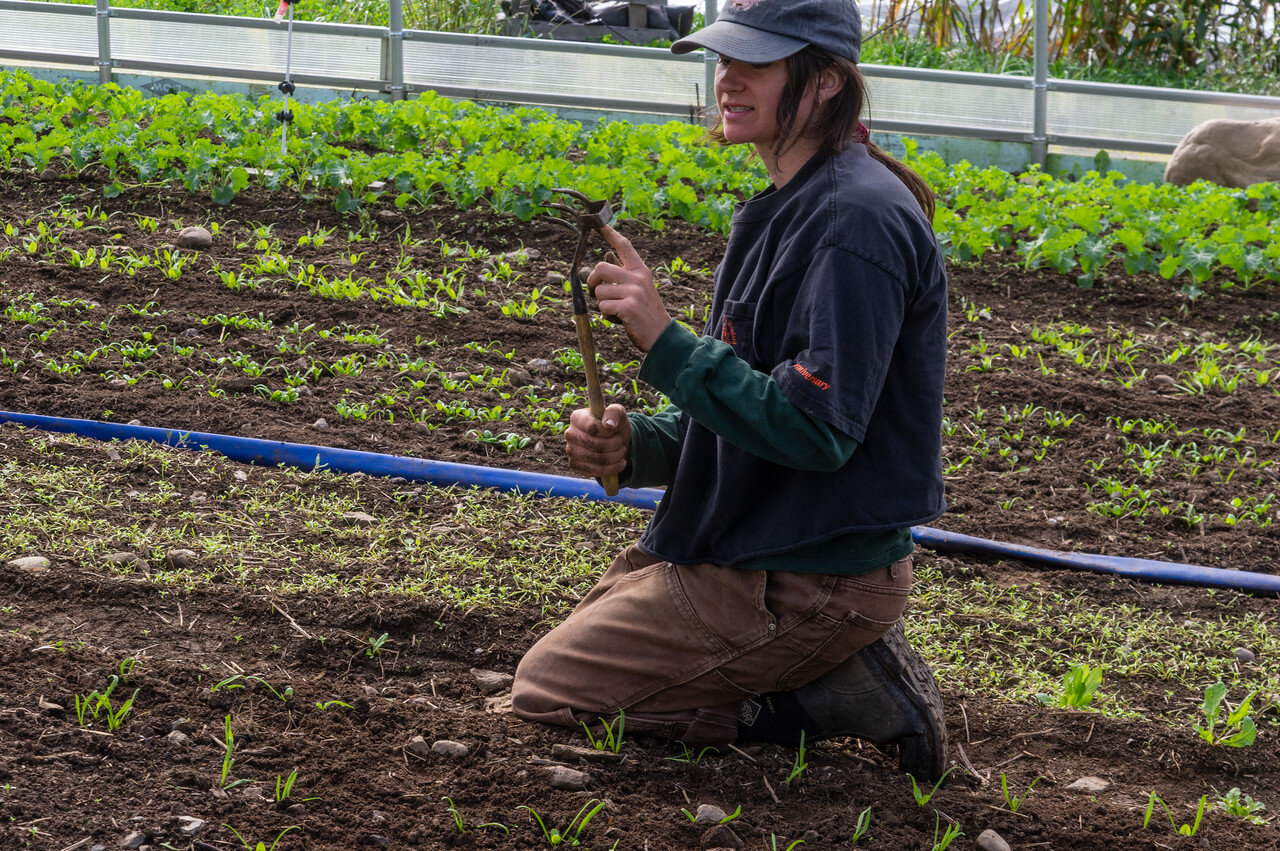
Grace explaining the differences in hand weeding tools, photo by Adam Ford

I love looking at bright lines of greens growing, photo by Adam Ford
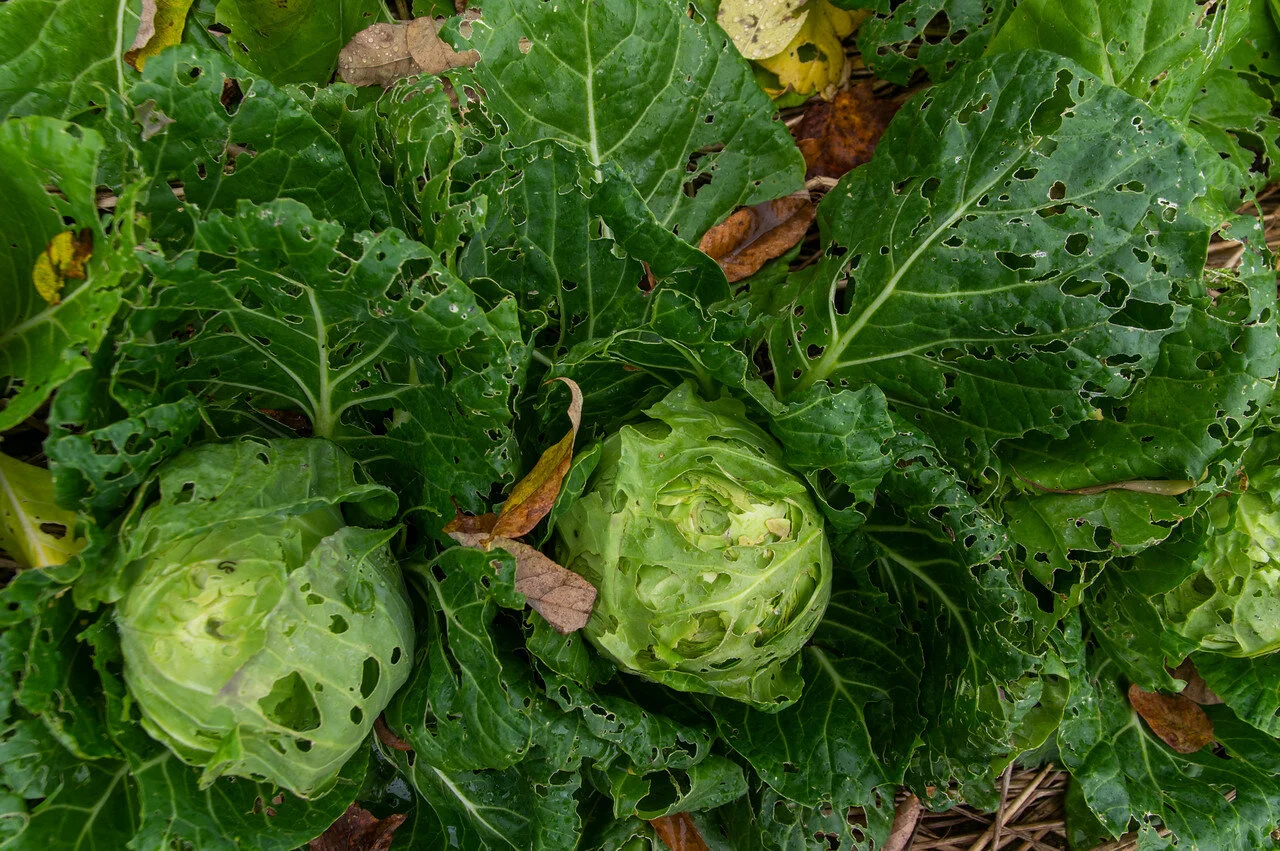
Slugs ruining the marketability of cabbage… but I just make my sauekraut from those, photo by Adam Ford
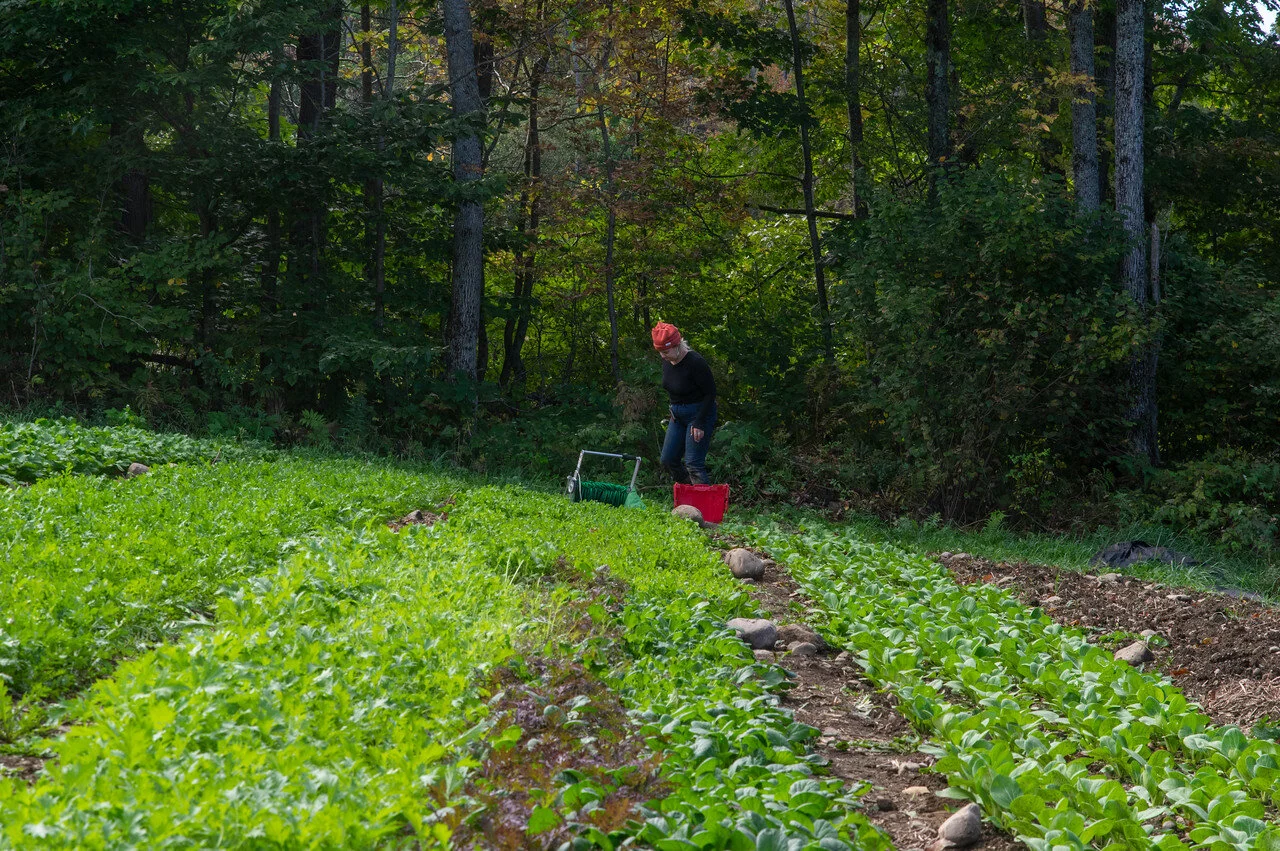
Morgan harvesting mesclun mix, photo by Adam Ford
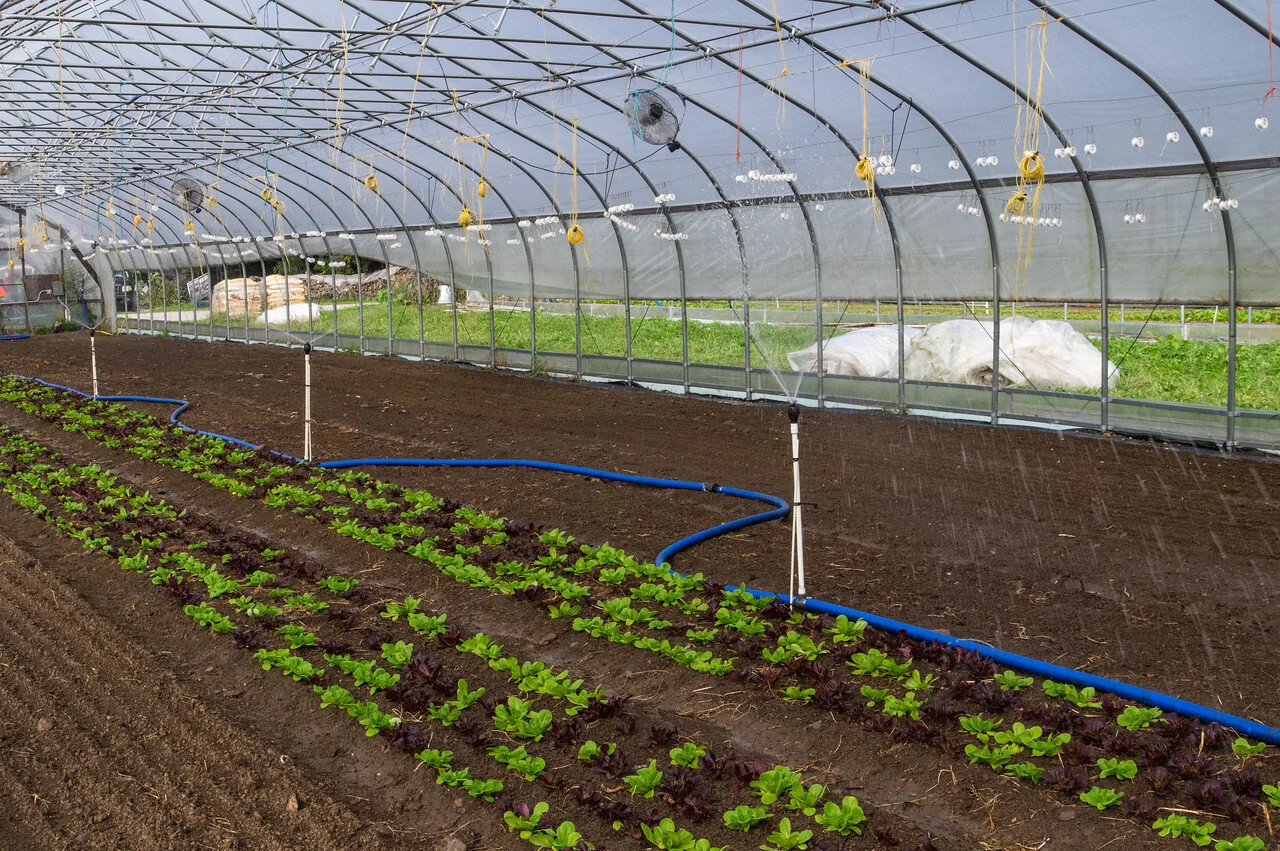
watering lettuce after transplanting, photo by Adam Ford
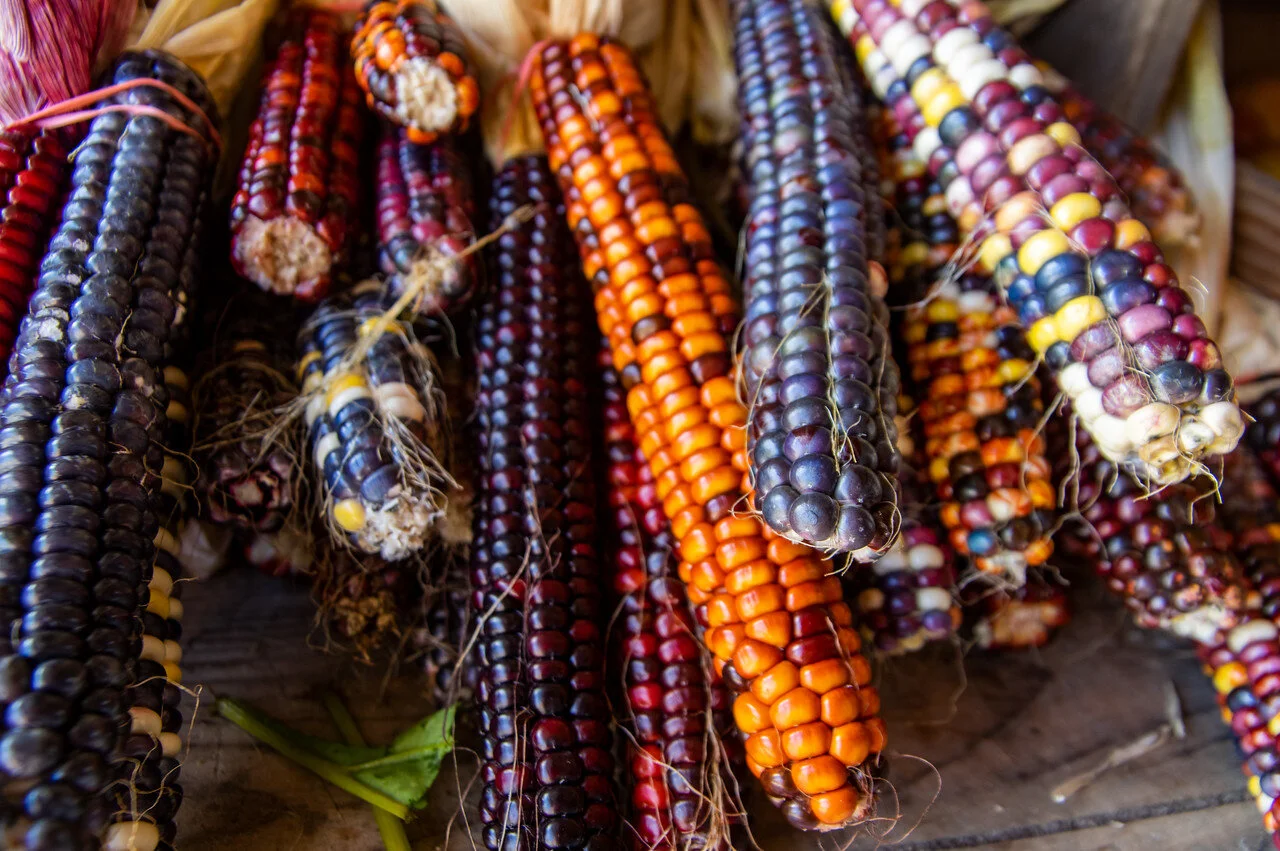
we put aside several cobs of the best painted mountain corn to save for seed next year, photo by Adam Ford
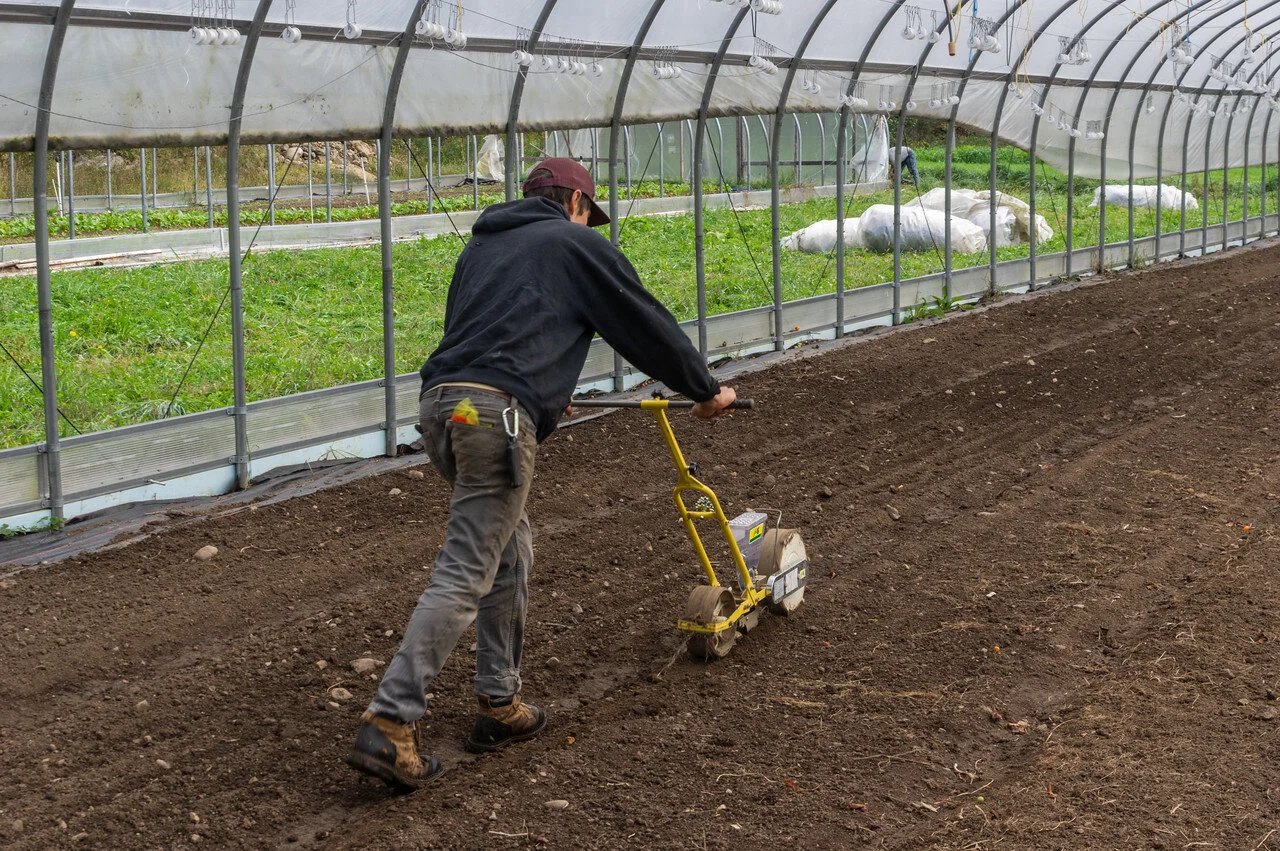
Ryan pushing the seeder to more winter green successions, photo by Adam Ford
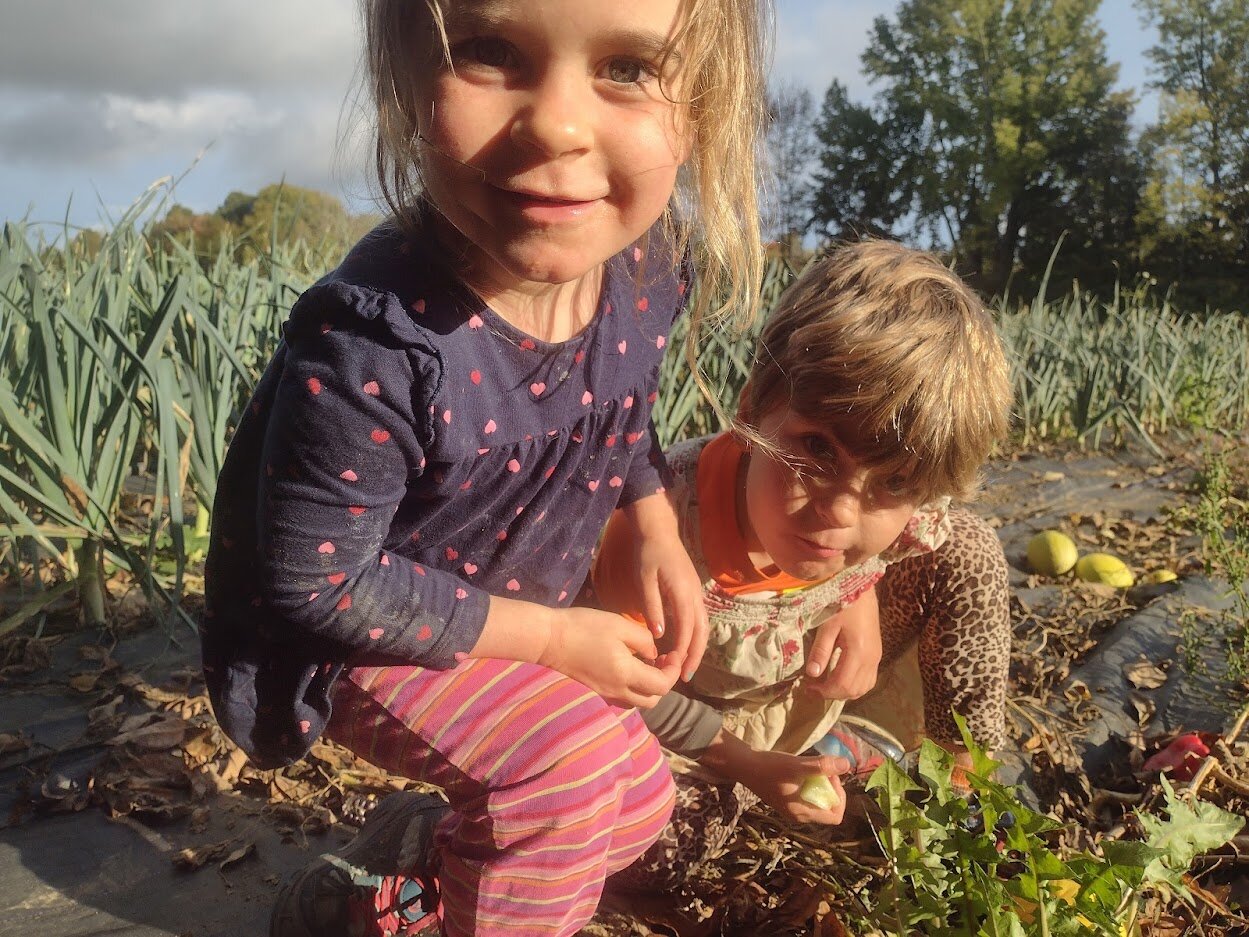
looking for bugs in the leeks
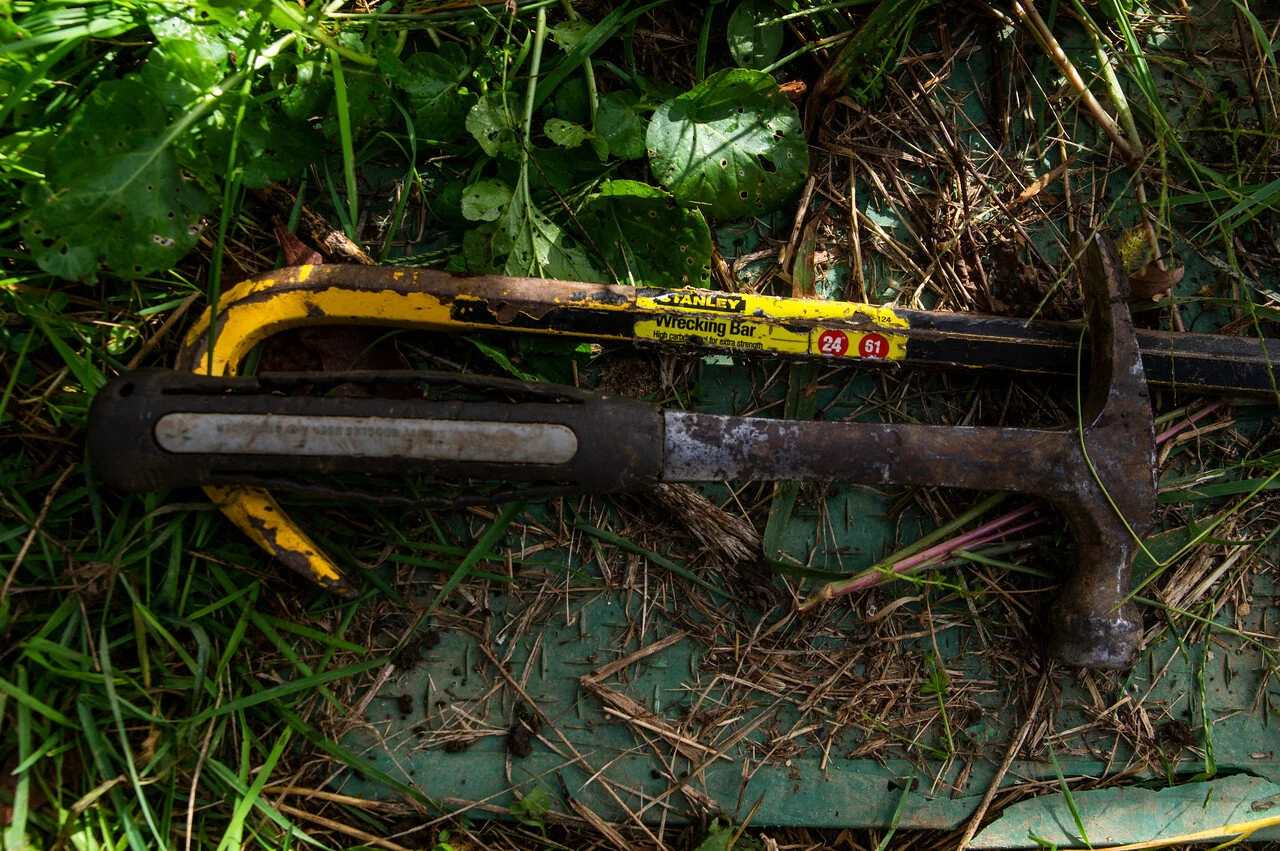
I believe we have had that wrecking bar since we started a CSA in Pennsylvania…. I have lots of memories fondly weilding that on many projects at the first place at 103 getting it ready for our first year of veggie production, photo by Adam Ford