
12th (LAST) Week of the Spring CSA Season: Week of May 21st
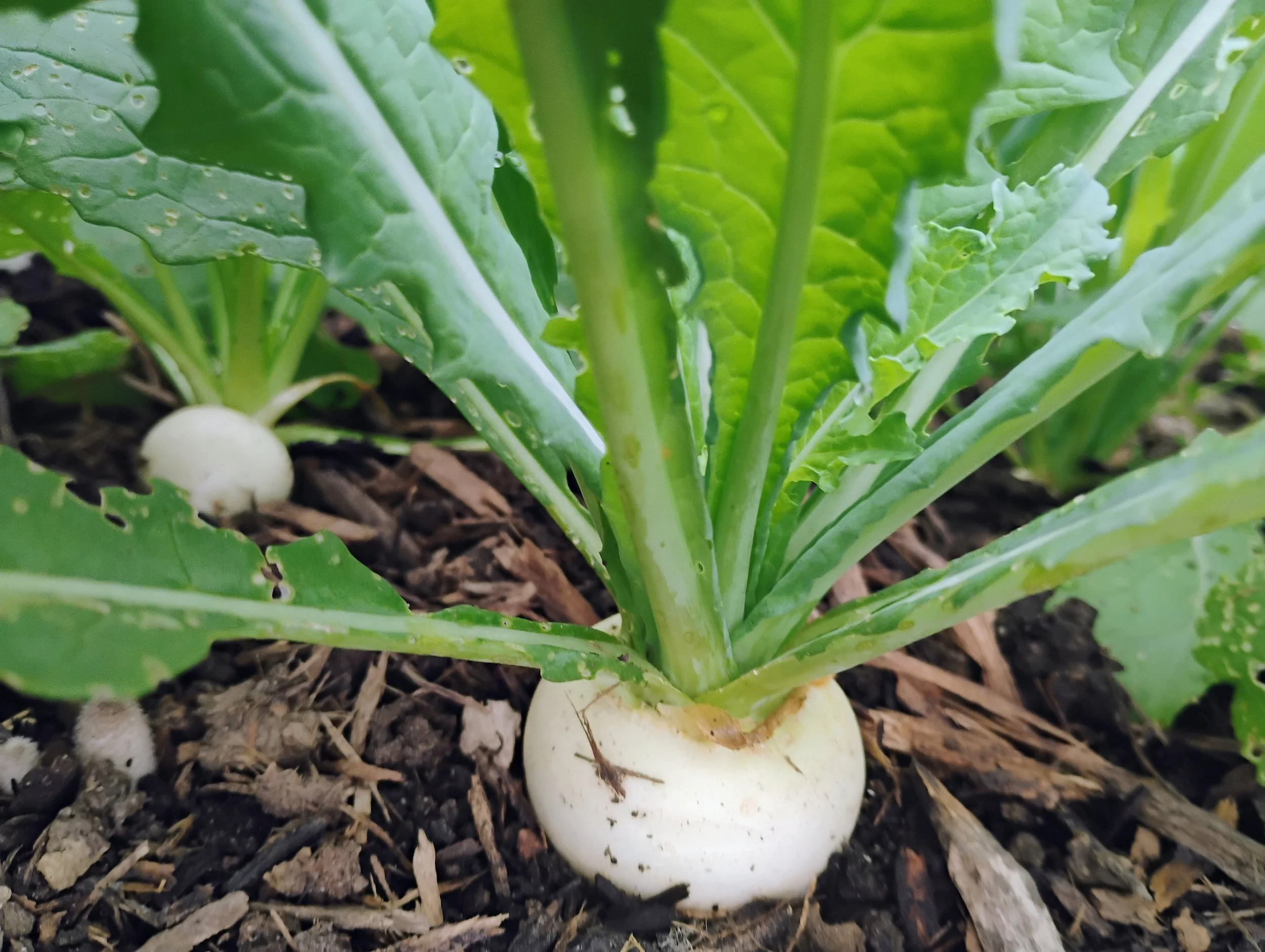
remember these beauties! first week of the salad turnips for the season… sweet, crunchy, mild… farm kids eat them like apples, photo by Kara
This Week’s Availability
This week we will have:
Greens: baby lettuce, spinach, pea shoots, bok choi, mini romaine heads, rainbow chard, and green cabbage
Roots: fresh red radishes, salad turnips, rutabaga
Alliums: green garlic, scallions
Herbs: cilantro, parsley
Miscellaneous: Rhubarb
Seedlings for your garden: tomatoes, sweet peppers, hot peppers, zucchini, summer squash, sunflowers, zinnias, parsley, basil, dill, sugarsnap peas, green beans, slicing cucumbers, pickling cucumbers, morning glory, snapdragons, elderberries, and willows
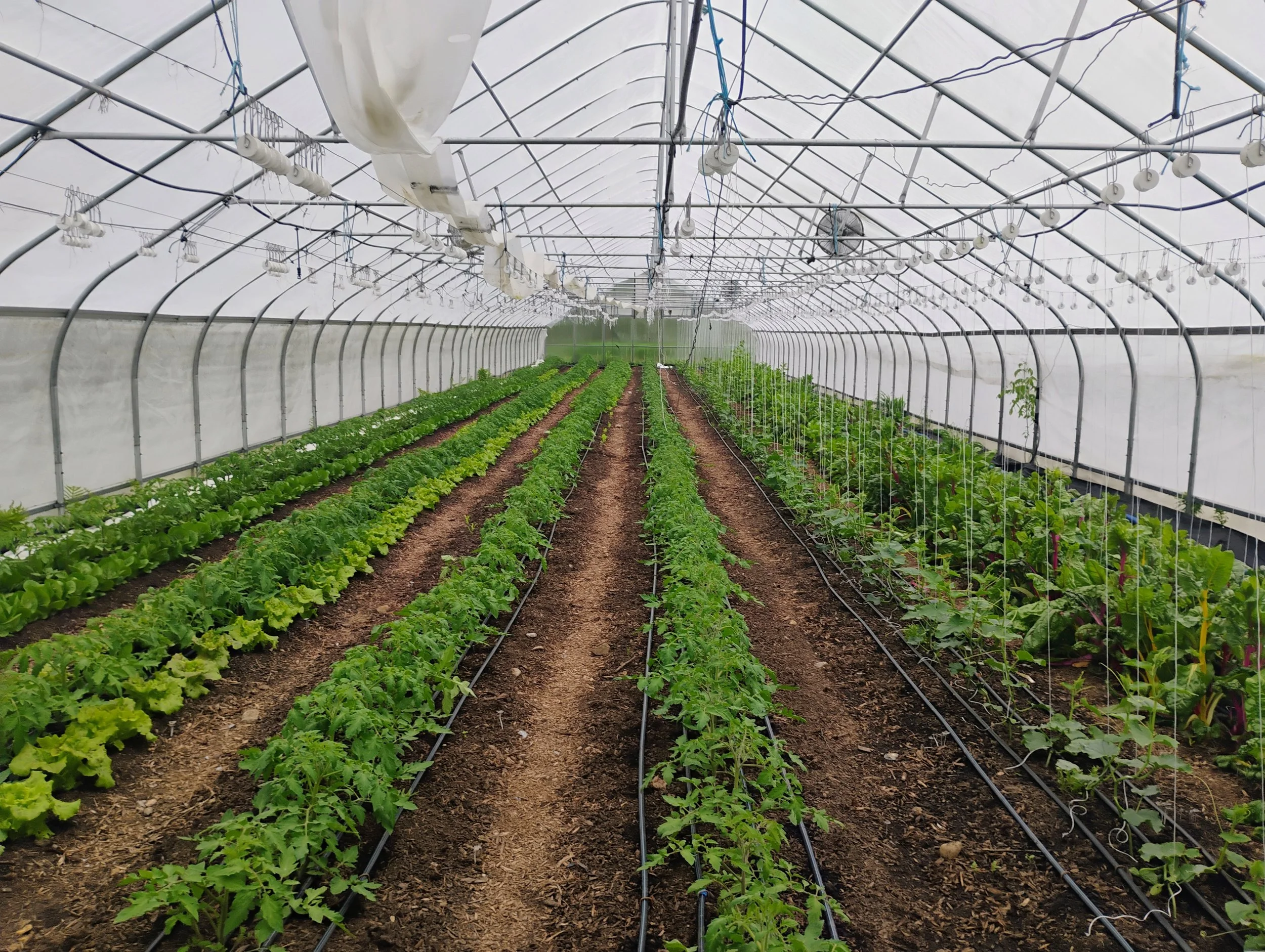
The Trunchbull loaded with 4 rows of tomatoes (with lettuce around the first two rows on the left) and 3 rows of cucumbers (and chard down the middle of one of the cucumber rows), photo by Kara
Farm News
THANK YOU for being a part of the spring CSA season. The spring season is truly for the passionate veggie eaters who know hat to do with the bounty of each season.
This week we continued transplanting: tomatoes in an unheated high tunnel, and leeks, lettuce, celery, and scallions outdoors. On Thursday we were in the path of a local deluge: one inch of rain that fell in a 30 minute downpour. The intensity of the rainfall caused water to runoff rapidly, especially from impermeable surfaces like roofs and greenhouses. In the fields, I took a walk around with a shovel to see where the water was moving, and to be able to redirect any problematic flows. One of our fields that I passed by was in the process of being mulched: the outer rows of the field were mulched with bark, but the rows in the center of the field hadn’t yet had mulch applied to them. In the heavy rainfall, it was striking to see the mulch absorb and hold onto the water, right next to rows of bare soil with muddy water running off of the field. It’s encouraging to see the ways that growing vegetables in mulched beds helps our land become more resilient to weather extremes: too much or too little water. We’re so grateful to be able to utilize this local forestry product to protect and enrich our soil.
In addition to improving water infiltration and retention in our soil, I’m also drawn to mulching as a way of providing a good habitat for soil microorganisms. Last week I wrote about mulched ridges being a way to allow the soil to breathe: to effectively exchange carbon dioxide respired by soil microorganisms with atmospheric O2 created by plants. Mulching our soil with bark provides both food and air space for a diverse soil microbial community. In recent years there has been remarkable research that sheds a bit of light onto the relationships between plants and soil microorganisms. One of the most microbially rich and diverse parts of the soil is the small space where the edges of plant roots meet the soil, known as the rhizosphere. As plants create sugars from photosynthesis, they use some of that energy for their own growth. But they also leak out quite a bit of their hard-earned photosynthesized compounds through their roots and into the soil. Why would plants work to photosynthesize and then simply squirt out those compounds to the soil? The sugars sent out through the roots are utilized by a soil microbial community in the small space surrounding the roots of the plant. Incredibly, plants can modify the particular sugars, amino acids, and alkaloids sent out through their roots in order to actively recruit certain types of bacteria and fungi into their rhizosphere. That microbial community surrounding plant roots plays a big role in making soil nutrients available to plant roots, and it can even modify the pH of the soil immediately around the root to facilitate nutrient uptake by the plant. But what I find most amazing is that the species of fungi and bacteria that plants recruit onto their root systems can have a major effect on the ability of plants to resist disease: certain microorganisms are able to produce antimicrobial compounds that are highly selective in reducing or neutralizing pathogenic microbes that would otherwise infect plants. In other words, managing soil for a rich and diverse microbial community gives plants the ability to selectively favor certain soil microbes in order for the plant to become more disease resistant. This is a major reason why farming with chemicals is an ever-escalating approach: the more that soil life is killed or strained through chemical application, the more difficult it is for plants to team up with soil microbes to develop their immune system. In chemically farmed soil with an extremely imbalanced microbial community, it may not even be possible for seeds to germinate without those seeds being treated by fungicide: I find that astounding. Once soil life is diminished by chemicals and compaction, it takes a lot of intention to bring back the life that sustains healthy plant growth. On the flipside, since we have started reducing our farm’s tillage and incorporating more organic material into our fields, we’ve noticed a significant improvement in the quality of the crops we harvest and their ability to resist disease. It’s been wonderful to begin to see the benefits of facilitating a soil environment that welcomes in the diversity of life. And learning about the relationships between plants and soil microbes helps grow my awareness and appreciation for the incredible workings of life, its vastness and interconnectedness.
This week we’ll begin moving lots of plants out of our greenhouse for people to grow in their gardens: vegetables, flowers, herbs, and some shrubs. If you keep a garden or grow any plants, we hope you’ll have a good season with them!
Have a great week,
-ESF Team: Ryan, Kara, K2, Cindy, Taylor, Leah, Natalie, Katie, Galen, Bryan, Vanessa, Georgia, and Hannah (and Sky and Soraya)
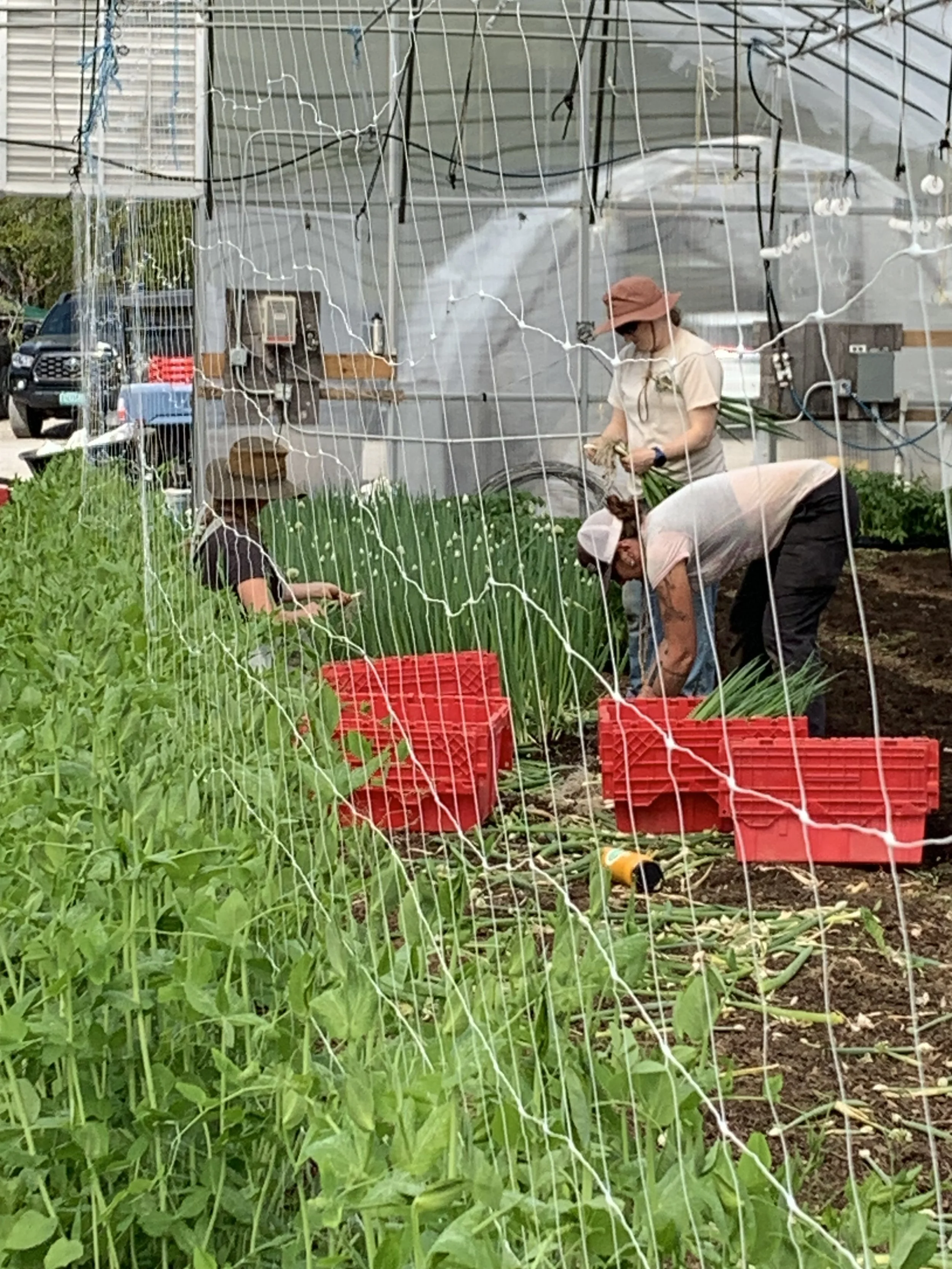
Katies and Galen harvesting scallions, photo by Cindy

Echo keeping watch in a sunny spot, photo by Cindy
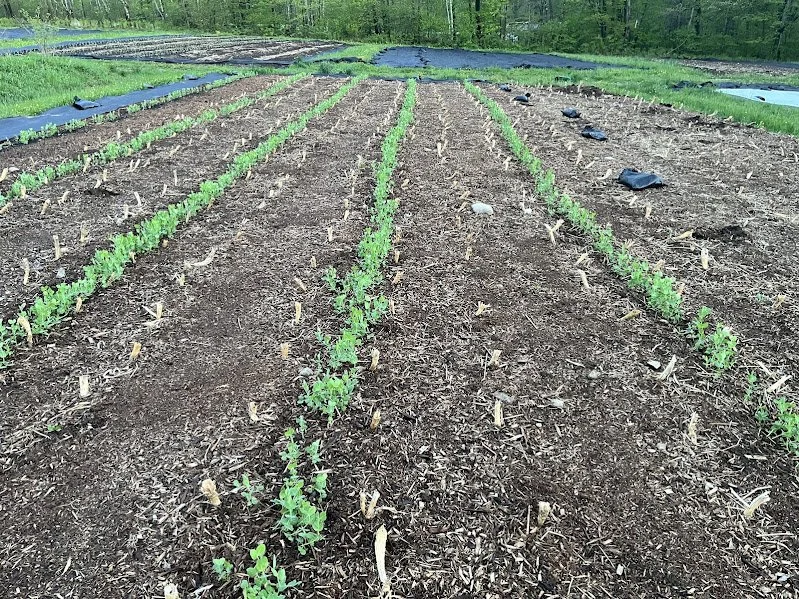
Peas germinating in the field, photo by Ryan
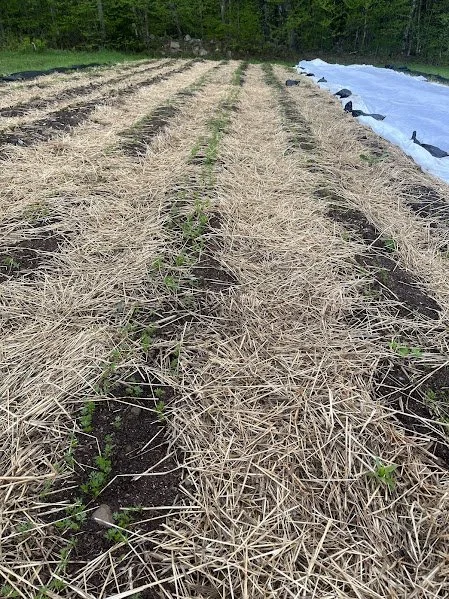
Carrots germinating in the field, photo by Ryan

coming in from the rain, photo by Cindy
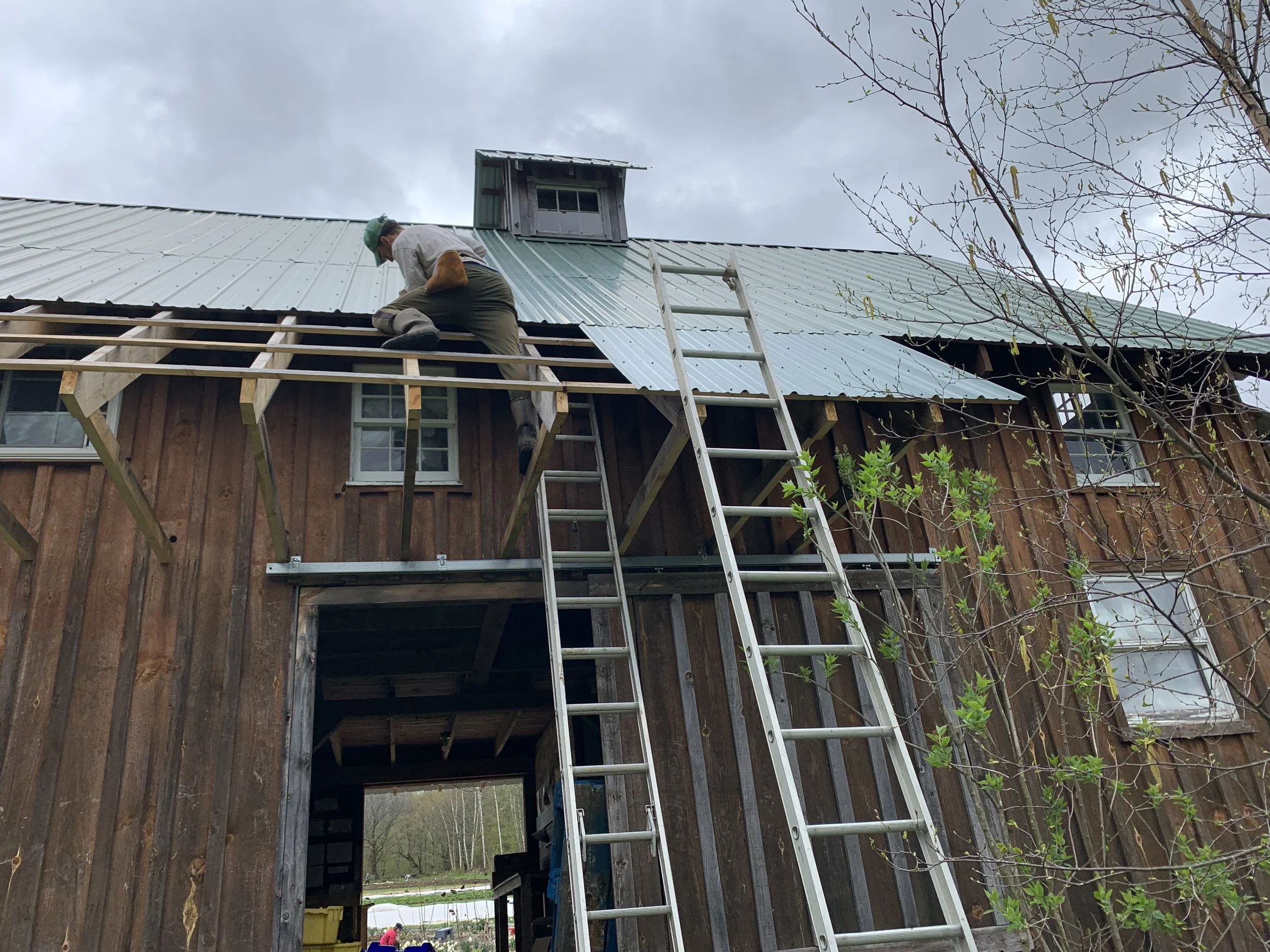
Uncle Bryan working on room overhang, photo by Cindy
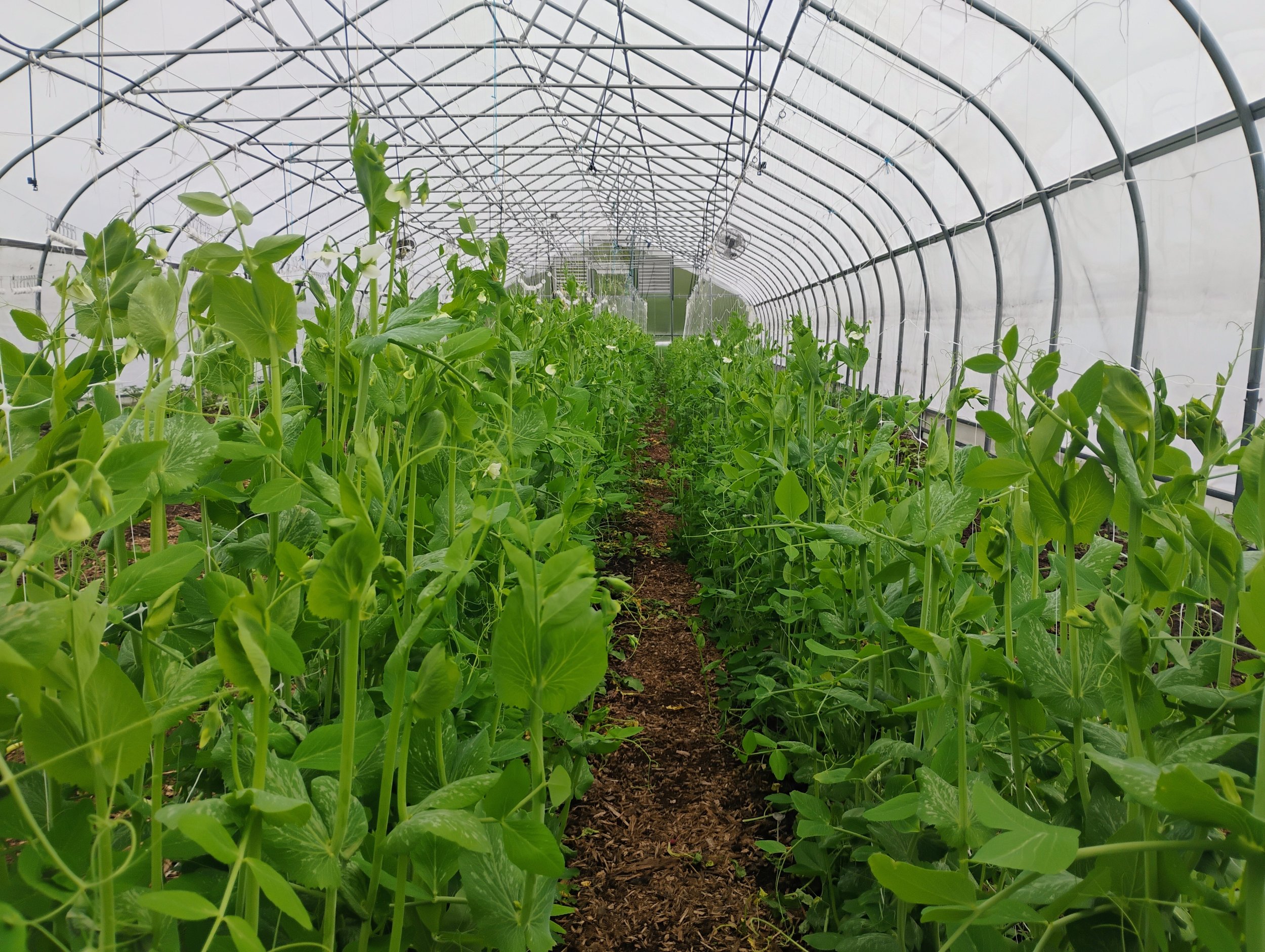
Peas in the tunnel are already flowering! photo by Ryan
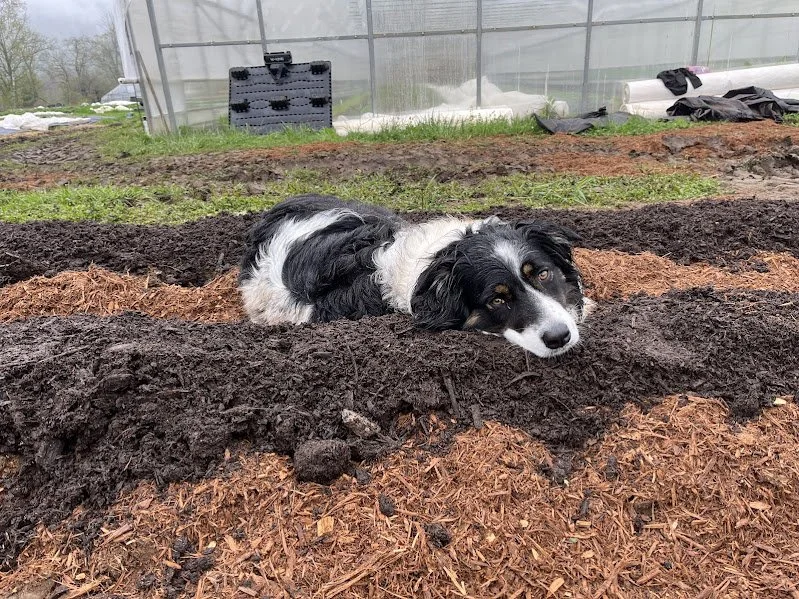
Harley chilling, photo by Ryan
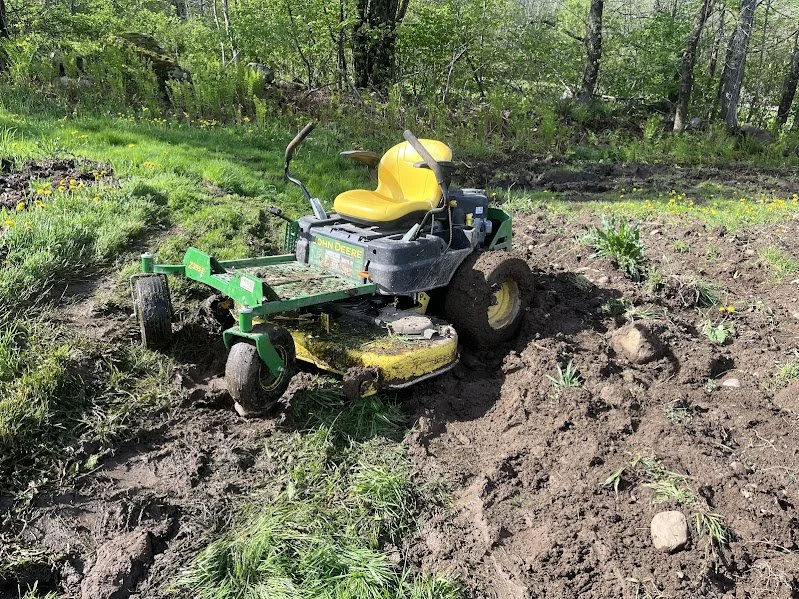
Mower stuck in the mud, photo by Ryan
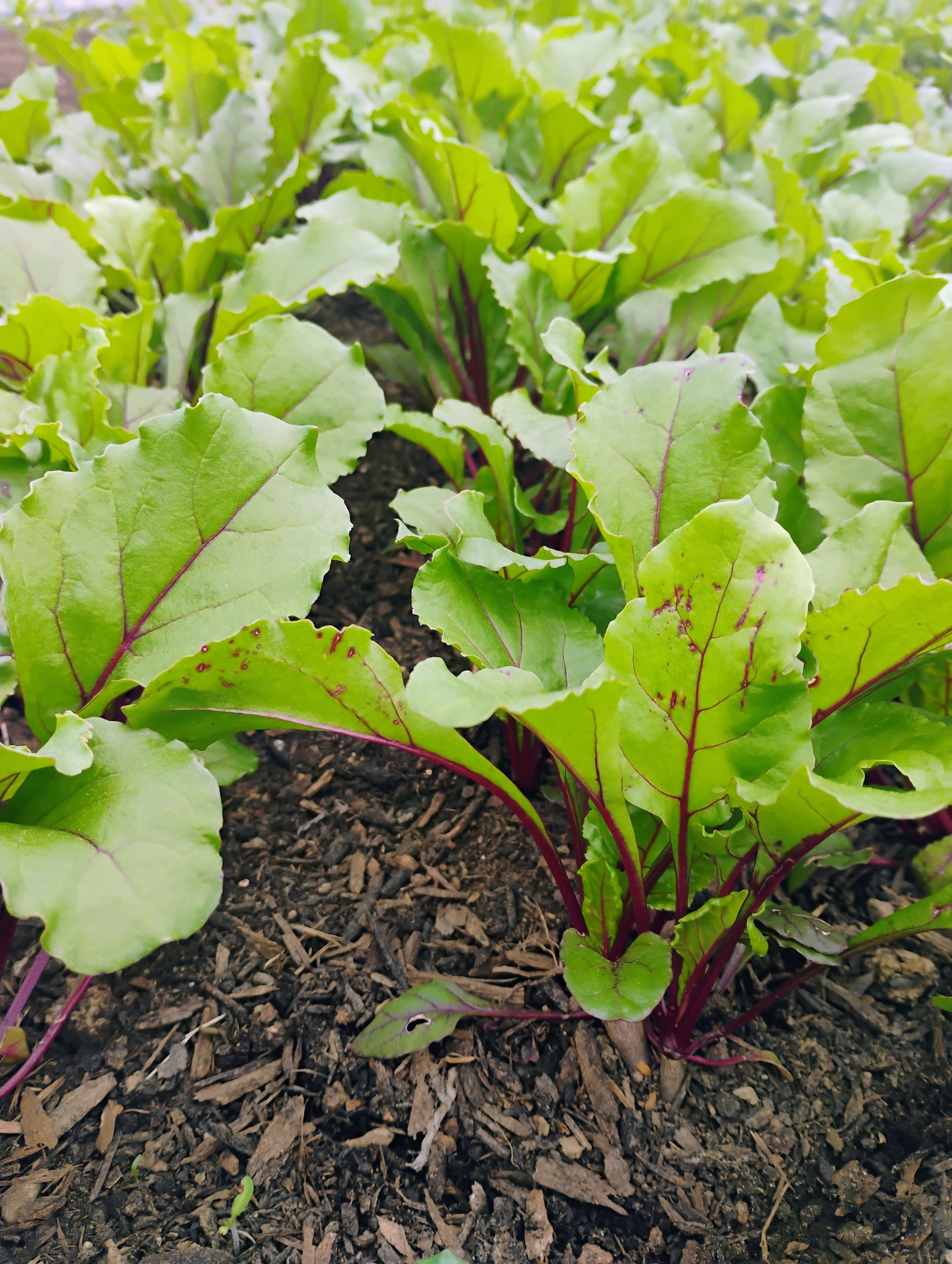
beets will be ready in a few weeks, photo by Kara
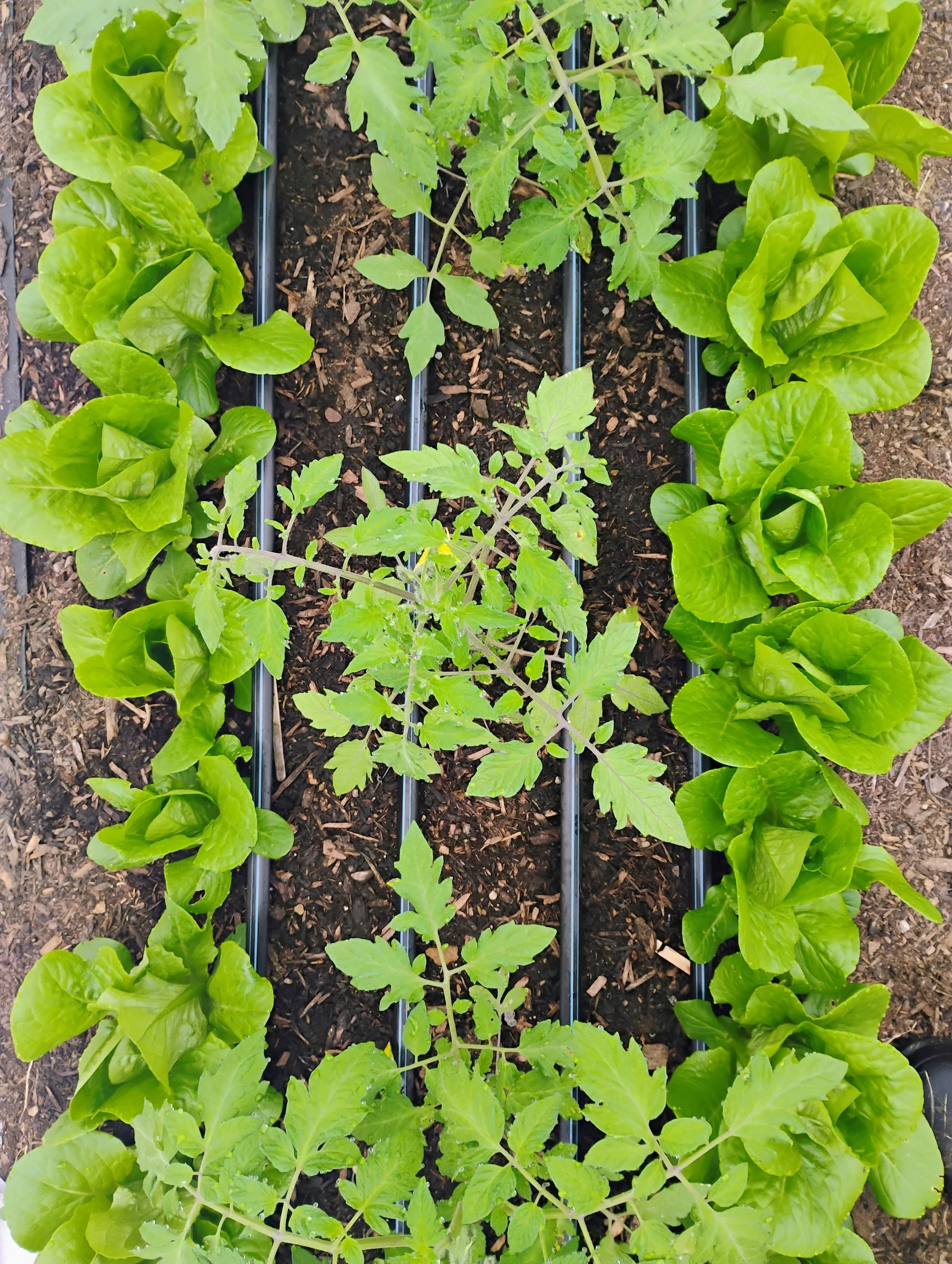
mini romaine heading up around the tomatoes, photo by Kara
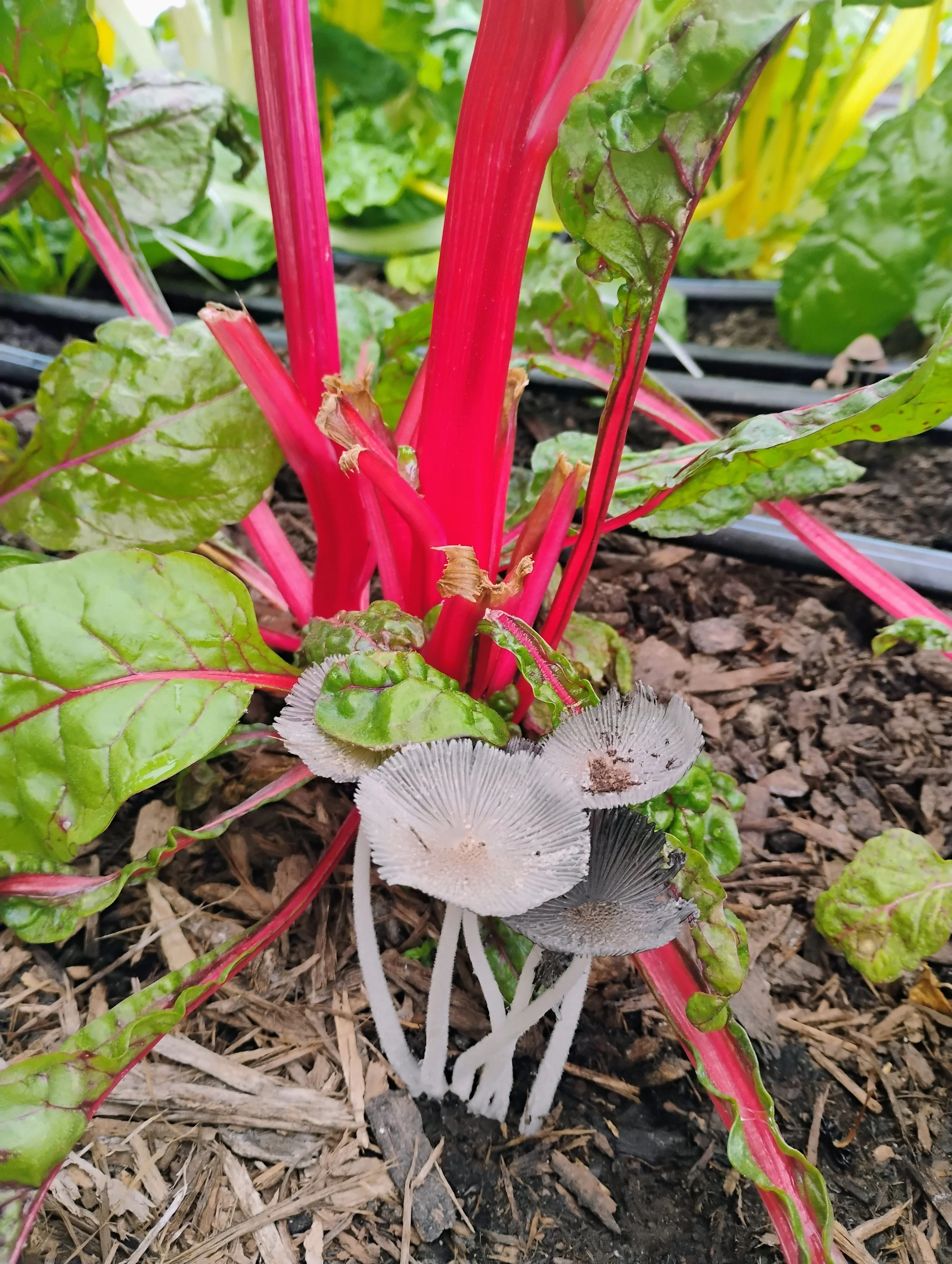
the more life the merrier in a healthy soil, photo by Kara
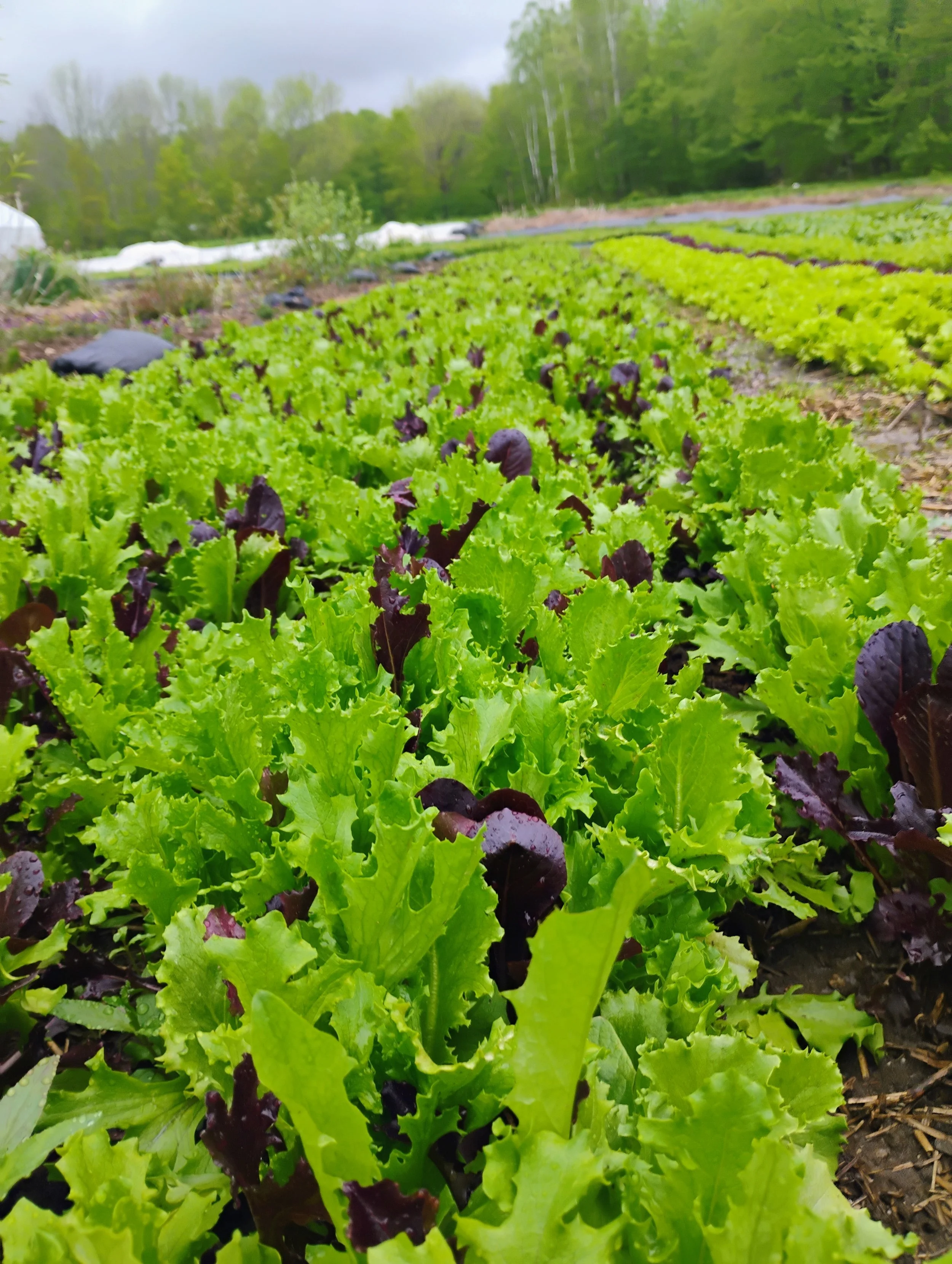
baby lettuce in field, photo by Kara
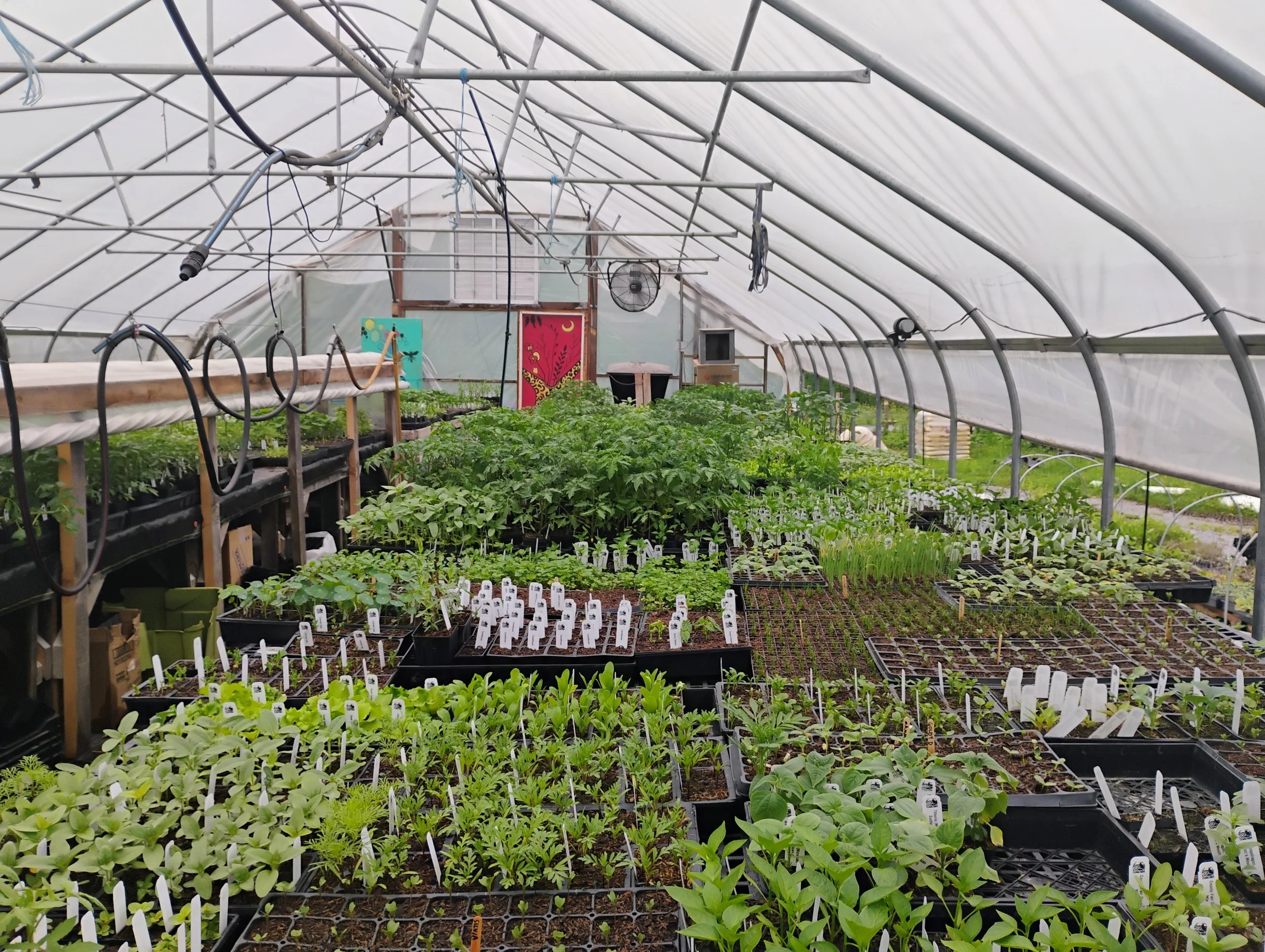
so many plants for your garden! photo by Kara
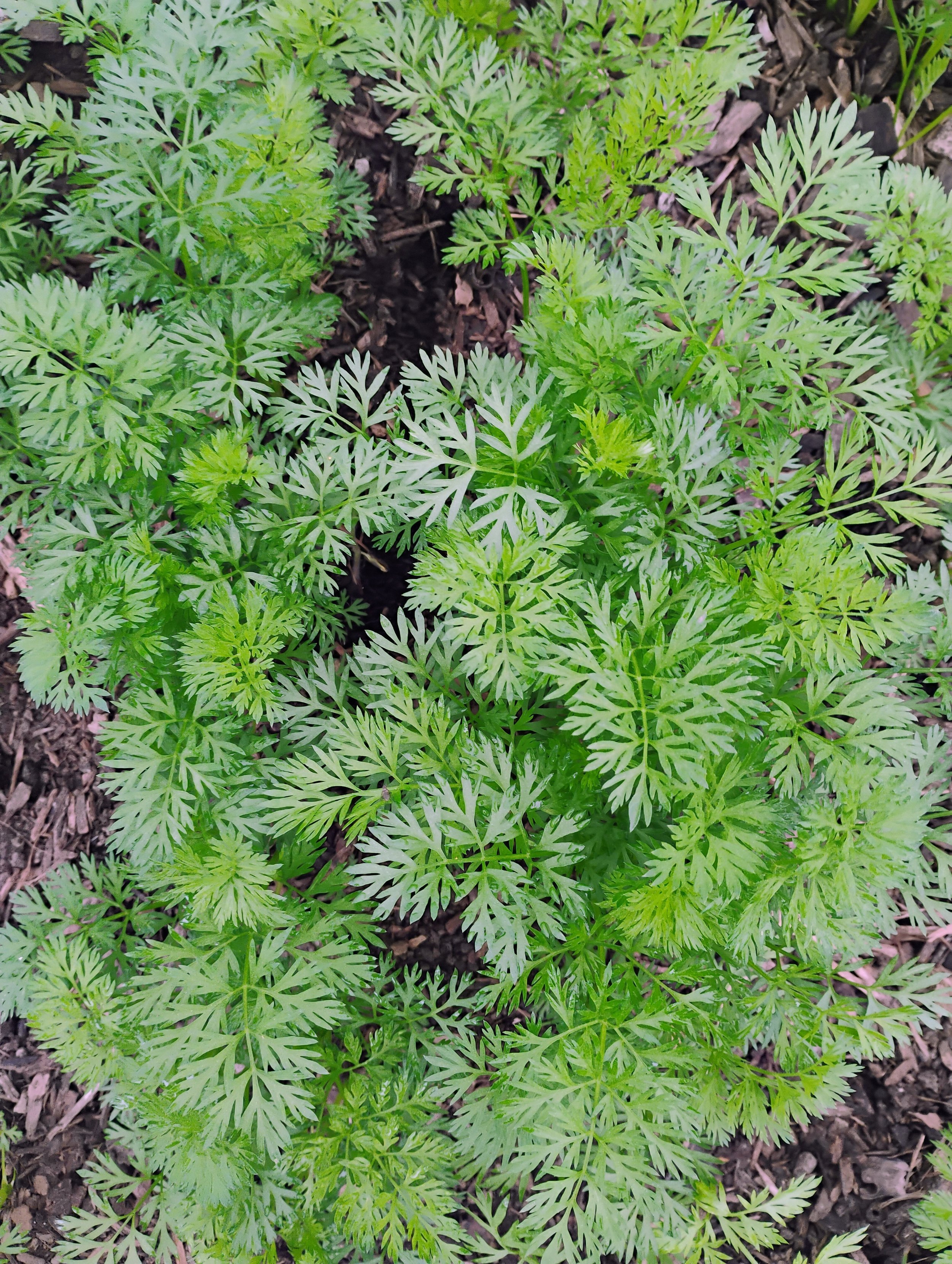
same with the first round of carrots, photo by Kara
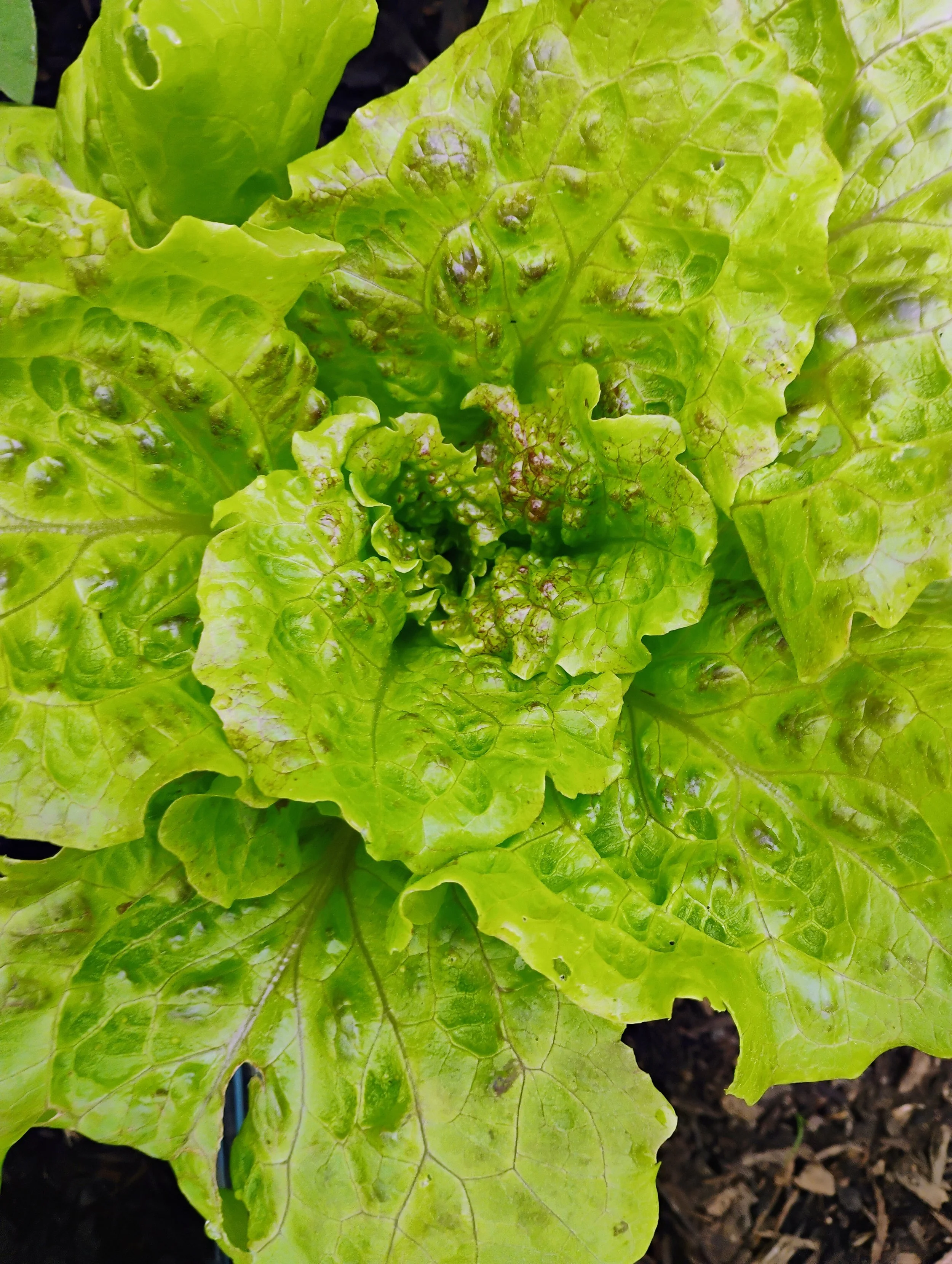
gorgeous lovelock lettuce gets much bigger, photo by Kara
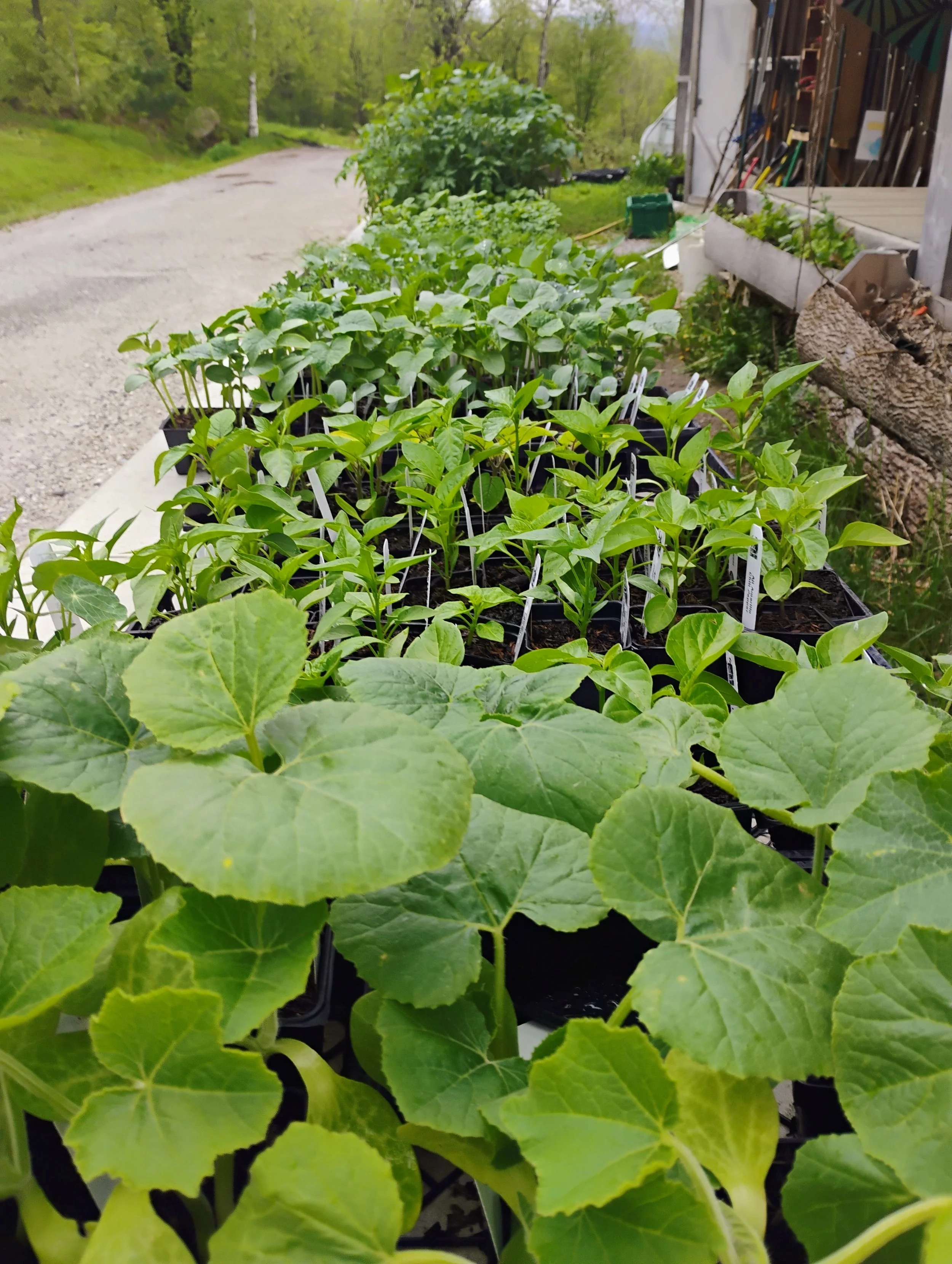
plants available at CSA pickup, photo by Kara
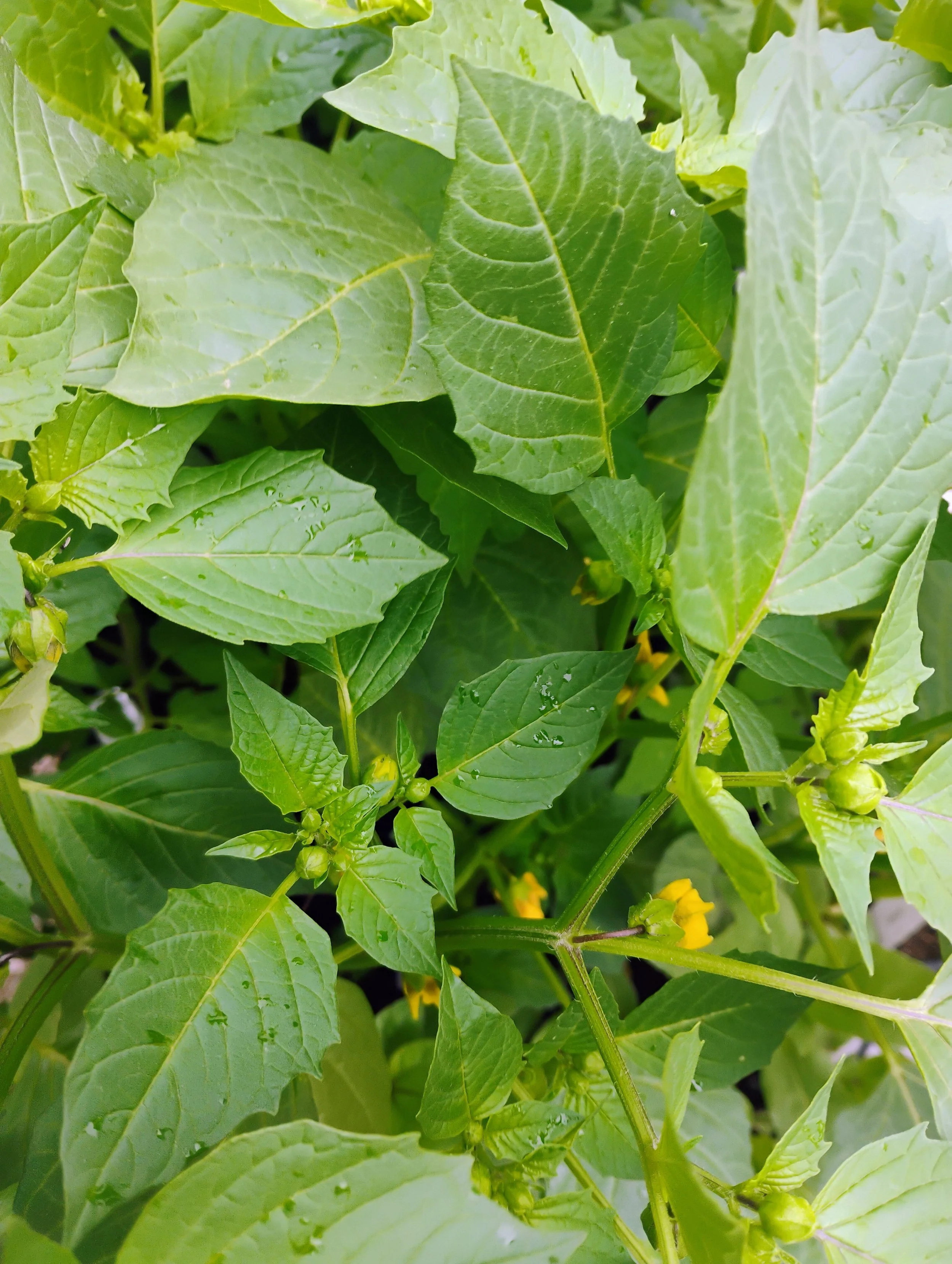
tomatillo starts, photo by Kara